


Maximize Performance with Heat Resistant Rubber/Metal Conveyor Belts
10-10-2025 66
Heat-resistant conveyor belts serve as the backbone of hot material handling systems where temperatures can cause damage or safety hazards to common equipment.
Mục lục
What is a heat-resistant conveyor belt?
Heat-resistant conveyor belts are specialized conveyor belts designed to transport materials in high-temperature environments and harsh conditions, usually from 60-70°C or higher. Conveyors use special materials such as EPDM rubber, Teflon (PTFE) mesh or stainless steel to resist deformation and aging when exposed to hot materials.
Heat-resistant conveyor belts are an indispensable solution in heavy industries such as metallurgy, cement, mining and food drying, ensuring the production process is continuous, safe and highly efficient.
Basic structure of Heat-resistant conveyor belts
A standard heat-resistant conveyor system consists of three main parts:
- Conveyor frame: Supports the entire system and bears the load. Usually made from Stainless Steel (eg Stainless Steel 304, 316) to resist rust and chemical corrosion, or special heat-resistant steel (such as A515 steel) in heavy industrial applications.
- Conveyor belt or Conveyor mesh:
+ Heat-resistant rubber conveyor belt: EPDM rubber (Ethylene Propylene Diene Monomer) and fabric layers (EP/NN). Heat-resistant better than regular rubber, resistant to heat aging and burning. There are many levels of heat resistance (70 degrees C to over 200 degrees C).
+ Teflon mesh conveyor belt (PTFE): PTFE-coated fiberglass, heat-resistant from −70 degrees C to about 260 degrees C, non-stick, chemical-resistant.
+ Metal mesh/chain conveyor belt: Stainless steel (stainless steel) or heat-resistant steel alloys. Extremely high heat resistance (up to 800 degrees C) and great mechanical strength.
- Drive and control system:
+ Motor: Provides traction. Must be properly protected and insulated if operating in excessively high temperatures.
+ Drive/support rollers: Transmit power and support the belt. The drive roller (active drum) is usually connected to the motor, while the support roller (passive drum) helps to tension and stabilize the belt. These rollers also need to be made of heat-resistant materials.
+ Control system: Includes inverter (to adjust speed) and sensors, emergency buttons to ensure safe operation in harsh conditions.
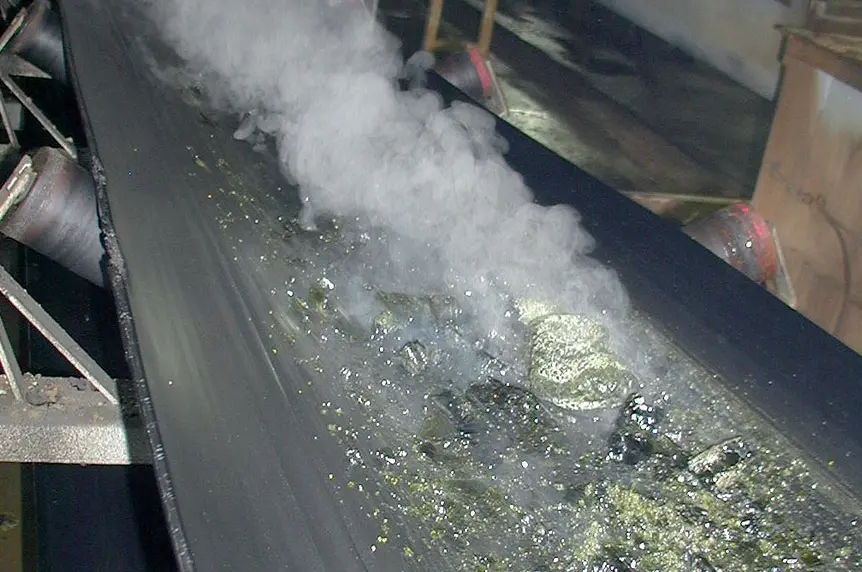
High temperature resistant rubber conveyor belts are popular in mineral processing plants
Main applications of heat-resistant conveyor belts
Their applications range from transporting hot raw materials to drying processes for final products.
1. Heavy Industry (Cement, Metallurgy, Mining)
This is the most common and severe application area where high temperature and high abrasion resistant rubber conveyor belts are used:
- Cement production: Transporting hot clinker (product after firing) from the kiln to the cooling or storage area. Material temperature can reach up to 150 - 200 degrees Celsius
- Metallurgy and Steel: Transporting hot ore, steel slag, coke and steel billets, metal sheets after hot rolling. Metal mesh conveyor belts can be used for extremely high temperature applications (up to 800 degrees Celsius)
- Thermal power and mining: Transporting hot coal, coal dust, ash from the boiler to the storage or processing area.
2. Food and Processing Industry
In this industry, heat-resistant conveyor belts must ensure both heat resistance and food safety and hygiene standards:
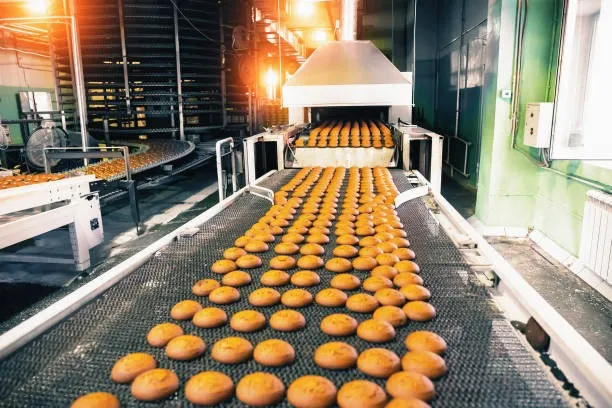
- Drying and baking: Transporting confectionery, cereals, cashews, or agricultural products through drying ovens or industrial ovens (usually using Teflon/PTFE mesh conveyor belts or stainless steel mesh).
- Cooling: Transporting hot products out of the oven for natural cooling or forced cooling (e.g., after baking, frying).
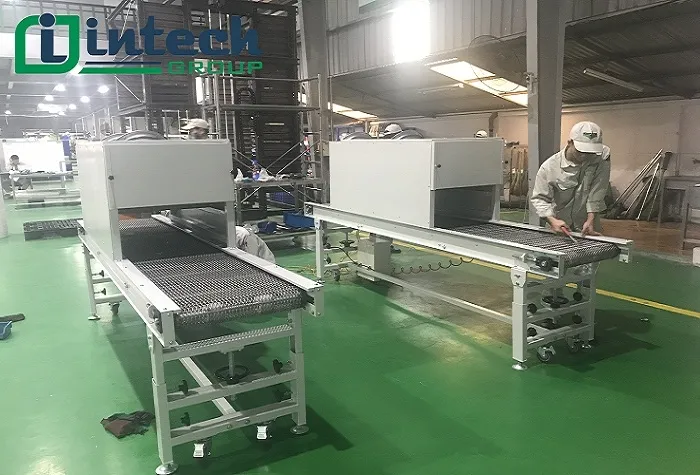
Heat-resistant drying mesh conveyor belts are popular in the food industry
3. Chemical and other manufacturing industries
- Chemical: Transporting hot chemicals, fertilizers, or corrosive materials that require heat treatment.
- Textile and printing: Use Teflon (PTFE) mesh conveyor belts in UV/IR dryers to dry ink, heat treat fabrics, or shrink packaging films.
- Construction Materials Manufacturing: Transporting ceramics, fired bricks, or glass products after they leave the kiln.
Criteria for selecting the right heat resistant conveyor belt
Selecting the right heat resistant conveyor belt is key to maximizing life and performance. Here are some important criteria to consider:
- Determine the exact material temperature to select the right conveyor belt
- The ambient temperature around the installation area affects other components such as the frame, rollers, and the overall durability of the system.
- Abrasion Rating of the Material: Hot materials often come with high abrasion properties. Sharp, rough materials (coal, stone, glass) require an outer rubber layer with superior abrasion resistance to prolong life.
- Tensile Strength (N/mm): Must be appropriate for the load and length of transport. Long and heavy-duty conveyors require higher tensile strength (EP rating).
- Speed: A conveyor belt speed that is too fast may not allow the heat to dissipate quickly, increasing the surface temperature of the belt. It is necessary to balance the speed to optimize both productivity and belt life.
Detailed maintenance steps for heat-resistant conveyor belts to prolong their life
The life of heat-resistant conveyor belts depends largely on strict maintenance procedures. Here are the detailed steps:
- Periodic temperature checks and monitoring:
- Objective: Early detection of signs of aging or heat damage.
- Action: Visually inspect the conveyor belt surface daily for cracks, hardening, blistering or peeling of the fabric. Use a thermometer gun to monitor the surface temperature of the conveyor belt when it is not loaded (on the return) and compare it to the design limit
- Ensure effective cooling:
- Objective: Reduce the accumulated temperature on the belt.
- Action: Set up or recheck the cooling system (mainly on the return belt). Industrial fans can be used to blow directly or mist/spray water to cool the underside of the conveyor belt indirectly to assist with heat dissipation.
- Adjust tension and deflection:
- Tension: Ensure the conveyor belt is at the correct tension. Over-tightening the belt will put pressure on the joints and fabric, causing tearing. Over-slack belts are prone to slipping on the drive rollers, generating frictional heat, damaging both the belt and the rollers.
- Idling: Adjust the idler rollers so that the conveyor belt always runs straight, avoiding rubbing against the frame, causing wear on the belt edges and exposing the fabric layer, leading to heat damage.
- Clean and remove accumulated material:
- Objective: Prevent hot material from sticking.
- Action: Regularly clean the drive roller, drive roller and return roller areas. Hot material sticking can act as an insulating layer, keeping the temperature on the conveyor surface, causing local damage and increasing wear.
- Conveyor belt splicing and repair techniques:
- Splicing: Use the hot vulcanization method with specialized heat-resistant glue and splicing material to ensure the joint has the same heat resistance as the original conveyor belt. Absolutely avoid cold splicing or mechanical clamping for high temperature conveyor belts (except in emergency cases).
- Repair: Quickly repair small tears and cracks with specialized heat-resistant patch glue to prevent the wound from spreading and protect the inner fabric layer from heat attack.
Reference price list for heat-resistant conveyor belts
The price list below is for reference only and may change depending on the time of import of materials, brand, and detailed technical requirements of the system.
| Conveyor Belt Type | Heat Resistance Range (Maximum) | Application Characteristics | Reference Price (Only conveyor belt) |
| Heat Resistant Rubber Conveyor Belt | 100 - 200 degrees C | Transporting bulk, heavy materials (clinker, cement, hot coal) | 200,000 - 600,000 VND/square meter |
| Teflon Mesh Conveyor Belt (PTFE) | 260 - 300 degrees C | Drying oven, glue press, food industry (requires non-stick) | 450,000 - 950,000 VND/square meter (Depending on mesh size, thickness) |
| Stainless Steel/Steel Mesh Conveyor Belt (Chain) | 300 - 800 degrees C | Kiln, metallurgical industry, glass (ultra-high temperature). | The price of the whole system is high, calculated by set/system. (Stainless steel mesh unit price fluctuates greatly) |
| Heat Resistant PVC Conveyor System Maximum | 80 degrees C | Food and electronics industry (low medium temperature). | 100,000,000 - 250,000,000 VND/System (Including frame and motor) |
Heat resistant conveyor: Essential investment for performance and safety
Heat resistant conveyor is not just a normal conveying equipment; it is a strategic investment to ensure continuous performance and absolute safety in harsh production environments. In industries such as cement, metallurgy, ceramics or hot food processing, conveyors are exposed to extremely high temperatures, heavy loads and the risk of continuous wear.
Choosing a high-quality heat resistant conveyor system, which is resistant to aging and maintains superior tensile strength, is key to:
- Avoid production interruptions due to sudden breakdowns.
- Minimize maintenance and replacement costs.
- Ensure safety for workers and the entire chain.
Don't put your system at risk with poor quality solutions.
Contact Intech today for in-depth advice from our team of engineers, helping you choose and design the most suitable heat-resistant conveyor belt for your business's specific temperature, load and production process.
- Hotline: 0966 966 032
- Address: Lot 6, Lai Xa Industrial Park, Tay Tuu Ward, Hanoi City
