


7 stages in shampoo production line
11-08-2025 603
Shampoo is an indispensable product in daily life, helping to clean hair and scalp, bringing a comfortable feeling to the user. To create a bottle of high quality shampoo, the manufacturer must follow a strict process consisting of many different stages.
Mục lục
The shampoo production line usually goes through 7 important stages, from raw material preparation to packaging and transportation. Each step plays an essential role in ensuring quality and production efficiency.
Stages in the shampoo production line
1 - Raw material preparation
Shampoo is a popular hair care product, made from many different ingredients. The main ingredients include water, detergents (such as Sodium Lauryl Sulfate), hair conditioners (such as natural essential oils, proteins), fragrances and preservatives.
Before being put into the production process, the input materials need to be thoroughly checked for quality. Indicators such as purity, chemical concentration, and safety level must meet the prescribed standards to ensure quality and safety for users.
2 - Mixing and blending
After the raw materials meet the requirements, the mixing process is carried out according to the standard formula. Purified water is heated to the appropriate temperature, then surfactants and nutrients are added in a certain proportion.
Specialized mixing equipment helps to dissolve and evenly distribute the ingredients, forming a homogeneous shampoo mixture. In this step, parameters such as pH, viscosity, color and fragrance are tested to ensure that they meet quality standards. The pH of the shampoo is usually close to that of natural hair (from 4.5 to 5.5) to maintain hair health.
3 - Homogenization and degassing
The shampoo mixture after mixing may contain air bubbles and has not reached the desired smoothness. Therefore, a homogenizer is used to break down the oil particles, making the mixture smoother.
Then, the degassing process is performed to remove air bubbles, making the shampoo have a smooth texture, without foaming or settling in the bottle.
4 - Filtering and Sterilization
Next, the shampoo mixture is filtered through a fine filtration system to remove unwanted impurities or residue. This step helps the product achieve high purity, without causing irritation to the scalp when used.
After filtering, the sterilization process is carried out to kill bacteria, ensuring the shampoo is safe to use and extending the product's shelf life.
5 - Filling and packaging
When the shampoo mixture meets the requirements, it will be put into the automatic filling system. The product is filled into bottles according to standard capacity, then the bottle cap is automatically closed to ensure airtightness, preventing bacteria from entering.
Next, the label is affixed to the shampoo bottle, ensuring full product information such as ingredients, instructions for use and expiry date. Finally, the product is visually inspected to eliminate defective products before being put on the market.
6 - Finished product quality inspection
Before leaving the factory, shampoos must undergo many strict quality checks. Factors such as viscosity, pH, color, and fragrance are measured to ensure product consistency.
In addition, foaming ability, cleaning ability, and skin safety are also evaluated through actual testing. Products that meet the standards will be stamped with an inspection mark and samples will be kept for comparison when necessary.
7 - Packing and shipping
After completing the quality check, the shampoo bottles are placed in cartons for protection during transportation. Warehouse staff will check the quantity, seal the cartons, and prepare for shipping.
The products will be shipped to distributors, stores, or supermarkets, ensuring that they reach consumers in the best condition.
Machinery in shampoo production line
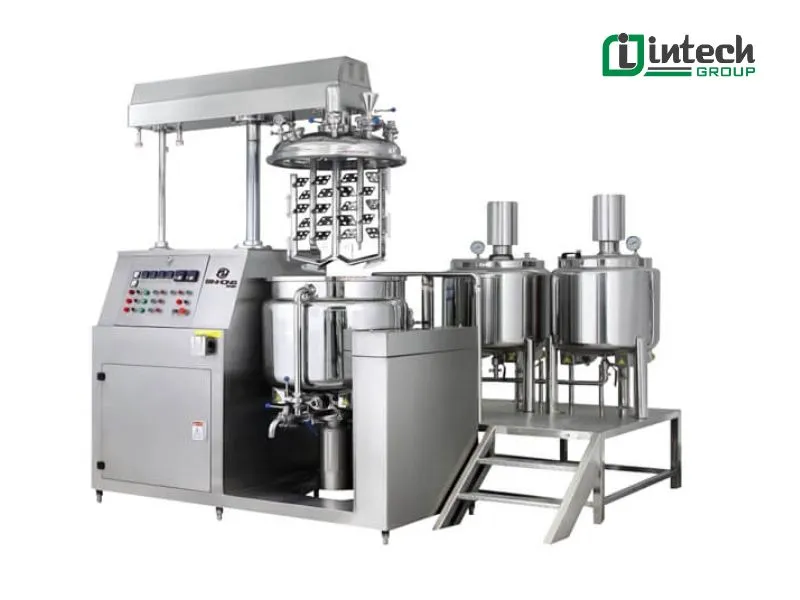
The shampoo production line is a closed system, including many modern equipment and machines to ensure high quality products and safety for consumers.
- Mixing and blending machine: is an important equipment in the shampoo blending stage. This equipment helps to dissolve and mix ingredients such as water, detergent, hair conditioner and fragrance according to the standard formula. The mixer can adjust the stirring speed, temperature and pressure to ensure the solution has high homogeneity.
- The homogenizer helps to smooth the shampoo mixture, ensuring that the ingredients do not separate or precipitate. This equipment works by using high pressure to break down the oil particles, giving the product a smoother and more stable texture.
- Filtration and sterilization system. After blending, the shampoo mixture needs to be filtered through a fine filtration system to remove unwanted dirt and impurities. Next, the sterilization process will kill harmful bacteria and microorganisms, helping to ensure safety for users and prolong the shelf life of the product.
- The automatic filling machine is responsible for measuring the appropriate amount of shampoo into each bottle according to the standard capacity. This equipment helps to increase production speed, reduce material waste and ensure that each shampoo bottle has the correct amount of solution.
- Capping machine. After filling, the shampoo needs to be sealed tightly to prevent air and bacteria from entering. The capping machine operates automatically, helping to increase efficiency and ensure the tightness of the product.
- The labeling and expiry date printing machine helps to attach labels to shampoo bottles accurately and quickly. In addition, the expiry date printing machine will print the production date and expiry date on the packaging, making it easy for consumers to track product information.
- Packaging and shipping system. After completing the above steps, the shampoo will be packed in boxes using the automatic packaging system. The shampoo bottles are arranged in cartons to protect the products during transportation. This system helps to minimize errors and increase the speed of warehousing.
In general, the shampoo production line consists of 7 main stages, each stage is strictly controlled to ensure that the product meets high quality standards before reaching consumers.
The application of modern technology to the production line not only improves efficiency but also helps create safe and effective products. With the continuous development of the cosmetic industry, the shampoo production process is increasingly improved to meet the increasing needs of customers.
The application of modern technology to the production line not only improves efficiency but also helps create safe and effective products. With the continuous development of the cosmetic industry, the shampoo production process is increasingly improved to meet the increasing needs of customers.
