


Application of Laser Cutting Technology in Industries
20-08-2025 372
From the delicate intricacies of jewelry to aerospace engineering parts, laser cutting technology is an indispensable tool in many different industries.
Mục lục
Laser cutting is a magical combination of precision and versatility that has revolutionized the way we shape the world around us. This article delves into the multifaceted applications of laser cutting, demonstrating its pivotal role in shaping modern industry.
Understanding Laser Cutting Technology
Machining Laser cutting is a process that involves the use of high-powered laser beams that has transformed manufacturing and fabrication. The technology, which has evolved since its inception, uses a focused laser beam to melt, burn, or vaporize materials, delivering unparalleled precision. Derived from the concept of computer numerical control (CNC), laser cutting is a testament to the synergy between innovation and practicality.

Applications of Laser Cutting technology in industries
The versatility of laser cutting technology, a marvel in the world of manufacturing and fabrication, is unparalleled. As the foundation of modern industry, it has opened up new horizons in manufacturing, innovation and precision.
This technology, which uses a focused laser beam, be it a CO2, fiber or solid-state laser, has revolutionized the way materials are cut and shaped. Let’s explore how laser cutting is applied in different industries, highlighting its adaptability and the complexity of its uses.
- Automotive Industry
In the automotive industry, laser cutting is an important tool, especially for the fabrication of complex parts and customizations. The process is driven by high precision and efficiency, allowing manufacturers to produce parts that are both complex and delicate, using a variety of materials from stainless steel to aluminum alloys.
- Examples of automotive parts made using laser cutting:
- Body panels are precisely cut to enhance aesthetics and aerodynamics.
- Engine parts are shaped with extreme precision.
Laser cutting, which is significantly more efficient than traditional metal fabrication processes such as die cutting or plasma cutting, has streamlined vehicle manufacturing. High-power lasers, typically fiber laser cutters, provide the level of precision required in the automotive sector, where every millimeter counts.
- Aerospace industry
In the aerospace industry, the application of laser cutting technology is crucial. The need for lightweight, high-strength materials in this sector cannot be overstated. Precision is a hallmark of aerospace components, and laser cutting, with its high precision and ability to process a wide range of materials, is perfectly suited to this task.
Key aspects:
- Cutting and engraving of metals and alloys used in aircraft manufacturing.
- Manufacture of complex parts requiring meticulous precision.
The aerospace industry benefits from the ability of laser cutting to produce parts that meet tight tolerances. The process, which often involves fiber laser cutting or CO2 laser cutting, ensures that the structural integrity of the material is maintained, which is critical in aerospace applications.

- Construction Industry
Laser cutting has also had a significant impact in the construction industry. Its use in the fabrication of steel frames and detailed architectural elements has brought new levels of creativity and precision to the field.
Examples in modern architecture:
- Laser-cut steel panels are used in innovative building designs.
- Custom architectural elements feature complex patterns and shapes.
The technology’s ability to cut through thick steel plates and produce precise cuts makes it an invaluable tool in construction. Whether it is stainless steel for structural support or decorative components, laser cutting offers the combination of strength and aesthetics that is so popular in modern architecture.
- Medical Devices
In the field of medical device manufacturing, the precision and versatility of laser cutting technology is indispensable. The process often uses fiber laser systems and CO2 lasers, allowing the creation of surgical instruments and medical implants with exceptional precision. The critical nature of these devices requires not only high precision but also the use of sterilizable and biocompatible materials.
Key aspects:
- The manufacture of surgical instruments with complex designs, where every millimeter can impact patient outcomes.
- Manufacturing of implants such as stents and joint replacements, where the precision of lasers ensures the compatibility and functionality of these life-changing devices.
Laser cutting in the medical device industry is about more than just creating instruments; it is about improving the quality of life. The precision of the technology ensures that the instruments and implants produced meet the highest standards of safety and effectiveness.
- Electronics Industry
Laser cutting technology plays a key role in the electronics industry, especially in the miniaturization of electronic devices. The industry is constantly pushing the boundaries of how small and effective devices can be, relying heavily on the precision cutting capabilities of laser technology.
Enter the Electronics sector:
- Cutting complex components for electronics and printed circuit boards (PCBs), where precision is paramount.
- Laser engraving and cutting of silicon wafers, a key step in semiconductor manufacturing.
This process, which often involves fiber lasers and solid-state lasers, allows for precise control of the size and quality of the cut, which is important in an industry where a fraction of a millimeter can make a significant difference.
- Jewelry
In the world of jewelry making, laser cutting technology has opened up new doors for creativity and precision. This technology allows artisans to create detailed designs and custom pieces that were previously impossible or extremely time-consuming to create.
Applications in jewelry making:
- Creating intricate patterns in precious metals such as gold, silver and platinum.
- Customizing jewelry with laser engraving, adding a personal touch to each piece.
The precision of laser cutting turns a simple piece of metal into a work of art, demonstrating the combination of technology and creativity in modern jewelry design.
- Fashion Textile Industry
The impact of laser cutting on the textile and fashion industries has been profound. This technology has allowed designers to experiment with complex patterns and designs, pushing the boundaries of fashion and textile manufacturing.
Impact on fashion design:
- Cutting intricate patterns on a variety of fabrics, from delicate silk to sturdy denim.
- Allows designers to create innovative, laser-cut garments that combine traditional materials with a contemporary aesthetic.
Laser cutting on fabrics not only enhances the visual appeal of fabrics, but also adds a new dimension to fashion design, bringing a combination of precision and artistry.
- Shipbuilding and Marine Industry
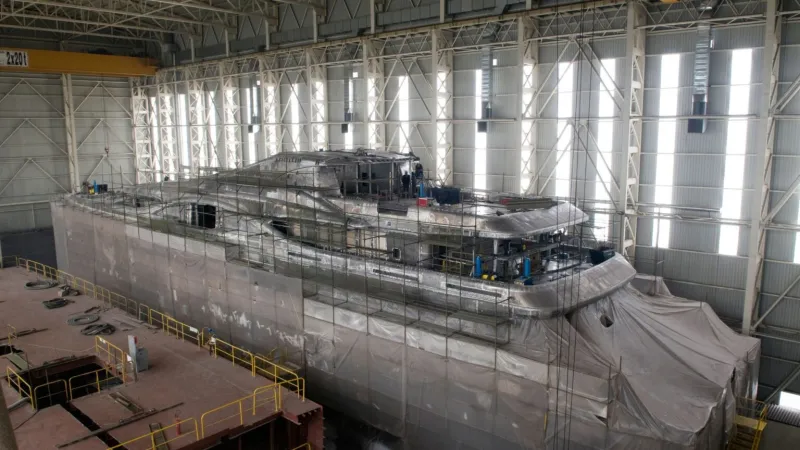
In the shipbuilding and marine industry, laser cutting technology is considered a beacon of innovation, revolutionizing the way large-scale metal parts and complex components are manufactured. The requirements for durability and precision in marine applications are stringent, due to the harsh marine environment that these parts must endure.
Key aspects:
- Laser cutting is used to create strong and precise components required for shipbuilding, such as hull sections and complex fittings.
- The technology excels at processing thick stainless steel plates, a popular material in the industry, ensuring high cut quality and minimal waste.
The precision of laser cutting, especially with fiber lasers and CO2 lasers, is paramount in ensuring that each part can withstand the rigors of marine life. This precision, coupled with the technology’s ability to process a wide range of metals, makes it an invaluable tool in the marine industry.
- Energy Sector (Including Renewable Energy)
Laser cutting technology plays a pivotal role in the energy sector, especially in the renewable energy sector. The production of components for wind turbines, solar panels and other energy infrastructure is a testament to the technology’s contribution to sustainable energy solutions.
Contribution to renewable energy:
- The precision and efficiency of laser cutting is crucial in the production of complex components for wind turbines and solar panels.
- Laser technology facilitates the creation of components with precise tolerances, which are essential to maximize the efficiency of renewable energy systems.
In this sector, the versatility and high precision of laser cutting, often associated with high-power laser systems, underscores its importance in developing solutions that are not only sustainable but also reliable.
- Heavy Machinery and Equipment Manufacturing
Laser cutting technology is widely integrated in heavy machinery and equipment manufacturing. Its versatility in processing different types and thicknesses of materials is crucial to creating parts that meet the diverse needs of this industry.
Flexibility in production:
- From cutting thick steel plates for heavy machinery to precision parts for specialized equipment, laser cutting meets a wide range of manufacturing needs.
- The ability of the technology to adapt to different materials and thicknesses without compromising accuracy or quality is a key advantage.
This adaptability, especially noticeable in fiber laser cutters, ensures that manufacturers can meet the specific requirements of their projects, whether they involve heavy steel or lighter metals.
- Packaging Industry
In the packaging industry, laser cutting technology has become an essential tool for precision cutting of packaging materials, including the creation of complex designs and prototypes. The customizability of laser cutting is particularly valuable in this area.
Customization in packaging design:
- Laser cutting allows for the creation of unique packaging designs, including complex cuts and engravings.
- The precision of the technology is ideal for the production of prototypes and small batches, allowing for rapid testing and development of packaging ideas.
Laser cutting’s ability to work with a wide range of materials, from cardboard to plastic, coupled with its precision and efficiency, makes it a popular choice in the packaging industry, where customization and quality are paramount.
- Art and Sculpture
In the field of art and sculpture, laser cutting technology has emerged as a transformative force, redefining the boundaries of artistic expression. Known for its precision and versatility, the technology allows artists to create intricate works of art and sculpture that were previously unattainable through traditional methods.
Impact on artistic expression:
- Artists harness the precision of laser cutting to create intricate, detailed works of art in a variety of materials, from metal to acrylic.
- Laser cutting has enabled the creation of three-dimensional sculptures with intricate designs, adding depth and complexity to the art.
The application of laser technology in art and sculpture not only expands creative possibilities but also allows for the exploration of new mediums and techniques, pushing the boundaries of what is considered possible in the world of art.
- Furniture and Interior Design
In furniture and interior design, laser cutting technology is celebrated for its customization and design flexibility. The technology has revolutionized the way detailed wooden components, metal fittings and decorative elements are created, offering unparalleled precision and complexity.
Customization in design:
- Laser cutting facilitates the creation of bespoke furniture and interior design elements, tailored to specific aesthetic and functional requirements.
- The technology allows for the precise cutting of intricate patterns and designs on a wide range of materials, from wood to metal, enhancing the aesthetics of interior spaces.
The role of laser cutting in furniture and interior design emphasizes the ability to combine function with artistic expression, transforming ordinary spaces into distinct environments.
- Woodworking Industry
In the woodworking industry, laser cutting technology has become an invaluable tool. Its ability to precisely cut and engrave wood has opened up new possibilities for both decorative and functional woodworking projects.
Woodworking Applications:
- From intricate inlays and detailed cuts to precise engravings, laser cutting offers a level of detail and precision that traditional woodworking tools cannot match.
- The technology is used to create custom furniture, decorative panels and unique wood artwork, showcasing the natural beauty of the material combined with sophisticated design.
Laser cutting in woodworking not only improves the quality of the final product but also significantly reduces the time and effort required in traditional woodworking methods, marking a significant step forward in this field.
- Signs and Advertising
In the field of signs and advertising, laser cutting technology stands out for its ability to create signs, displays and promotional materials that are both complex and eye-catching. The technology offers a unique combination of precision, speed and versatility, making it ideal for creating impactful marketing materials.
Advantages in signs and advertising:
- Laser cutting allows for the production of highly detailed and visually appealing signs and displays in a variety of materials, from acrylic to metal.
- The precision of the technology allows for the creation of intricate designs that attract attention and effectively convey messages.
The use of laser cutting in signs and advertising not only enhances brand visibility but also allows for greater creativity in design, providing businesses with a powerful tool to stand out in a crowded marketplace.
- Defense and Military
The defense and military sectors benefit greatly from the precision and reliability of laser cutting technology. The technology is widely used to produce critical components for military vehicles, advanced weapons, and protective equipment. The high-risk nature of defense applications requires not only precision, but also consistency and reliability in every component produced.
Key defense applications:
- Manufacture of vehicle components that require high strength and durability.
- Manufacture of complex weapon parts, where every millimeter can be the difference between success and failure.
Laser cutting, with its precision cutting capabilities and ability to work with a wide range of materials, including metals and durable alloys, is essential to meet the stringent standards of the military industry.
- Rail and Transportation
In the rail and transportation industry, laser cutting technology plays a vital role in the fabrication of components for trains, trams and related infrastructure. The durability and precision required in transportation applications make laser cutting an ideal choice.
Importance in transportation:
- Produce high-strength, precision-engineered components for rail vehicles.
- Create complex components for transportation infrastructure where both durability and precision are important.
The use of advanced laser cutting machines, capable of processing a wide range of material types and thicknesses, ensures the reliability and safety of transportation systems.
- Agricultural machinery manufacturing
Laser cutting technology contributes significantly to the field of agricultural machinery manufacturing. It improves the efficiency and durability of equipment such as tractors, harvesters and other agricultural machines.
Role in agricultural machinery:
- Precisely cutting tractor and harvester parts, improving the performance and longevity of machinery.
- Shaping durable parts that can withstand the rigors of agricultural work.
The ability of laser cutting to create precise and durable parts is vital in industries where machinery is subjected to harsh working conditions and requires high reliability.
- Food and beverage industry
In the food and beverage industry, laser cutting technology is instrumental in creating machinery parts and packaging solutions. The precision required in the food processing industry, combined with food safety considerations, makes laser cutting an invaluable tool.
Food and beverage applications:
- Produce parts for food processing machinery with high precision, ensuring the safety and quality of food products.
- Produce innovative packaging solutions that meet strict hygiene standards.
The versatility of laser cutting, which can work with a wide range of materials, from stainless steel to food-safe plastics, plays a vital role in maintaining the high standards of the food and beverage industry.
- Research and Development (R&D)
In the field of Research and Development (R&D), laser cutting technology is an invaluable tool for developing prototypes and making test parts. Its precision and versatility allows for the creation of parts with complex designs and tight tolerances, which are essential in the R&D process.
Implications in R&D:
- Rapid prototyping of parts for testing and development, accelerating the innovation process.
- Flexibility in handling a wide range of materials, which is important for experimental projects that may require working with composite or unconventional materials.
The ability of laser cutting to produce parts quickly and accurately plays a vital role in the iterative R&D process that drives the development of new technologies and products.
- Sports Equipment Manufacturing
In sports equipment manufacturing, laser cutting technology is used to produce parts that are not only functional but also customizable. The industry requires materials that vary widely in type and thickness, and the versatility of laser cutting makes it a perfect fit.
Advances in Sports Equipment Design:
- Customize sports equipment and gear to suit specific sports needs and preferences.
- The ability to work with a wide range of materials, from metals for structural components to plastics and composites for specialized equipment.
The precision and versatility of laser cutting materials is essential in sports equipment design, where performance and safety are paramount. This technology allows for the creation of equipment that enhances sports performance and provides better protection.
What Materials can be effectively cut with lasers?
With such versatility, it’s no surprise that laser cutting technology allows for complex cutting of a wide range of materials. Here, we explore the materials that are most effectively cut with lasers, each chosen for their unique properties and the specific advantages they bring to the laser process.
- Stainless steel: A popular choice for its durability and corrosion resistance, ideal for both industrial and consumer applications.
- Mild steel: Known for its versatility and efficiency in the construction and automotive industries.
- Aluminum: Lightweight yet strong, widely used in the aerospace and transportation industries.
- Titanium: Prized in the aerospace and medical industries for its durability and biocompatibility.
- Copper: Used in electrical components due to its excellent conductivity.
- Brass: A combination of copper and zinc, often used in decorative applications for its golden appearance.
- Acrylic: Widely used in signs and displays due to its clarity and ability to be laser cut with clean, polished edges.
- Wood: From hardwood to plywood, laser cutting provides intricate details for furniture, artwork, and more.
- Glass: The precise and non-contact nature of laser cutting makes it suitable for cutting delicate glass, especially in architectural and automotive applications.
- Plastics and Polymers: Comes in a variety of types, each with different properties suitable for laser cutting, such as PETG, ABS, and polycarbonate.
The choice of laser type can be a CO2 laser, fiber laser, or solid-state laser depending on the material being cut. Factors such as thickness, heat sensitivity, and desired accuracy play a major role in determining the appropriate laser and cutting process.
Conclusion
The exploration of laser cutting technology in various industries shows its versatility and superior efficiency. From intricate designs in the worlds of art and fashion to precision parts in the aerospace and automotive industries, the applications of laser cutting are vast and varied.
The ability to work with a wide range of materials—metals, plastics, glass, and more—underscores its adaptability and indispensability in modern manufacturing. As we look to the future, the potential of laser cutting technology continues to expand.
Advances in laser power, efficiency, and control will likely open up new avenues of design and material processing capabilities, further expanding the application field of laser cutting. The continued integration of laser cutting with other technological innovations, such as 3D printing and advanced CNC techniques, suggests a future where the boundaries of manufacturing and innovation are continually pushed forward.
As laser technology continues to evolve, it promises to remain an important tool in shaping the world around us, from the objects we use every day to the most advanced technologies.
