


Automation in Electronics Manufacturing - Trends, Technologies and Benefits
11-08-2025 443
The electronics manufacturing industry is witnessing strong changes with the increasingly popular appearance of automation technology. So what does automation in electronics manufacturing bring to this field? How is it changing the way factories operate and what challenges are there? Let’s find out with Intechvietnam through the article below.
Mục lục
What is electronics manufacturing automation?
Electronics manufacturing automation is the process of applying technologies and automatic control systems (such as robots, CNC machines, PLC programming control systems, sensors, MES production management software, etc.) to the production line of electronic devices, to replace or support humans in the production stages.
The main goals of automation in electronics manufacturing:
- Increase productivity and product quality.
- Reduce labor costs and human errors.
- Ensure high accuracy in the assembly, testing and packaging of electronic products.
- Optimize production processes and manage production data.
Benefits of automation in electronics manufacturing
Automation in electronics manufacturing plays an important role in improving the efficiency and quality of the entire production process.
- Thanks to the ability to operate continuously 24/7 and the high precision of machines, automation helps increase productivity and minimize errors, thereby limiting product errors caused by humans.
- Businesses can significantly reduce long-term labor costs because they no longer rely too much on manual labor, especially in repetitive stages.
- Helps control the production process in a synchronous and accurate manner, thereby improving the quality of output products.
- With an automatic production line, businesses can increase production speed and output, thereby improving competitiveness and quickly meeting market demand. Using machines to replace humans in toxic and dangerous stages also helps ensure labor safety, contributing to building a safer and more sustainable working environment for workers.
Challenges of automating electronics manufacturing
Automation brings many benefits to the electronics manufacturing industry such as increasing productivity, reducing errors and improving product quality. However, besides those advantages, the application of automation also comes with many challenges and limitations that businesses need to carefully consider.
- The initial investment cost for automation is very large: Businesses need to spend a significant amount of money to equip modern machinery, advanced technology as well as intelligent control software. In addition, training human resources to operate and maintain automated systems also takes a lot of time and money, especially for small and medium-sized enterprises, this is a significant barrier.
- Automation requires high technical skills: Automated production lines require engineers, programmers and technicians with in-depth expertise, understanding of electrical and electronic systems, control software, industrial robots, etc. This creates pressure in recruiting and maintaining high-quality human resources, especially in the context of a limited technical labor market.
- Dependency on technology: When a machine system has a problem or technical error, the entire production line can be interrupted, affecting delivery progress and increasing repair costs. Troubleshooting errors in automated systems is often much more complicated than in manual production processes.
- Impact of automation on employment: Replacing manual labor with machines will lead to a decline in employment opportunities for unskilled workers, especially in simple assembly plants. This poses a major challenge for society in career transition and retraining human resources.
Automation Technologies in Electronics Manufacturing
Here is an overview of common automation technologies in electronics manufacturing:
1 - High-precision robots:
- Technology: Robots are integrated with sensors and AI to perform tasks that require high precision, such as assembling small components or soldering microchips.
- Types of industrial robots used: Pick and place robots are used to pick up small electronic components (SMD, DIP, etc.) from the feeder and place them on the printed circuit board (PCB) accurately and quickly. Soldering robots automate the process of soldering electronic components onto the PCB, ensuring quality and uniform solder joints. Inspection robots are equipped with cameras and machine vision systems to inspect solder joint quality, component location, assembly errors, and other defects on the PCB. Assembly robots are used to assemble larger parts of electronic products, such as housings, screens, batteries, etc.
- For example, Foxconn's robots at the iPhone factory can assemble components with an error of less than 0.1 micrometers, achieving an accuracy of 99.9%.
- Benefits: Increase production speed, reduce errors, and are suitable for complex electronic products.
2 - Computer vision and AI
- Technology: Using industrial cameras and AI algorithms to inspect product quality, detect errors that are difficult for humans to see. Computer vision is integrated with robots and other machines to provide image recognition, positioning, and inspection capabilities.
- Applications: Used to inspect the position and orientation of components, detect assembly errors, inspect solder quality, read barcodes, and other inspection tasks. Inspect phone screens, printed circuit boards (PCBs), or detect solder errors.
3 - Industrial Internet of Things (IIoT):
- Technology: Connecting machines and devices via IoT networks to collect, analyze real-time data and optimize production processes.
- Applications: Monitoring production line performance, predicting machine maintenance, and energy management.
- For example, Intel uses IIoT to predict chip manufacturing machine failures 24 hours in advance, reducing downtime by 20%.
- Benefits: Increasing efficiency, reducing waste, and supporting remote management.
4 - Automated assembly systems:
- Technology: Robotic systems and automated conveyor belts to assemble electronic components at high speed.
- Applications: Assembling phones, tablets, or home electronics.
- For example, LG factories use automated assembly systems to produce TVs, reaching a speed of 500 products/hour.
5 - Conveyor and Automated Material Handling Systems:
- Conveyors: Automatically transport PCBs and other components between production stages.
- AGV (Automated Guided Vehicles) and AMR (Autonomous Mobile Robots): Transport materials, components, and finished products within the factory without a driver.
- AS/RS (Automated Storage and Retrieval Systems): Automate the storage and retrieval of goods in the warehouse.
6 - MES Manufacturing Management Software:
- MES monitors and controls the entire electronics manufacturing process in real time.
- Manage production data, schedules, quality, machine performance, and human resources.
- Provide information to optimize processes and make timely decisions.
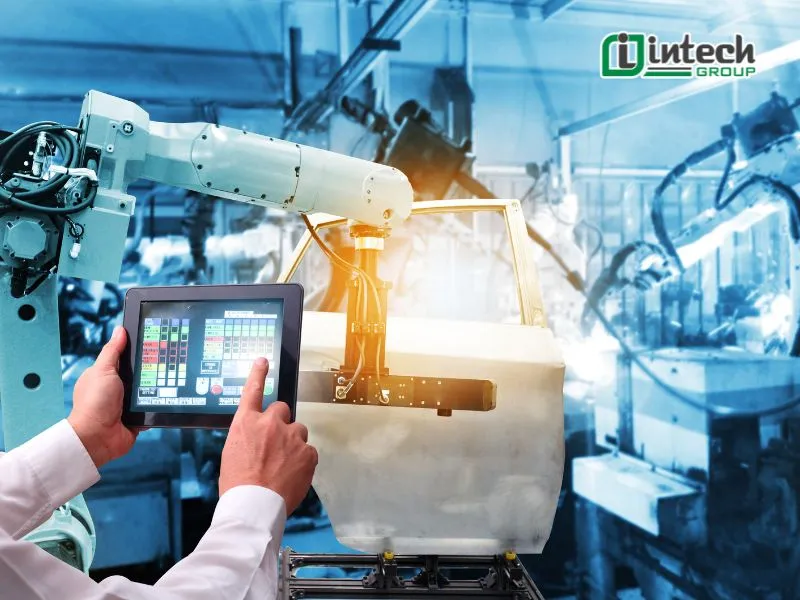
Specific applications of electronic production automation
Here are some specific applications of automation:
- Electronic product packaging automation
In the packaging process, the use of robots and automatic packaging machines helps to quickly and accurately process electronic products such as phones, microchips, sensors, etc.
This system undertakes operations such as sorting, labeling, shrink wrapping, packaging, etc. without human intervention. Packaging automation helps ensure that products are well protected, uniform in appearance, and at the same time increases the speed of production.
- Automation applications in electronic circuit board assembly
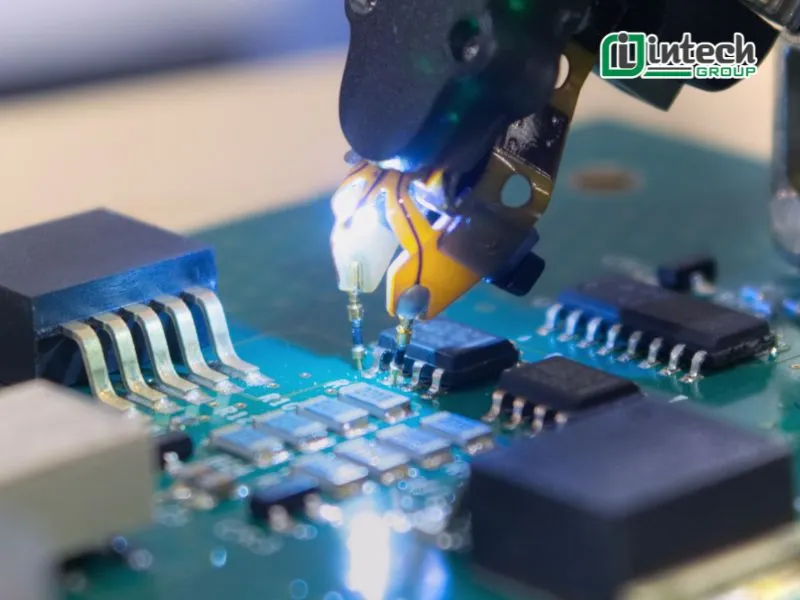
Electronic circuit boards (PCBs) are the "heart" of most electronic devices. The assembly process of components on the circuit board today is performed by Pick and Place machines, wave soldering machines, automatic soldering machines, etc.
These devices can operate with extremely high precision and speed compared to manual operations. Thanks to that, businesses can produce large quantities of circuit boards with consistent quality, reducing technical errors.
- Automating the quality inspection process of electronic products
The quality inspection of each component and finished electronic product is performed by automated systems such as automatic optical inspection (AOI), X-ray inspection (AXI), or functional testing systems (ICT).
These systems can detect soldering errors, wrong components, or circuit errors with high accuracy, contributing to ensuring that products meet quality standards before leaving the factory. Automating inspection helps businesses better control risks and reduce the rate of defective products.
- Automation of electronic component production
In the production of components such as resistors, capacitors, semiconductor chips, etc., modern production lines use presses, gluing machines, cutting machines and fully automatic CNC control systems.
Therefore, businesses can produce components with super small sizes, extremely high precision, and large output. This is a prerequisite to meet the needs of the electronic equipment market, which is growing rapidly and diversely.
How much does it cost to automate an electronics manufacturing line?
The cost of automating an electronics manufacturing line depends on many factors such as the scale of production, the level of automation, the type of equipment used, and the technical requirements of the product. Most automation costs can be broken down into four main categories: people, data, equipment, and robots.
- Human resources costs include the recruitment and training of employees who can understand and improve the automation.
- Data costs include the cost of software, technology, and platforms that monitor and analyze your data.
- Equipment costs include new machinery and industrial equipment that run your automation system.
- Robot costs include any industrial robots you incorporate into your automation process.
The initial investment in an automation system can be quite high due to the purchase of modern machinery, control software, sensors, industrial robots, and installation and programming costs. However, in the long run, this cost is offset by reducing labor costs, increasing productivity, reducing error rates and saving raw materials.
In addition, many businesses today choose partial automation solutions (semi-automation) to optimize investment costs while still ensuring production efficiency. To get the most detailed advice and quotation for the electronics industry automation line system, contact Intech Group immediately for the best support!
In addition, many businesses today choose partial automation solutions (semi-automation) to optimize investment costs while still ensuring production efficiency. To get the most detailed advice and quotation for the electronics industry automation line system, contact Intech Group immediately for the best support!
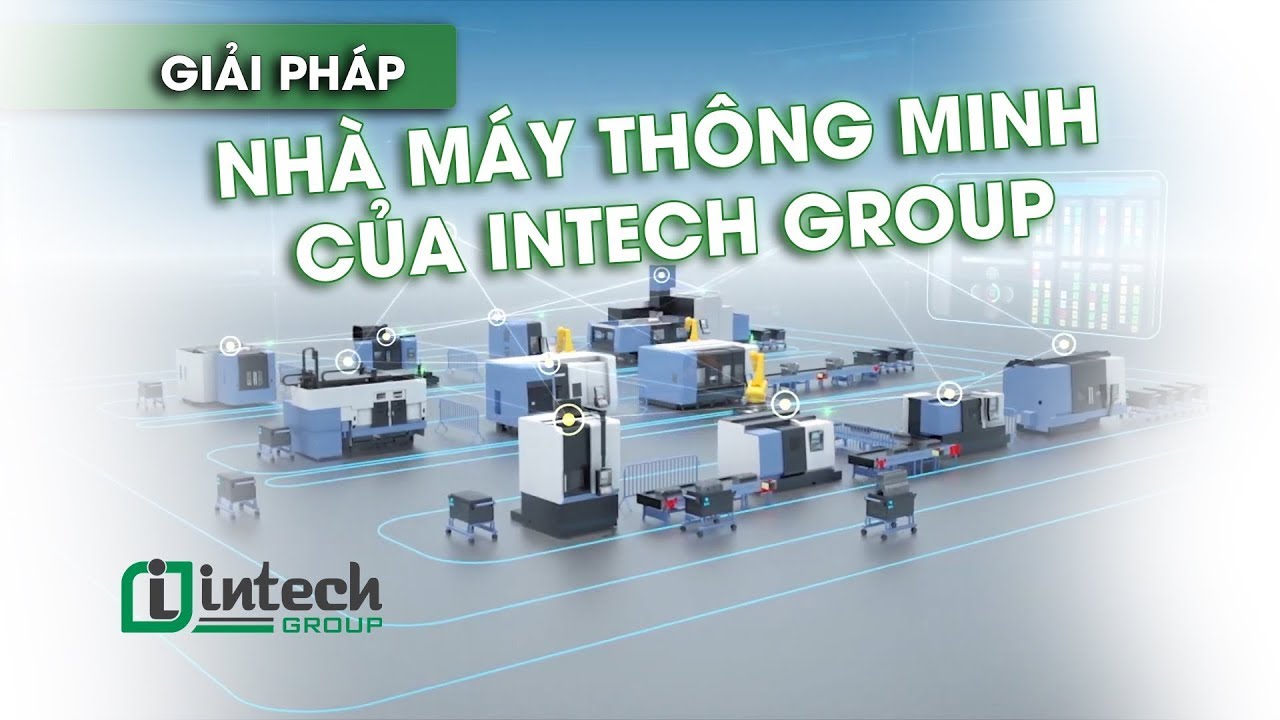
Electronics manufacturing automation solutions from Intech Group
Intech Group is proud to be a leading unit in the field of providing automation solutions, automation lines, accompanying customers on the journey of transforming modern and smart production.
Let's learn about some automation solutions in electronics manufacturing from Intech Group.
- Electronic circuit board assembly line
Intech Group provides electronic circuit board (PCB) assembly lines with a high level of automation, integrated with advanced technologies such as Pick & Place machines, reflow soldering machines, and automatic optical inspection (AOI) systems.
This line helps electronics businesses shorten assembly time, ensure the accuracy of every small detail, and significantly reduce the error rate in production. This solution is especially suitable for factories producing consumer electronics, telecommunications equipment, and industrial circuit boards.
- Electronic component assembly conveyor system
The conveyor system designed and manufactured by Intech Group is flexibly applied in the electronic component assembly stages. With the ability to customize according to the factory space and production process, the electronic component assembly conveyor not only seamlessly connects the stages but can also integrate sensors, sorting systems, collaborative robots, and inspection cameras.
This helps optimize product transmission speed, minimize waiting time, and improve the operating efficiency of the entire line.
- Electronic component assembly line
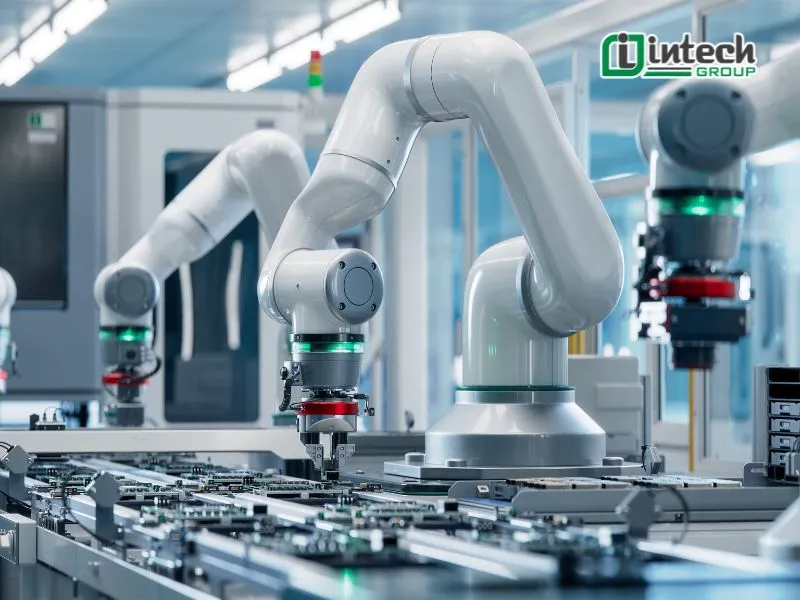
A complete electronic component assembly line includes semi-automatic or fully automatic workstations, specifically designed for each type of product.
These lines integrate robots, machine vision component positioning systems, and precision mechanical mechanisms, helping to perform operations such as assembly, screw tightening, inspection, and packaging accurately and quickly. This solution helps businesses optimize labor costs, while increasing product consistency and quality.
- AGV autonomous robots in transporting components:
AGV (Automated Guided Vehicles) robots are used to transport electronic components, circuit boards, and chips between areas in the factory, such as from the warehouse to the assembly line.
Intech Group's AGV robots are integrated with smart sensors, helping to transport electronic components with high precision, reducing internal logistics time by 30% in modern manufacturing plants.
- Automatic warehouse for storing electronic components:
Intech Group's smart warehouse system is designed to store and manage small electronic components such as chips, capacitors, integrating IoT and AI technology.
Intech Group's automatic warehouse helps manage electronic components according to the FIFO principle (first in, first out), reducing the time to search for components from 10 minutes to 1 minute in electronics manufacturing plants. This helps to optimize storage space, reduce errors and increase warehouse management efficiency.
Contact Intech Group to find the right electronics manufacturing automation solution
Intech Group provides comprehensive total solutions, from design consulting, system integration to after-sales operation and maintenance. We are committed to helping customers optimize investment costs, increase productivity, improve product quality, and ensure capital recovery within 3-5 years.
With practical experience and a team of highly specialized engineers, Intech Group always accompanies businesses on the journey of digital transformation and upgrading industrial production.
Contact Intech Group today for detailed advice and quotation:
- Hotline: 0966 966 032
- Address: Lot 6, Lai Xa Industrial Cluster, Tay Tuu Ward, Hanoi City
