


Automation in footwear production: The key to improving production capacity
10-08-2025 2.837
From an industry that relied heavily on manual labor and human skills, footwear manufacturing today is witnessing the rapid integration of automated systems, intelligent robots and advanced digital technology. Automation in footwear manufacturing is no longer just a passing trend but has become a vital factor for businesses that want to remain competitive in the global market.
Mục lục
Automation not only helps increase productivity and improve product quality, but also opens up unprecedented possibilities for creativity and innovation in the design, production and personalization of leather and footwear products.
What is automation in leather and footwear production?
Automation in leather and footwear production is the process of applying technology, equipment and automatic control systems (such as robots, sensors, CNC machines, management software, etc.) to footwear production stages to replace or support humans, thereby improving production efficiency, reducing costs and ensuring product quality.
Some characteristics of automation in leather and footwear production:
- Integrating modern machinery: such as automatic laser leather cutting machines, automatic sewing machines, smart conveyor systems, etc.
- Using production management software (MES/ERP): to monitor, analyze and optimize processes.
- Reduce dependence on manual labor: especially in repetitive stages such as cutting, sewing, gluing, packaging, etc.
- Increase product accuracy and uniformity.
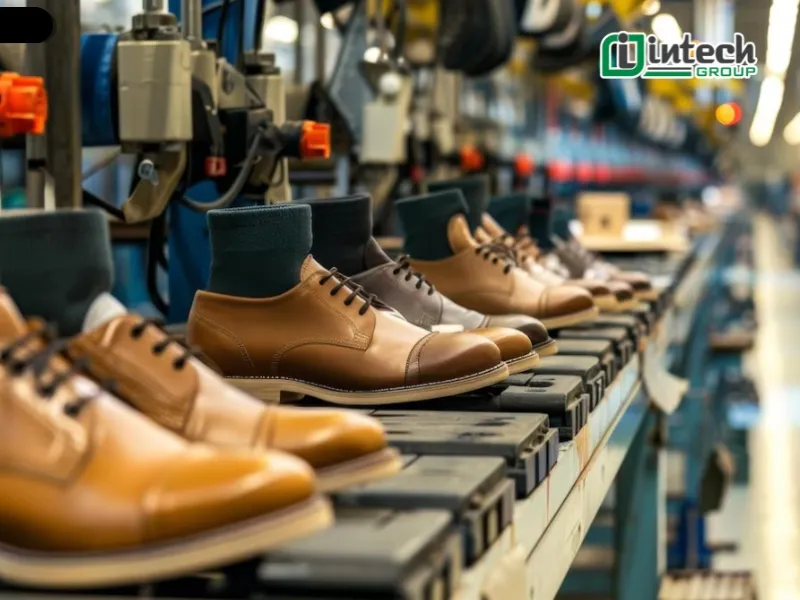
The importance of automation in leather and footwear production
In that context, automation is not only a trend but has become a key factor, bringing vital importance to the sustainable development of leather and footwear enterprises.
- Increase productivity and production efficiency
Applying automatic machinery systems such as CNC leather cutting machines, programmable sewing machines, smart conveyor belts, etc. allows production stages to take place quickly, accurately and continuously. This helps shorten production time, increase the number of products completed in the same period of time, thereby promptly meeting large and urgent orders of the market.
- Reduce labor and long-term operating costs
Although the initial investment costs for equipment and technology can be large, in the long run, automation helps businesses save significantly on personnel, training and operating costs. At the same time, stable and continuous operation of machinery also helps limit interruptions in production, minimizing costs arising from technical errors or work accidents.
- Improve product quality and uniformity
Thanks to the support of technology, stages such as cutting, sewing, gluing, checking... are performed with high precision, minimizing human errors. Thanks to that, leather and footwear products meet uniform quality standards, meeting the strict requirements of major export markets such as the EU, the US, Japan...
- Reduce waste of raw materials
Automatic leather cutting systems can be programmed to optimize the area of leather used, helping to reduce excess scrap. This not only helps save on raw material costs but also contributes to environmental protection and green production - a factor that is increasingly of interest to international customers and partners.
- Improving working conditions and labor safety
Heavy, dangerous or high-precision steps are replaced by machines, thereby reducing the risk of work accidents and creating a more professional, clean and safe working environment for workers.
Automation not only brings economic benefits but is also a decisive factor in improving the competitiveness of the footwear industry in the digital transformation period. Promoting automation will help Vietnamese footwear enterprises catch up with the development trends of the global industry, increase product value and affirm their position in the international market.
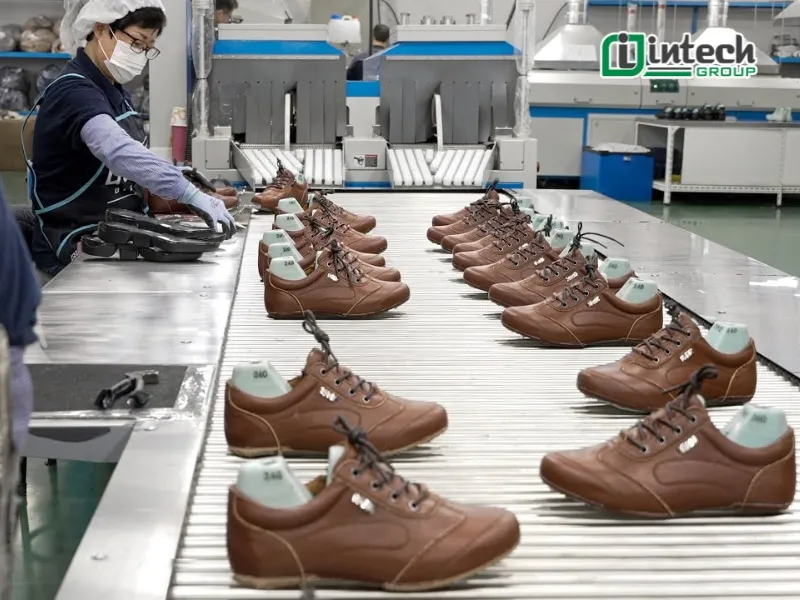
Automation Technologies in Footwear Manufacturing
Here are the popular automation technologies being applied in the footwear industry:
1. Computer-aided design (CAD) and computer-aided manufacturing (CAM) systems
CAD/CAM systems help the footwear industry transform from traditional design methods to modern digital methods with many outstanding advantages.
Specialized CAD software for the footwear industry such as Crispin, Romans CAD, Shoemaster and Delcam allow designers to create detailed 3D shoe models on the computer. These software provide tools to:
- Design complex shoe parts with high precision
- Create 3D shoe lasts and adjust dimensional parameters
- Simulate the flattening process of 3D surfaces into 2D cut patterns
- Optimize pattern arrangement on materials to minimize waste
CAM systems connect directly to CAD designs to convert designs into specific instructions for manufacturing machines. The outstanding advantages of CAD/CAM include:
- Reduce new product development time from months to weeks
- Increase accuracy in design and manufacturing
- Easily adjust and change designs when necessary
- Support storage and management of digital design libraries
In modern shoe factories, CAD/CAM systems have been integrated throughout, from initial design to final production, creating a seamless and efficient process.
2. Laser cutting machine and automatic cutting machine
Laser cutting machine and automatic cutting machine have been replacing traditional manual cutting methods, bringing outstanding efficiency and precision in leather and footwear production. This technology helps reduce production costs by 15-20% and significantly improve product quality.
Laser Cutting Machine
Laser cutting machines use CO2 or fiber laser technology to cut leather, fabric, and synthetic materials with super high precision. This technology has the following advantages:
- Cutting accuracy up to 0.1mm
- Fast cutting speed (can cut hundreds of parts per hour)
- Smooth cutting edge, no scorching
- Ability to cut complex shapes that cannot be done manually
- Automatically identify the optimal position on the material sheet to save materials
Automatic cutting machine
Modern automatic cutting machines such as oscillating knife cutting machines, hydraulic cutting machines, and CNC cutting machines are widely used in the leather and footwear industry with the following advantages:
- Camera system scans and identifies materials
- Nest software automatically optimizes the arrangement of details on the material sheet
- Ability to process multiple layers of material at the same time
- Integrated with CAD/CAM system to receive direct design data
- Automatic conveyor system for loading and recovering materials
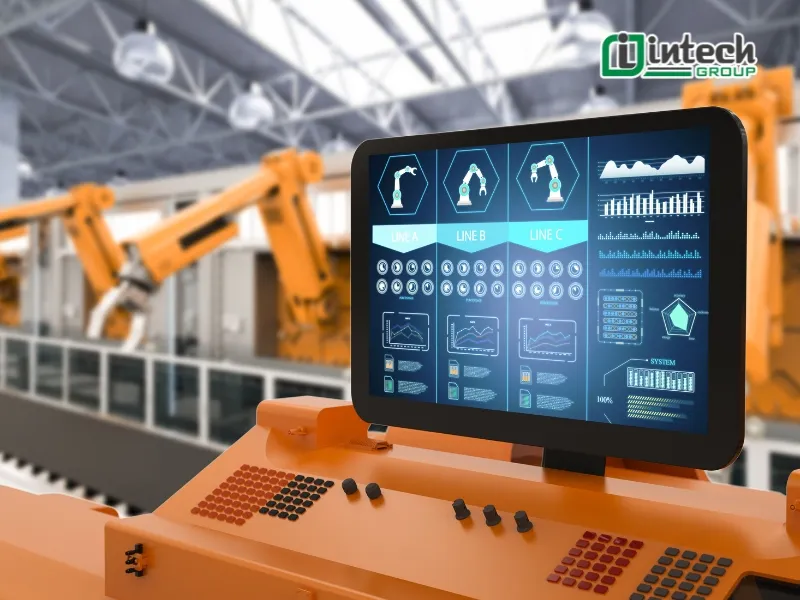
3. Automatic sewing system and sewing robot
The sewing stage in traditional shoe production requires a lot of highly skilled labor. However, with the development of technology, automatic sewing systems and sewing robots have been applied to increase productivity and ensure consistent quality. These systems help increase productivity by up to 30% compared to traditional manual sewing methods, while reducing the error rate to less than 1%.
Automated sewing systems
Modern automated sewing systems include:
- CNC sewing machines: Pre-programmed to perform complex seams according to CAD designs
- Sewing machines with automatic feeding systems: Automatically adjust the position of the material during the sewing process
- Laser marking systems: Precisely guide the sewing position for the tailor or automatic sewing machine
- Combined automated sewing stations: Integrate multiple automated sewing machines into a continuous line
Sewing robots
In recent years, sewing robots have been developed specifically for the footwear industry with the ability to:
- Handle soft and flexible materials such as leather and fabric
- Automatically adjust the tensile and tension of the material during the sewing process
- Perform complex 3D seams
- Automatically change sewing needles and sewing threads for different types of materials
4. Automated assembly lines
Automated assembly lines are an important step forward in footwear production, especially in the stages of sole attachment and final assembly - which are requires the most labor and time.
Automated sole attachment Systems
Modern automated sole attachment systems include:
- Automatic glue pumps: Precisely control the amount of glue used and the location of the glue injection
- Automatic hydraulic/pneumatic sole presses: Ensure uniform pressure across the entire sole
- Cooling and structural stabilization systems: Ensure a durable bond between the sole and the shoe body
- Sole assembly robots: Precisely position the shoe body and sole during assembly
Integrated assembly lines
Integrated assembly lines combine multiple processes into one continuous process:
- Smart conveyor systems: Transport products between workstations in real time
- Automated workstations: Perform individual processes such as toe pulling, heel shaping, and sole attachment
- Central control systems: Monitor and coordinate the entire assembly process
- RFID and barcode devices: Track each product in the production line
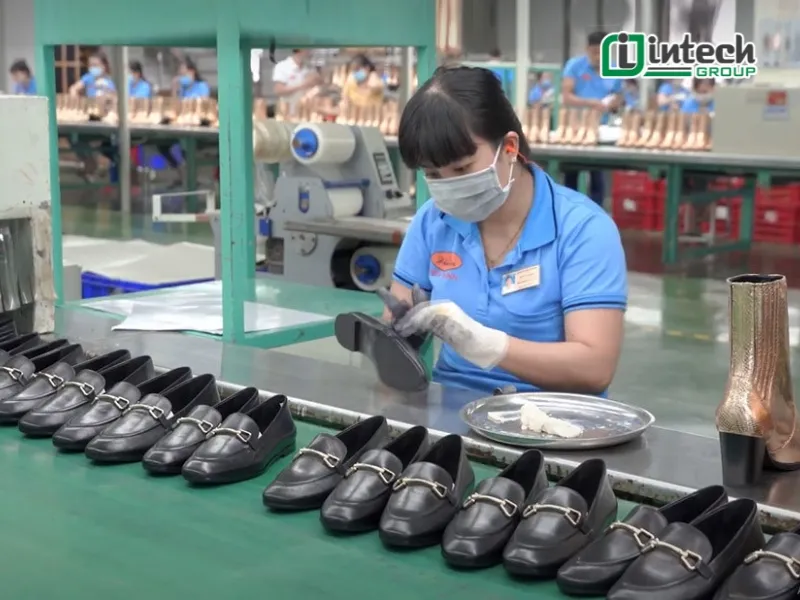
5. Automated quality control systems
Quality is key in the production of high-end footwear. Modern automated quality control systems help detect defects early and ensure that every product meets standards before leaving the factory. Automated quality control systems can detect defects with an accuracy of 0.1mm and process thousands of pairs of shoes per day. According to statistics, the application of these systems has helped reduce the rate of defective products to less than 0.5% and cut after-sales warranty costs by up to 30%.
Computer vision technology
Computer vision systems in footwear quality inspection include:
- High-resolution cameras and 3D sensors: Scan and capture detailed images of each part of the shoe
- AI image processing software: Analyze and compare with standard samples to detect deviations
- Automatic marking system: Mark defective locations for later processing
- 3D laser scanning technology: Check the size and spatial shape of the product
Physical inspection system
In addition to visual inspection, automated physical inspection systems are also applied:
- Tensile and bond strength tester: Evaluate the strength of seams and connections between parts
- Waterproof testing equipment: Ensure shoes meet waterproof standards
- Flexibility and bending tester: Evaluate the mechanical properties of shoes
- Sole abrasion testing system: Predict the service life of shoe soles
6. 3D printing technology in the production of shoe soles and accessories event
3D printing is revolutionizing the footwear industry, especially in the production of soles and accessories. It opens up design and manufacturing possibilities that were previously impossible with traditional methods. According to industry experts, by 2030, about 20-30% of high-end footwear products will use 3D printing technology in at least one part of the product.
3D printing in shoe sole manufacturing
3D printing technology is applied in shoe sole manufacturing with outstanding advantages:
- Ability to create complex structures: Create mesh structures, honeycombs, or variable shapes that cannot be molded by traditional methods
- Personal customization: Design shoe soles that fit the foot shape and walking style of each user
- Optimize weight distribution and elasticity: Adjust the hardness/softness in different areas of the shoe sole
- Material diversity: Use new materials such as TPU, nylon, and highly elastic polymers
3D printing in shoe accessories and details
In addition to shoe soles, 3D printing technology is also applied to produce shoe accessories and details:
- Customized shoe buckles and buckles
- 3D logos and decorative details
- Personalized anatomical insoles
- Functional details such as ventilation systems and mechanical support
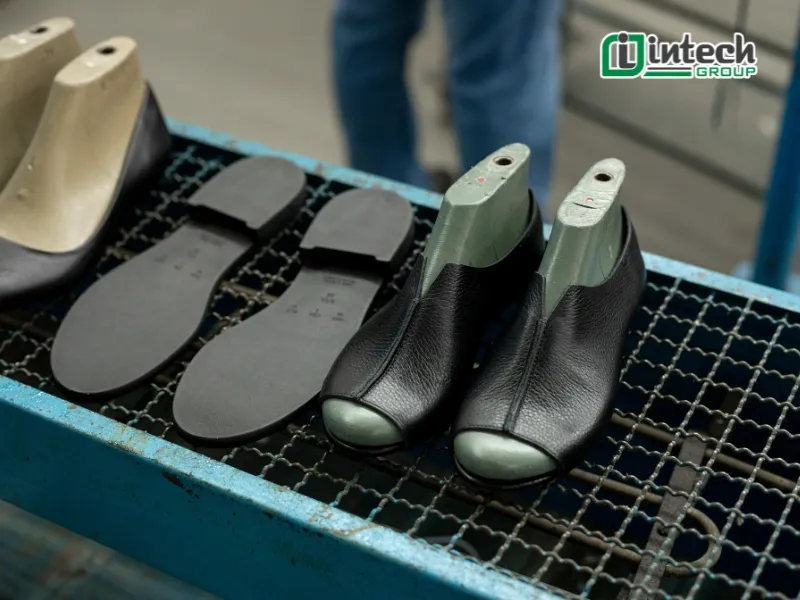
Actual application of automation in the Vietnamese footwear industry
According to the Vietnam Leather, Footwear and Handbag Association (Lefaso), despite facing many challenges in 2024, the Vietnamese footwear and handbag industry still recorded positive results with an estimated export turnover of 27.04 billion USD, an increase of 11.45% over the previous year. Of which, the footwear product group contributed 23.24 billion USD (up 13.16%), while the suitcase, handbag and briefcase group reached 3.8 billion USD (up 9.7%).
Currently, many large domestic enterprises have proactively invested in modern technology to automate the production process. A typical example is Viet A Chau Development Investment Joint Stock Company (HCMC), which has deployed a 3D scanning and printing system to serve the mold manufacturing stage. Thanks to that, the implementation time of this stage has been shortened to 10 days, while helping to significantly increase the delivery speed.
Another example is Thai Binh Shoes - a company that has equipped a series of modern equipment such as programming sewing machines, laser cutting machines, computerized embroidery machines, etc. to optimize production stages. This automation not only helps reduce costs and increase labor productivity, but also limits risks due to dependence on manual labor in key stages.
Industry experts say that the current labor productivity of domestic enterprises is only about 4-6 pairs/person/day, while foreign-invested enterprises have reached 16-18 pairs/person/day and are forecast to reach 20 pairs/person/day in the near future. This productivity gap is one of the factors that makes it difficult for domestic enterprises to compete with FDI enterprises, both in terms of export value and added value.
Looking to the future, automation in footwear production will not only stop at replacing manual labor but also aim to create a smart, flexible and sustainable manufacturing ecosystem. New technologies such as artificial intelligence, the Internet of Things and blockchain will continue to accelerate the transformation process, creating production models where the boundaries between the real and digital worlds are increasingly blurred.
However, besides the huge opportunities, footwear businesses also face significant challenges in terms of investment capital and high-quality human resources. To succeed in the digital age, footwear manufacturers need to have a long-term vision, appropriate investment strategies, and focus on training and developing human resources ready to master automation technology.
Only then can the footwear industry fully exploit the potential of automation, reaching new heights in productivity, quality and the ability to meet the increasing demands of global consumers.
