


Automation in pharmaceutical manufacturing
10-08-2025 329
The pharmaceutical industry is increasingly developing and subject to strict quality control, the application of modern technology in production becomes essential. Automation in pharmaceutical production not only helps improve production efficiency but also contributes to ensuring the safety, accuracy and uniformity of each pharmaceutical product.
Mục lục
This is an inevitable trend that helps pharmaceutical enterprises improve their competitiveness and meet strict international standards.
What is pharmaceutical automation?
Automation in pharmaceutical production is the process of applying automatic technologies and modern control systems to production, management and quality control stages in the pharmaceutical industry.
The goals of automation in this field are:
- Increase accuracy and consistency in drug production.
- Ensure hygiene and safety, avoid cross-contamination and human errors.
- Optimize processes, improve productivity and production efficiency.
- Meet the strict standards of pharmaceutical management organizations such as GMP (Good Manufacturing Practice), FDA (US Food and Drug Administration) ...
Automation can be deployed at many levels: from drug packaging production lines, raw material mixing systems, to traceability management software and real-time production data.
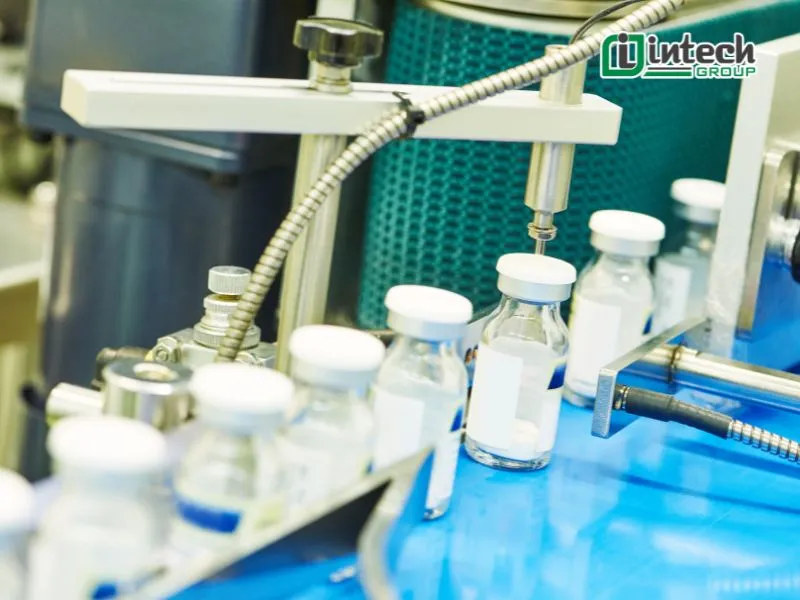
Practical applications of automation in pharmaceutical production
- Automating the production process
The stages in pharmaceutical production such as raw material mixing, packaging, labeling or product quality control can all be automated with modern equipment and lines. The use of automatic mixing machines helps ensure the exact ratio between ingredients, while limiting human intervention - a factor that can easily cause errors or contamination.
Automated packaging and labeling systems not only increase production speed but also ensure high synchronization and accuracy. In addition, quality control technology using cameras, sensors or AI can quickly detect defective products, helping to improve the safety and reliability of finished drugs.
- Warehouse and logistics management
In the pharmaceutical supply chain, warehouse management and transportation of raw materials and finished products always require precision and strict control. The application of automated transport robots (AGV) and smart warehouse management systems (WMS) helps optimize storage space, minimize loss and ensure that raw materials are supplied at the right time.
Digitalizing inventory data also helps businesses easily track the status of raw materials, expiration dates and make appropriate production plans.
- Controlling the production environment
A standard production environment is a vital factor in the pharmaceutical industry. Smart HVAC (Heating, Ventilation and Air Conditioning) systems are used to control temperature, humidity and air pressure in each production area, especially in clean rooms.
In addition, modern sensors are installed to continuously monitor indicators of cleanliness, fine dust and microorganisms in the air, thereby ensuring optimal and safe conditions for products throughout the production process.
- Traceability and production data
One of the major challenges in the pharmaceutical industry is the ability to trace product origin and control production data. Automation allows the integration of production management systems (MES) and enterprise resource planning systems (ERP) to collect, store and analyze data in real time.
Thanks to this, businesses can monitor the entire production process, from input materials to final products. This not only serves the purpose of inspection and auditing but is also a mandatory requirement to meet the regulations of domestic and international pharmaceutical regulatory agencies.
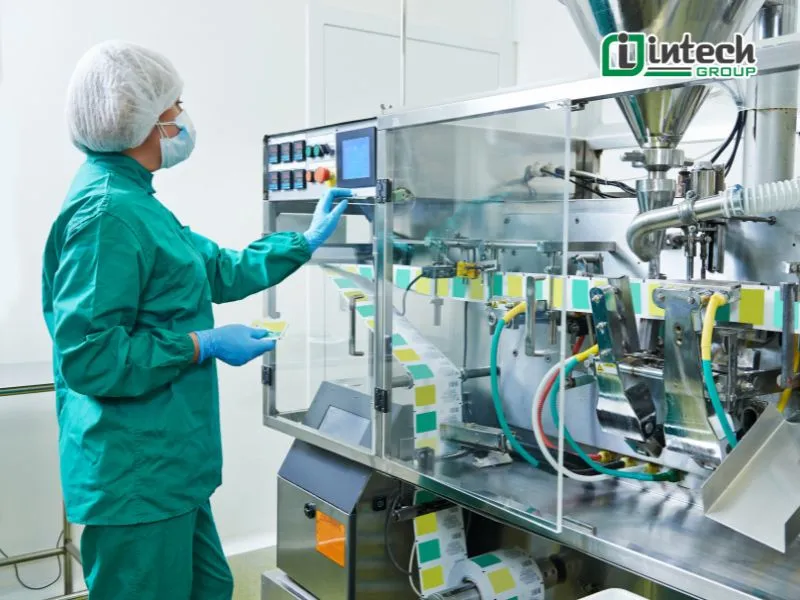
Benefits of applying automation in pharmaceutical production
Pharmaceutical manufacturing plants - where each product is directly related to human health and life - precision, safety and efficiency are non-negotiable factors.
Therefore, applying automation in pharmaceutical production is not only a trend, but also an essential need to improve quality, meet international standards and optimize business operations. The benefits that automation brings to the pharmaceutical industry are very clear and comprehensive.
- Automation helps increase productivity and production efficiency
Replacing manual steps with machines and intelligent control systems helps to significantly increase production speed, while reducing machine downtime and operating costs. The automated production line is capable of continuous operation with high stability, minimizing errors and wasting raw materials.
- Automation ensures product accuracy and consistency
In pharmaceutical production, even a small deviation in dosage, ingredients or environmental conditions can seriously affect product quality. Automatic mixing, packaging and inspection systems ensure that each pill and each batch meets strict standards, thereby building trust with customers and meeting strict inspection requirements such as GMP, WHO, FDA...
- Minimize human errors and increase safety
Automation limits direct human intervention in error-prone or high-risk areas. This is especially important in areas where injectables, antibiotics, or sensitive pharmaceuticals are produced. Monitoring and early warning systems also help detect abnormalities in the production process in a timely manner for quick handling.
- Long-term cost savings and improved competitiveness
Although the initial investment cost may be high, in the long run, automation helps businesses save on human resources, reduce operating costs, material loss, and repair costs due to manufacturing errors. Optimizing the entire process also helps businesses be more flexible in adjusting output, quickly responding to market demand.
- Automation supports data management and product traceability
Integrated software systems such as ERP or MES help store all production data in real time, from input materials to finished products. This not only serves internal management but is also a mandatory requirement for product inspection, testing and traceability when incidents occur.
Automation in pharmaceutical production is opening a new step forward for the industry - where speed, quality and safety are always top priorities. Although there are challenges in implementation and investment, the long-term benefits it brings are undeniable. Leading the automation trend is a solid foundation for the pharmaceutical industry to develop sustainably, effectively and deeply integrate into the global supply chain.
