


Details of popular types of industrial production today
08-07-2025 291
Choosing the right type of industrial production is a key factor in helping businesses optimize productivity and costs. Depending on product characteristics and market demand, businesses can apply mass production, production to order, or single-piece production models. Each form has its own advantages and disadvantages, requiring reasonable investment in production lines, technology, and management to achieve optimal efficiency.
Mục lục
Join us to learn in detail about the types of industrial production and how to choose the right type for your business through the article below.
What is the definition of production type?
Production type is the way to organize and carry out the process of producing goods or services in a business, factory, or production facility. Each type of production is determined based on key factors such as: production scale, product characteristics, process repetition frequency, and level of automation.
In other words, the type of production reflects the way businesses choose to optimize resources, technology, and processes to create products with the most optimal cost, time, and quality.
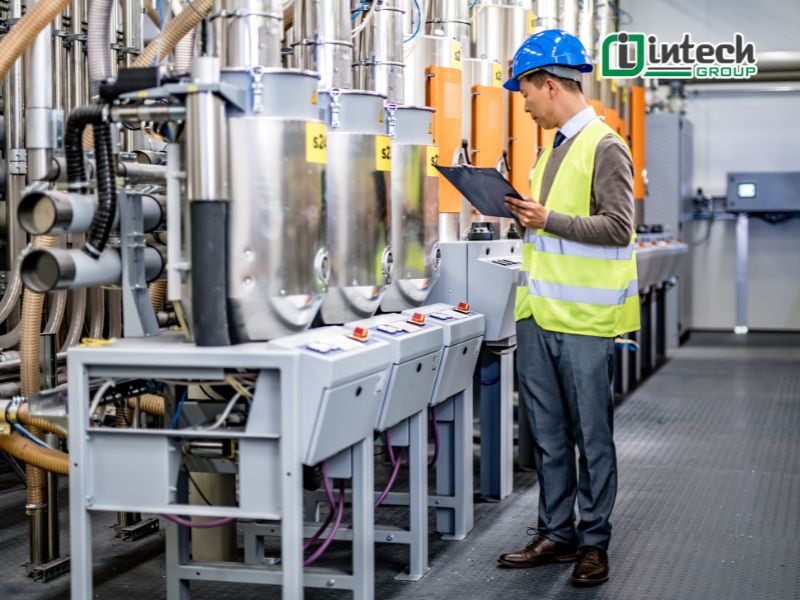
Popular types of industrial production today
Production types are divided mainly based on production volume, order nature, and process repetition. Some of the most common production models include: mass production, single-piece production, project-based production (Make to Order) and mass production (Mass Production).
1. Mass Production
Mass production is a type familiar to industries such as automobiles, electronics, food, etc. The characteristic of this model is the production of a very large number of identical products over a long period of time, often lasting many years.
Outstanding features:
- The production process is standardized and highly automated, mainly carried out on a continuous line.
- Each machine or stage only undertakes one fixed operation, helping to increase efficiency and production speed.
- The product has high uniformity, ensuring similar quality between batches.
- Requires a large initial investment capital to set up a system of specialized machinery, lines and equipment.
- Workers need to have stable expertise and be familiar with each specific stage.
Main disadvantages:
- Low flexibility, almost impossible to adjust product designs in the short term.
- High inventory risk if market demand changes suddenly.
- When there is a machine breakdown, the entire chain is easily interrupted, greatly affecting delivery progress.
- This model is not suitable for products that require personalization or have low production quantities.
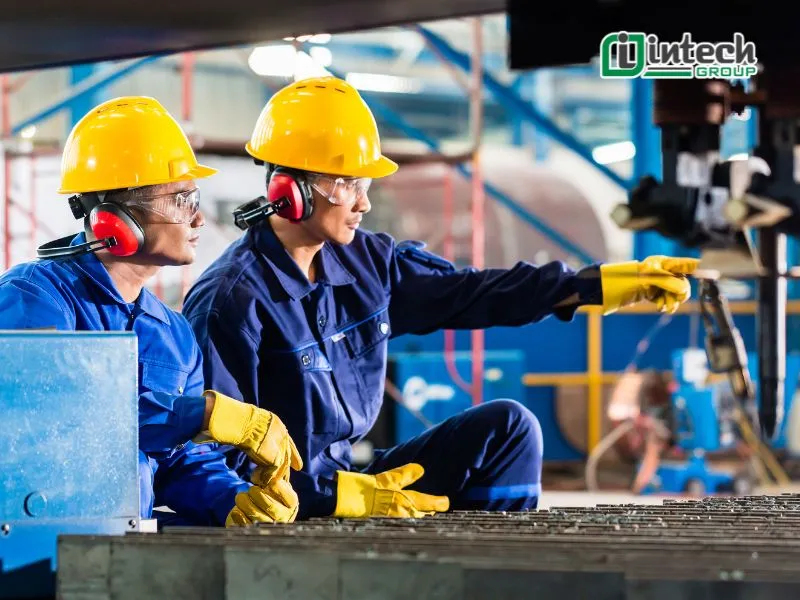
2. Job Production
Job Production is the optimal choice for special products, unique or with separate technical requirements. This type of production is suitable for small orders, usually products according to customer requirements.
Outstanding features:
- Each product is a separate project, with a different design and production process.
- There is no repetition or if there is, the quantity is extremely limited.
- The production process often focuses on manual skills or flexible multi-purpose machines, without the need for a fixed assembly line.
- High requirements for labor skills and experience of the production team.
- Extremely good product customization ability, easy to adjust to new requirements from customers.
Main limitations:
- Production costs per unit of product are often much higher than mass production models.
- The production process is long, delivery time is longer due to lack of repetition and standardization.
- Due to the specific characteristics of production, businesses need to invest a lot of time in the design and production planning stages.
- Requires many specific tools, materials or equipment for each individual product.
3. Project-based / on-demand manufacturing (Make to Order - MTO)
Project-based manufacturing, also known as Make to Order, is a manufacturing model that is only implemented after a business receives a specific order from a customer. Instead of producing ready-made products for sale, the business only starts the manufacturing process when there are clear requirements for design, quantity and technical specifications from the customer.
Outstanding features:
- Each product is designed and manufactured to order, is highly personalized and often does not repeat the process for other orders.
- The manufacturing process is organized as an independent project, with the goal of ensuring on-time delivery and meeting technical standards.
- Requires the ability to manage progress and coordinate resources closely to limit waiting time and minimize interruptions between production stages.
- The manufacturing organization structure requires high flexibility due to the constantly changing requirements between different projects.
- Labor resources are often rotated according to each phase of the project. When the project is completed, human resources and equipment can be coordinated to the next order or project.
Limitations to note:
- Production times are often longer than mass production models due to having to go through separate design, planning and implementation stages.
- Businesses face great pressure to ensure resources (raw materials, labor, machinery) are always ready for new orders.
- Instability in the number of orders and production schedules can cause revenue to fluctuate from phase to phase.
- If not managed well, the risk of delays and budget overruns for each project is very high.
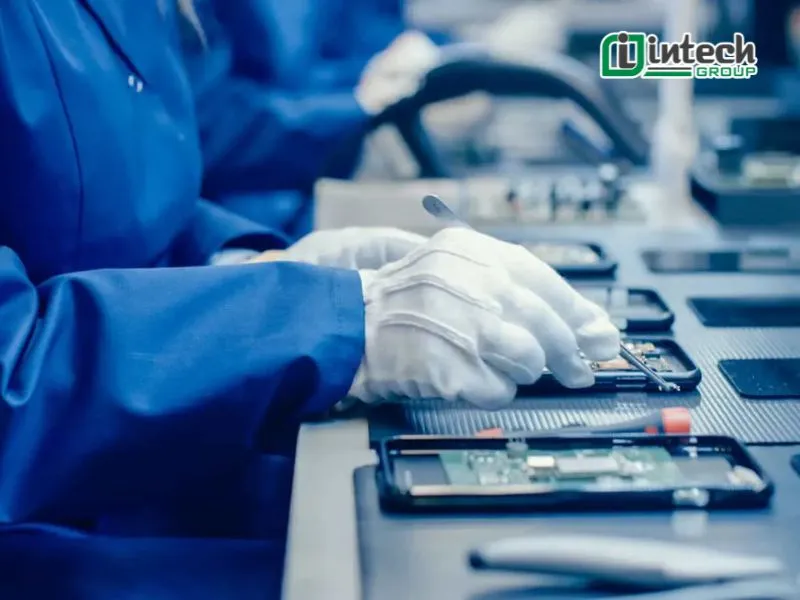
4. Make to Stock (MTS)
Make to Stock is a traditional production strategy, widely applied in many consumer industries such as food, apparel, electronics, etc. With this model, businesses produce goods based on market demand forecasts, then store goods in warehouses to be ready to supply as soon as customers request.
Outstanding features:
- The production process is organized stably, mass production in large quantities to optimize costs per unit of product.
- Fast delivery time because products are always available in stock.
- Minimize the risk of losing orders due to not being able to meet customers' immediate needs.
- Manufacturers regularly monitor, analyze and update market demand forecasts to plan appropriate production.
- This model is especially effective for products with high standardization and stable consumption demand in cycles.
Potential Disadvantages:
- Highly dependent on the accuracy of demand forecasts. If the forecast is incorrect, it can easily lead to large inventories, causing financial waste, storage costs and the risk of obsolete goods.
- In industries with rapid product change such as technology, fashion, etc., production for storage can increase the risk of unsold goods that are no longer suitable for market tastes.
- The cost of maintaining warehouses, preserving and controlling inventory can become a burden for businesses, especially during periods of strong market fluctuations.
How to choose the right type of production for your business
Choosing the right type of production is one of the most important strategic decisions for any business in the industrial manufacturing sector. Choosing the right model not only affects costs and productivity, but also determines the competitiveness and sustainable development of the business in the market.
Clearly define product characteristics and market demand
The first factor that businesses need to consider is product characteristics. Is your product a standard product, produced in large quantities or a custom-made, personalized product?
- If the business produces products with stable demand, large volume, and little change in design such as packaged foods, electronic components, etc., then mass production (Mass Production) or production for storage (Make to Stock) will be the appropriate choice.
- On the contrary, if the product is specific, designed according to the specific requirements of each customer such as specialized mechanical equipment, custom-made furniture, etc., then single-piece production (Job Production) or project-based production (Make to Order) will be the optimal solution.
Analyze the available resources of the business
An indispensable factor is the ability to invest capital, human resources, and machinery and equipment systems.
- For large-scale production, businesses need large investment capital for automated production lines, warehouses, and professional operating teams.
- In contrast, flexible production models such as MTO or Job Production require a highly skilled, experienced workforce with good adaptability to change.
Evaluating internal capacity will help businesses choose a model that is suitable for actual implementation.
Consider forecasting and order management capabilities
Each type of production requires different levels of forecasting and order management.
- Businesses with good market forecasting systems and stable sales data should prioritize Make to Stock to reduce production costs.
- On the contrary, if the market is volatile, difficult to predict or the product has a short life cycle, the Make to Order model will help businesses reduce inventory risks and optimize working capital.
Assess the level of flexibility needed in production
When the market changes rapidly, businesses need to consider the flexibility factor in the production process.
- Industries with large fluctuations in product designs and constantly changing customer needs should choose flexible production models such as Job Production or MTO.
- On the contrary, if the product changes little and is produced according to fixed standards, the Mass Production model is still an effective cost-saving solution.
Consider long-term strategy and automation trends
Finally, the choice of production type also needs to be based on the long-term development strategy of the business.
- If the business is oriented to expand scale, reduce labor costs and increase productivity, investing in automation and mass production lines is a necessary step.
- For small businesses or startups, being flexible with orders to control financial risks is a safer strategy.
Understanding the characteristics and advantages and disadvantages of industrial production types helps businesses choose the model that suits their business goals and existing production capacity. Whether mass production, single-piece or custom-made, each form requires reasonable investment in technology, automation lines and operational management. Businesses need to regularly evaluate and adjust production strategies to optimize costs, improve product quality and keep up with market trends.
