


Discover the 10 steps in the standard bread making process
17-08-2025 952
The standard bread production process requires meticulousness and experience from the baker to ensure the final product is always of stable quality, meeting the taste of consumers.
Mục lục
Bread is a familiar dish in the daily life of many people, but few people know that to make a delicious loaf of bread, it must go through a strict and meticulous production process. From choosing ingredients to stages such as mixing dough, fermenting, shaping and baking, each step plays an important role in creating a complete product. Let's explore the 10 steps in the bread production process with Intech to better understand how loaves of bread are born through the article below.
Standard bread production process
The steps in the bread production process include:
Step 1: Prepare ingredients and tools for making bread
Having everything ready before starting helps the bread production process go more smoothly. Thanks to that, you are always ready for the next stage. To make bread, you will need the following ingredients and supplies:
- Ingredients: flour, yeast, salt and water
- A large bowl
- A mug or cup
- A scale (digital, preferably one that can measure to the nearest gram)
- A cloth/plastic wrap/beeswax towel/another bowl of the same size or larger to cover the dough
- A baking tray/bread pan
- A sharp knife or blade (also known as a baker's blade/lame)
- Oven gloves
- Oven (preheated to 220°C, gas mark 8, 425°F, with a sturdy baking tray or baking stone on a rack, as bread, even in a pan, benefits from a hot surface)
- A cooling rack
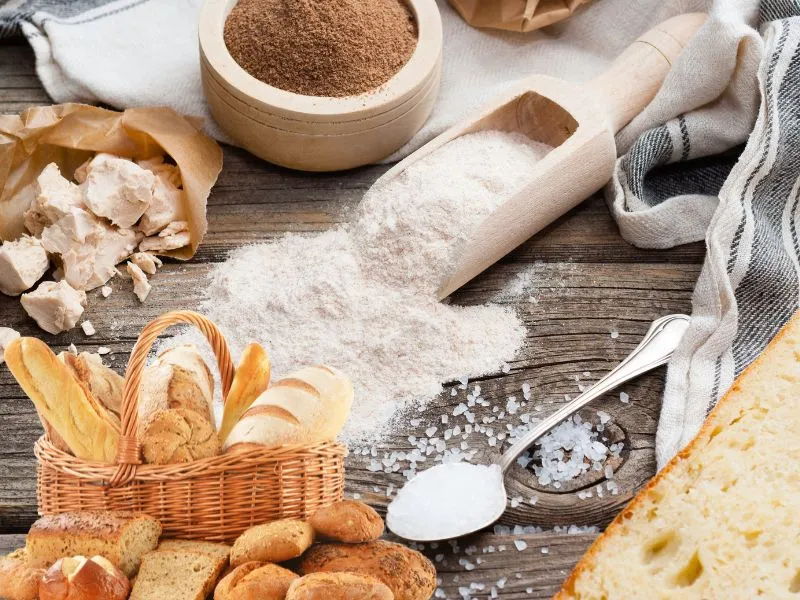
Once you get into bread making, you may want to invest in some other supplies, such as:
- A plastic scraper, for scraping dough out of the bowl and cutting dough
- A proofing basket/storage basket dough
- Temperature gauge to check the internal temperature of the finished loaf
- Oven thermometer
- Flour sprinkler
- Dutch oven
- Bread bag
Step 2: Measure the ingredients
Bread baking doesn't need to be as precise as baking cakes, so you can relax a little bit here. When you're new to bread baking, start with a basic recipe and practice. The recipe below is for a simple white bread.
- 5-10g per 500g of flour: Salt is usually 1-2% of the weight of the flour, which is about 5-10g per 500g of flour. Salt is important for flavour, tightening the gluten structure, slowing down fermentation and giving the crust colour, but you can reduce it to 1% of the flour weight if you like.
- 2g dry yeast or about 5g fresh yeast per 500g flour: Reducing the amount of yeast you use will slow down the fermentation process, which can help improve the overall flavor and texture of your loaf.
Note: Salt can kill yeast, so try to keep them separate. Add one ingredient and mix it into the flour before adding the other and mixing again.
Step 3: Mix the dough
It's important to remember that different flours absorb water differently. Start with less water than you need, then add more gradually until you get the dough right.
For example, for a plain white bread, you'll usually add 320-340g of water to 500g of strong white flour.
Step 4: Knead the dough
Once the dough is mixed, the next step is to knead the dough. This is what makes the dough elastic and stretchable. This will create a dough full of air holes, making the bread light and fluffy.
Once the dough has reached the right consistency, you can cover it with a towel, large plastic bag, or plastic wrap and let it rest for 10 minutes to an hour. After the resting time, the dough will be smoother and more elastic.

Step 5: Divide the dough
Once the dough has risen and developed gluten, the next step is to divide the dough. If you are making multiple loaves or different sized loaves, you will need to divide the dough into moderate portions. Dividing the dough makes the rising and baking process easier, and also helps the loaves to have a uniform and beautiful shape after baking.
Step 6: Shape
Once you have divided the dough, you will proceed to shape each portion of the dough. Shaping the dough will help the loaf to have the desired shape and create a beautiful crust. You can shape the bread in traditional styles such as baguettes, round breads, or loaves, depending on the type of bread you want to make. At this point, you need to be gentle so as not to break the air bubbles in the dough, which will help the bread have a light and spongy texture after baking.
Step 7: Wait for the bread to rise
After shaping, you need to let the dough rest and rise again. This is an important step so that the bread can rise evenly when baked. The second rise time can last from 30 minutes to an hour, depending on the temperature and humidity of the environment. During this stage, the dough will continue to ferment and develop, creating small air bubbles that make the loaf softer and smoother.
Step 8: Heat and prepare the oven
Once the bread has reached the desired size, you need to prepare the oven. Before putting the bread in the oven, preheat the oven to about 220°C (428°F). The oven needs to be preheated to ensure a stable temperature when the cake is put in the oven, helping the cake to rise well and have a crispy crust. If you have a baking stone or baking tray, place it in the oven before heating to create even heat.
Step 9: Bake the cake
Once the oven has reached the required temperature, you put the bread in to bake. Baking time usually ranges from 25 to 40 minutes, depending on the size and type of bread. You can check if the bread is done by tapping the surface of the bread; if the sound resonates, the bread is done. In addition, the crust should be a nice golden brown and crispy.
Step 10: Cool and package
Once the bread is done, take it out of the oven and let it cool on a cooling rack. Cooling helps prevent the bread from absorbing moisture from the inside out, keeping the crust crispy and the texture inside. Once the bread has completely cooled, you can package and store it in a bag to keep it fresh for a long time.
Thus, from preparing the ingredients to the final finishing steps, the bread making process not only requires patience but also meticulousness to achieve delicious loaves of bread.
Important Notes in the bread making process
When carrying out the bread making process, there are a number of important factors that need to be noted to ensure the quality and efficiency of the product. In particular, the preservation of raw materials and the selection of suitable equipment are two key factors that directly affect the final result.
- Proper preservation of raw materials
Proper preservation of raw materials is extremely important in the bread making process. Ingredients such as flour, yeast, salt, water and other ingredients need to be stored in suitable conditions to ensure quality and stability during the baking process.
- Flour: Flour should be stored in a dry, cool place and away from direct sunlight. This helps the flour to not become moldy and retain its freshness. Flour should be stored in a sealed package or a covered container to prevent insects from entering and affecting the quality.
- Yeast: Yeast is one of the most important factors in bread making. Dry yeast should be stored at room temperature in a sealed container to avoid exposure to moisture and air. Fresh yeast should be stored in the refrigerator and used within the shortest possible time, as fresh yeast is susceptible to spoilage and loss of fermentation ability.
- Salt and other additives: Salt should also be stored in a dry place, away from moisture. Additives such as sugar, cornstarch, and cooking oil should be stored in sealed containers to keep them from becoming contaminated with moisture or spoiling.
Good storage of ingredients not only helps maintain the quality of bread but also helps minimize food safety risks, bringing confidence to consumers.
Choosing the right equipment for the bread production process
The equipment used in the bread production process plays an important role in ensuring the efficiency and productivity of baking. Choosing the right equipment will help increase production speed, reduce costs, and improve product quality.
- Dough mixer: This is an important equipment in the bread making process, helping to mix the ingredients evenly and develop gluten in the dough. The dough mixer should be able to adjust the mixing speed to suit different types of dough and different baking recipes. A quality mixer will save time and effort compared to manual mixing.
- Oven: The oven is an indispensable equipment in the bread making process. The oven needs to be heated evenly and have the ability to maintain a stable temperature throughout the baking process to ensure the bread is evenly cooked, crispy crust and spongy inside. A good oven not only helps the product achieve high quality but also helps save energy during the baking process.
- Dough sheeter: The dough sheeter helps save time and labor when rolling out the dough. This machine is very useful when making bread with special shapes, helping the dough to be rolled out evenly and more beautifully. Using the dough sheeter also helps maintain the quality of the dough, avoiding damaging the gluten structure in the dough.
- Temperature and humidity monitoring equipment: An important factor in the bread production process is the temperature and humidity in the oven and the dough proofing environment. Therefore, using a temperature and humidity measuring device will help to accurately control these factors, ensuring that the dough is proofed properly and the baked bread has stable quality.

Optimize the bread production process with a modern production line
A bread production line is a system of machinery and equipment designed to automate and optimize the bread making process, from the preparation of raw materials to the packaging of the final product. Using a production line helps increase productivity, ensure consistent product quality and minimize human intervention.
Main components of a bread production line:
- Dough mixer: Mixes dry and wet ingredients to form a uniform dough.
- Dough kneader: Kneads the dough to develop gluten, creating elasticity and texture for the bread.
- Dough divider: Divides large dough into small, equal parts.
- Shaping machine: Shapes dough parts as required (round, long, rolled...).
- Proofer: Creates a suitable temperature and humidity environment for dough fermentation.
- Oven: Bakes cakes at specified temperature and time.
- Conveyor: Transports cakes through different stages.
- Cooling machine: Cools the bread after baking.
- Packing machine: Packs the bread into packaging.
In addition, using production management software also helps monitor and optimize the operation of the line, track performance, and manage raw materials effectively. Optimizing the production line not only helps increase productivity but also improves product quality, meeting market demand quickly and effectively.
Hopefully the above article has helped you better understand the bread production process. Through learning about the 10 steps in the bread production process, we can see that this is an elaborate process, requiring meticulousness and precision from the first stages until the bread is baked. Each step in the process contributes to creating loaves of bread that are not only delicious but also ensure quality. Understanding the bread production process helps you apply it in practice and choose the right equipment.
