


Dishwashing Liquid Production Line: What You Need to Know
12-08-2025 1.053
Dishwashing liquid is an essential household cleaning product for cleaning in the kitchen. The demand for cleaning products is increasing, the dishwashing liquid production line has also become an advanced technological solution, helping businesses improve product efficiency and quality.
Mục lục
With the development of science and technology, modern production lines not only optimize the production process but also ensure safety for users and are environmentally friendly.
What is a dishwashing liquid production line?
A dishwashing liquid production line is a system of machinery and equipment that operates continuously and automatically to optimize the dishwashing liquid production process.
This system includes steps from mixing raw materials, bottling, capping, labeling, to quality control and product distribution. The main goal of this line is to increase productivity, save costs and ensure consistent product quality.
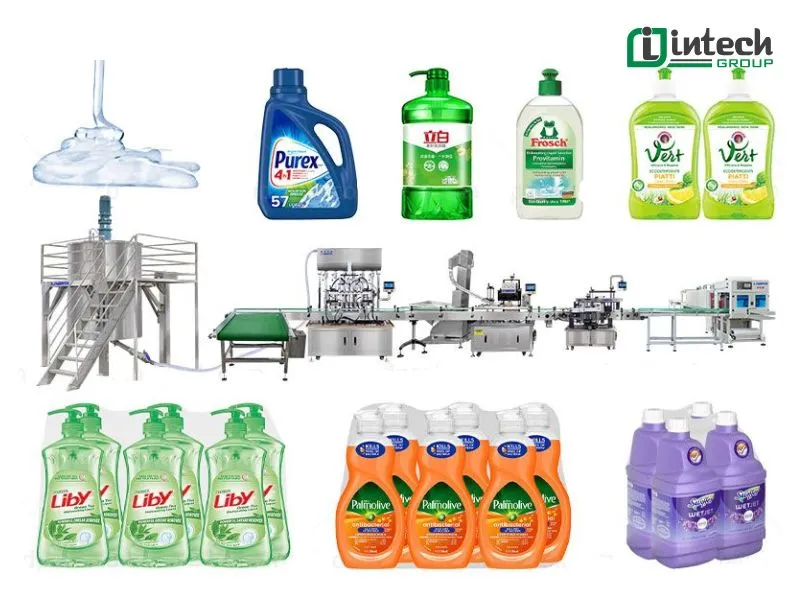
Basic components in a dishwashing liquid production line
Below is a detailed description of the basic components in a dishwashing liquid production line.
- Common Dishwashing Liquid Formula Ingredients
Dishwashing liquid formulas combine different ingredients to serve various functions, such as cleaning, degreasing, foaming, and maintaining consistency. The following table shows an overview of the ingredients and their functions, common options, and addition rates in a typical dishwashing liquid formula:
| Ingredients | Function | Common Options | Addition Rate, % w/t |
| Anionic Surfactants | Main Detergents | Sodium Lauryl Sulfate (SLS) Sodium Laureth Sulfate (SLES) Linear Alkyl Benzene Sulphonic Acid (LABSA) Alpha Olefin Sulphonate (AOS) | 10-15% |
| Non-Ionic Surfactants | Additional Cleaning, Degreasing, and Foaming | Alcohol Ethoxylates (AEO) Cocamide DEA (CDEA) | 1-5% |
| Amphoteric Surfactants | Gentle Cleaning and Foaming | Cocamidopropyl Betaine (CAPB) Cocamidopropylamine Oxide (HIGH) | 1-5% |
| PH Adjusters and Buffers | Maintain Optimal pH | Sodium Hydroxide Citric Acid | 0.5-2% |
| Degreasers | Enhanced Grease Removal | Ethanol | 1-5% |
| Preservatives | Inhibits Bacterial Growth | Parabens Methylisothiazolinone (MIT) Methylchloroisothiazolinone (MCI) | 0.1-0.5% |
| Fragrance and Colorants | Aesthetic Appeal | Synthetic Fragrances Essential Oils Dyestuffs | 0.1-2% |
| Thickeners and Rheology Modifiers | Viscosity Adjusters | Sodium Chloride (Salt) Hydroxypropyl Methylcellulose (HPMC) | 0.5-2% |
- Ingredients Required for a Basic Dishwashing Liquid Formula
The following four core ingredients make up form the foundation of a functional dishwashing liquid formulation, ensuring the cleaning, foaming and overall performance of the product. While other ingredients such as thickeners, preservatives and fragrances can enhance the usability and appeal of the product, primary and secondary surfactants, pH adjusters and water are necessary to achieve a minimum level of cleaning effectiveness.
- Primary Surfactant (Anionic Surfactant): Anionic surfactants, such as Sodium Lauryl Sulfate (SLS) or Linear Alkylbenzene Sulfonate (LABSA), provide the primary cleaning power in dishwashing liquids, helping to break down and remove dirt and grease from dishes.
- Secondary Surfactant (Amphoteric or Non-Ionic Surfactant): Secondary surfactants, such as Cocamidopropyl Betaine (CAPB) or Alcohol Ethoxylate (AEO), contribute additional cleaning and foaming properties. These surfactants also help stabilize foam and improve the mildness of the formula.
- pH Adjuster: Sodium Hydroxide or Citric Acid is important for maintaining the optimal pH level (usually between 7 and 8) of the dishwashing liquid. The appropriate pH ensures that cleaning performance is maximized, while also improving the compatibility of the product with the user's skin.
- Water: Water is an important ingredient in dishwashing liquid, as it acts as a solvent and carrier for other ingredients. The water content in dishwashing liquid typically ranges from 65% to 90%. Water helps dilute and distribute the surfactant, pH adjuster, and any additional additives throughout the liquid, making it easier to apply and clean dishes.
How a Dishwashing Liquid Production Line Works
A dishwashing liquid production line plays an important role in optimizing the production process, ensuring quality, and meeting the growing demands of the market. This process usually includes the following basic steps:
Step 1: Prepare raw materials
Raw materials for producing dishwashing liquid include cleaning chemicals, foaming agents, disinfectants and other additives. Raw materials are weighed and tested to ensure the correct ratio according to the formula.
Step 2: Mix and dissolve raw materials
After preparation, raw materials are transferred to mixing tanks equipped with automatic stirring systems. The mixing process takes place under strictly controlled temperature and time to ensure that the raw materials are completely mixed.
Step 3: Filling the product
After the raw material mixture has been mixed, it will be transferred to the automatic filling machine. The filling machine is designed to ensure the exact capacity for each product bottle.
Step 4: Cap and label
After being fully filled, the dishwashing liquid bottles will be transferred to the capping area. The automatic capping system ensures that the bottles are tightly sealed to avoid leakage. The product bottles are then transferred to the automatic labeling machine for final appearance.
Step 5: Inspection and packaging
Before being fully packaged, the dishwashing liquid products will undergo a strict quality inspection to ensure that there are no errors in capacity, packaging or labels. After inspection, the products will be packed and shipped to the warehouse for storage or delivery.
Basic machines in the dishwashing liquid production line
Here is a list of basic machines in the dishwashing liquid production line
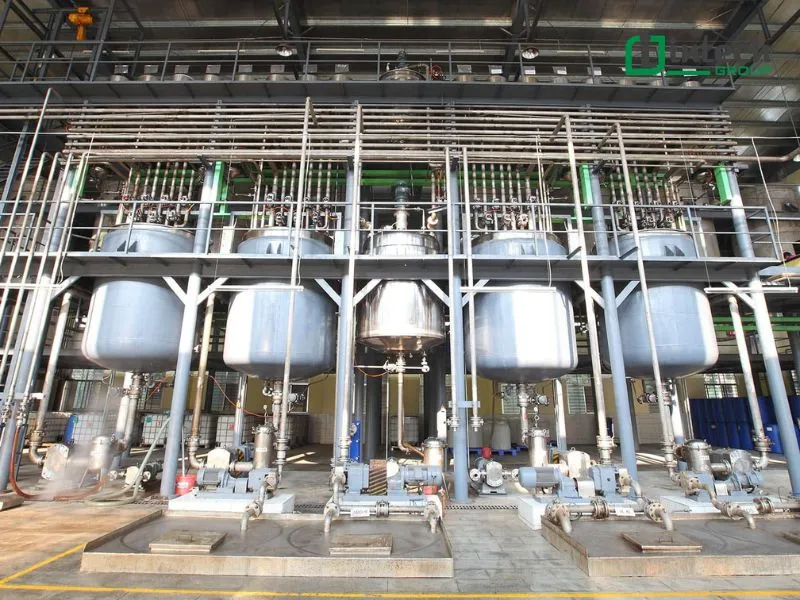
- Raw material mixer
The raw material mixer plays an important role in the initial stage of the product manufacturing process. This equipment helps to stir chemicals, foaming agents and other additives to form a homogeneous mixture. The machine is usually equipped with an automatic stirring system, which helps save time and increase efficiency.
- Filling machine
After the raw material mixture is mixed evenly, the filling machine will ensure that the solution is filled into each bottle with the correct capacity. This system helps to minimize material loss and increase product uniformity.
- Capping and labeling system
After being filled, the bottles will be transferred to the automatic capping system. This device ensures that each bottle is tightly sealed, helping to prevent solution leakage. Then, the automatic labeling machine will proceed to label the product information, increase aesthetics and help customers identify the brand.
- Quality control process
The quality control process plays an important role in ensuring that the product meets the standards before being packaged and distributed. This stage includes checking the capacity, color, scent and packaging condition. Unqualified batches will be rejected or reprocessed.
Summary
In general, the dishwashing liquid production line plays an important role in meeting market demand and enhancing the competitive position of the enterprise. Investing in modern technology not only helps optimize production but also affirms the commitment to sustainable development, bringing consumers quality and safe products.
