


Explore the automatic cooking oil production line
11-08-2025 322
Thanks to the application of advanced technology, the cooking oil production line is increasingly optimized, helping to ensure quality, food safety and meet consumer needs.
Mục lục
Main raw materials in the cooking oil production line
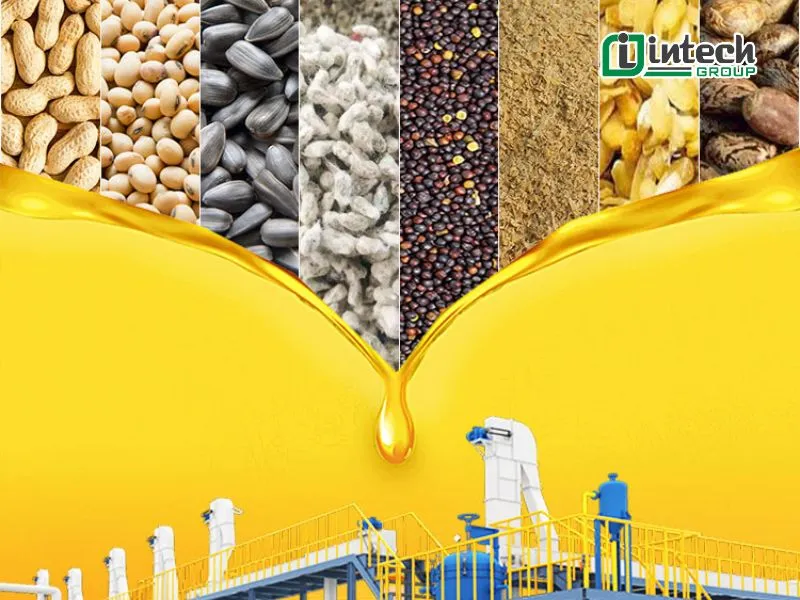
The main raw materials for cooking oil production include high-oil seeds such as soybeans, sunflower seeds, rapeseeds, palm kernels, olives and corn kernels. Each type of seed is carefully selected to ensure the best quality and meet food safety standards.
The harvesting and processing of raw materials play an important role in ensuring the extraction efficiency and quality of crude oil.
Popular cooking oils today include:
- Soybean oil: Rich in beneficial fats, helps prevent aging, protects the heart, strengthens the immune system and is good for the eyes and skin.
- Almond oil: Helps prevent high blood pressure, reduces the risk of atherosclerosis, stroke, suitable for salads.
- Avocado oil: Contains Magnesium and Potassium, supports memory, reduces stress, suitable for frying, salads and skin care.
- Canola oil: Anti-aging, obesity, immune-boosting, good for the heart and beautifying the skin.
- Coconut oil: Supports beauty, anti-aging, but contains a lot of saturated fat so should be used sparingly.
- Seed oil: Extracted from nuts such as walnuts, pumpkin, good for the heart but expensive, not popular.
- Flaxseed & wheat oil: Rich in omega 3, 6, helps improve heart health, reduces arthritis, suitable for salads and dipping sauces.
Process in the cooking oil production line
The cooking oil production process includes many different stages to ensure the final product is of high quality, safe and meets consumer needs.
- Harvesting and processing raw materials
Harvesting raw materials:
- The main raw materials include: soybeans, sunflower seeds, rapeseeds, palm kernels, olives, corn kernels...
- Harvest when the seeds are ripe, the oil content reaches the maximum level.
- Harvesting method: manual or mechanized.
Cleaning and screening:
- Remove impurities such as soil, rocks, branches, leaves, damaged seeds.
- Use vibrating screen, fan and magnet systems.
- Classify seeds by size.
Drying:
- Reduce moisture below 10%.
- Method: sun drying or industrial drying.
- Raw material processing
After cleaning, raw materials will be put into preliminary processing such as drying or crushing to increase oil pressing efficiency. With some types of seeds, people can use steaming or roasting methods to soften, making the oil pressing process more effective.
- Oil pressing and extraction
There are two main methods to extract oil from raw materials:
- Mechanical pressing: Using a screw press or hydraulic press to separate oil from raw materials.
- Solvent extraction: Using solvents such as hexane to dissolve oil from raw materials. This method is often applied on an industrial scale because it helps to obtain more oil.
- Crude oil refining
After pressing or extracting, the oil still contains many impurities such as residue, protein, phospholipids and other compounds. Therefore, crude oil will undergo a filtration process to remove these impurities.
- Oil refining
Unrefined crude oil is often dark in color, has a strong odor and contains some undesirable impurities. The refining process helps the oil meet food safety standards. The steps in this stage include:
- Degumming: Remove phospholipids that cause oil turbidity with hot water or acid.
- Neutralization: Remove free fatty acids with alkaline solution to avoid making the oil sour.
- Decolorization: Adsorb unwanted pigments with activated carbon or clay.
- Deodorization: Use distillation to remove compounds that cause unpleasant odors.
- Oil blending
- Combine different oils to achieve desired properties
- Adjust fatty acid composition, smoke point and stability
- Supplementation
- Vitamins: add vitamins A, D, E to increase nutritional value
- Antioxidants: BHT, BHA, TBHQ or vitamin E to increase shelf life
- Emulsifiers: lecithin to increase stability
- Packaging and storage
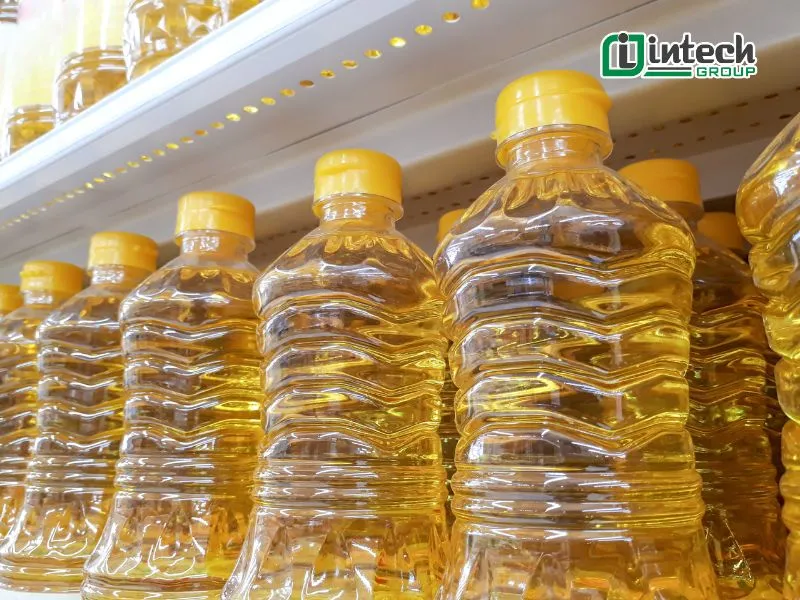
After refining, the edible oil is quality tested before packaging. Edible oil can be packaged in plastic bottles, glass bottles or large cans depending on usage needs. Edible oil storage must be carried out in suitable conditions to avoid oxidation and quality loss.
- Quality control
Before being put on the market, edible oil must undergo strict quality testing according to food safety standards such as purity, color, taste, fatty acid content and oxidation stability.
The production of edible oil is a complex process with many different stages, from harvesting raw materials, extracting crude oil, refining, to packaging and distribution. Each step in the process plays an important role in ensuring the quality and safety of the final product. Edible oil manufacturers are always innovating and applying new technology to improve production efficiency, reduce environmental impact and meet the increasing demand of consumers for quality and safe products.
Machinery in the edible oil production line
- Raw material cleaning and processing machines
- Impurity separator: Removes impurities such as sand, gravel, seed shells and unwanted objects from raw materials.
- Raw material dryer: Helps reduce the moisture content of oil seeds to increase extraction efficiency.
- Seed crusher or mill: Crushes or mills raw materials to increase the contact area, making the oil pressing process more efficient.
- Oil press
- Screw press: Uses mechanical pressure to separate oil from raw materials.
- Hydraulic press: Uses strong compression force to press oil from seeds with high oil content.
- Cold press: Used to press oil at low temperature, helping to retain more nutrients.
Preliminary oil press is often applied in large-scale edible oil factories. The preliminary oil press can extract about 70% of the oil in the oilseed. Then the preliminary press cake is sent to the solvent extraction plant. This oil press is suitable for oilseeds with oil content above 20%, such as sunflower seeds, peanuts, rapeseeds, flaxseeds, etc. It has a capacity of 10 to 200 tons per day.
- Solvent Oil Extractor
The solvent extraction process of edible oil is an important component of large-scale edible oil production, especially effective for maximizing oil yield from various oilseeds and pre-crushing cakes.
By using advanced solvent extraction, evaporation and separation systems, oil mills can efficiently produce high-quality crude oil and valuable by-products, ensuring economic and operational efficiency. It is especially beneficial in large-scale edible oil production, where efficiency, productivity and cost-effectiveness are important.
- Oil Extractor: Use solvents (usually hexane) to dissolve oil from raw materials.
- Solvent evaporator: Removes solvent from oil after extraction.
- Solvent recovery system: Reuse solvent to save costs and ensure environmental safety.
- Crude oil refinery
- Plate filter or frame filter: Removes coarse residue and impurities in oil.
- Centrifuge filter: Uses centrifugal force to separate smaller impurities.
- Oil refinery
The edible oil refinery is the final part of the edible oil production line, playing an important role in removing impurities and improving the quality of crude oil. Oil refineries include degumming, deacidification, decolorization, deodorization, wax separation and fractionation.
- Degumming equipment: Removes phospholipids that cause oil turbidity.
- Neutralization equipment: Uses alkaline solution to remove free fatty acids.
- Oil decolorization machine: Uses activated carbon or clay to adsorb unwanted pigments.
- Deodorizing equipment: Using distillation to remove compounds that cause unpleasant odors.
- Packaging and preservation machine
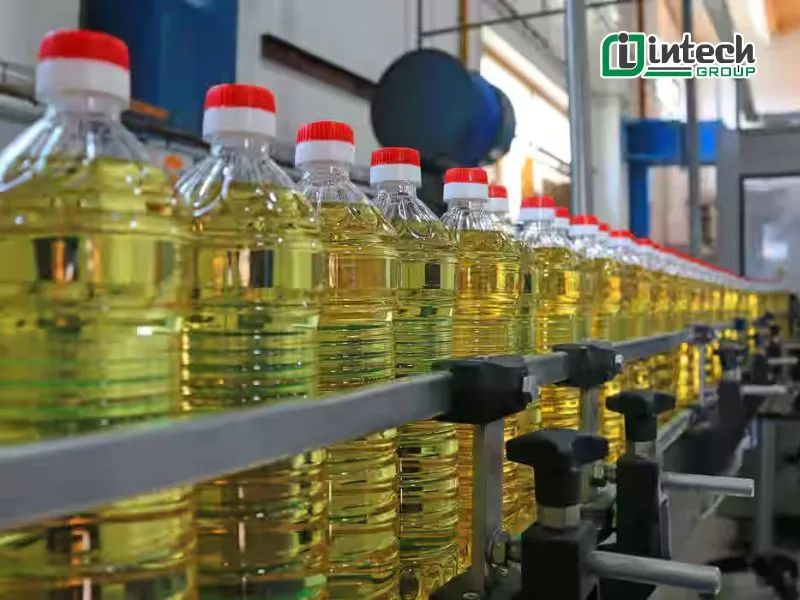
- Oil filling machine: The filling machine will measure and fill oil into bottles or packaging.
- Capping machine: Ensures that the oil bottle is sealed tightly to avoid leakage.
- Labeling machine: Labeling products helps trace the origin and necessary information.
- Preservation system: Includes oil tanks and cold storage to preserve oil before distribution.
Thanks to the application of advanced technology, the cooking oil production line is increasingly optimized, helping to ensure quality, food safety and meet consumer needs. Understanding this process not only helps consumers choose good products but also raises awareness of food safety in daily life.
