


Explore the cosmetic production line from A to Z
14-08-2025 403
With the constant development of the beauty industry market, owning a modern cosmetic production line that meets international standards such as CGMP or ISO 22716 is a vital factor that helps businesses compete and affirm their brand.
Mục lục
What is the concept of cosmetic production line?
Cosmetic production line is a system of organization and operation of equipment, machinery and production processes designed to produce cosmetic products efficiently, consistently and with standard quality.
This line includes the following main stages:
- Preparing raw materials: Receiving, checking and processing raw materials to ensure quality.
- Mixing and combining raw materials: Using specialized mixers to combine cosmetic ingredients such as emulsifiers, moisturizers, fragrances, etc.
- Filling and packaging: Filling cosmetics into packaging (bottles, tubes, jars) with the correct dosage, then packaging the finished product.
- Quality control: Ensuring that the product meets safety, effectiveness and aesthetic standards before being released to the market.
Cosmetic production lines not only ensure consistency in each product but also help optimize performance, save costs and meet hygiene and safety standards such as CGMP, ISO 22716. This is an important factor to help businesses improve product quality and build brand reputation.
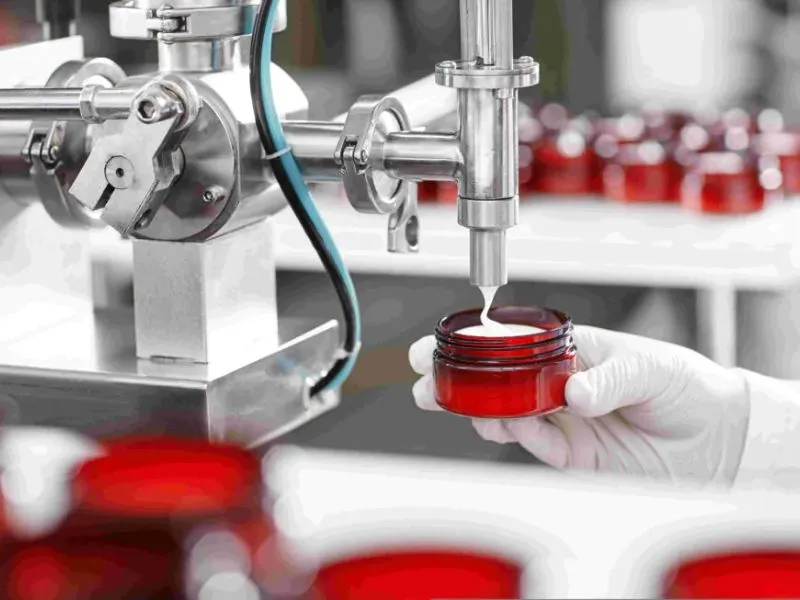
Main machines in a cosmetic production line
In a cosmetic production line, there are three main types of machines that play the most important roles including: raw material mixers, filling and packaging machines, and product quality control systems.
- Raw material mixer
The raw material mixer is the heart of the cosmetic production line. The machine is used to mix raw materials such as water, oil, emulsifiers and special active ingredients. Mixing evenly not only helps the product achieve consistent quality but also ensures the stability of cosmetics over a long period of time.
- Highlights: Modern mixers are often equipped with heating and cooling systems, which help control the temperature during the mixing process. This is very important for sensitive products such as creams or serums.
- Applications: The mixer is suitable for a wide range of cosmetics, from lotions, thick creams to skin care gels.
- Filling and packaging machines
The filling and packaging machine is the last but no less important step in the production line. The machine performs the filling of cosmetics into bottles, tubes, or jars with precise dosages. Then, the machine packages the product, creating complete packaging and ready to be put on the market.
- Highlights: Modern machines can integrate many steps, such as labeling, sealing or printing expiry dates, helping to save time and labor costs.
- Advantages: The filling machine ensures that the process is fast, accurate and meets high hygiene standards, avoiding product leakage or contamination.
- Product quality control system
To ensure that cosmetic products meet standards before being released to the market, a quality control system is an indispensable device. This system checks factors such as the consistency, viscosity, color, scent and pH of the product. In addition, the machine also detects packaging errors such as loose lids or incorrect label placement.
- Modern technology: Some control systems use artificial intelligence (AI) and optical sensors to ensure high accuracy.
- Important role: The system helps detect production errors early, thereby minimizing risks, saving costs and protecting brand reputation.
The machinery in the cosmetic production line not only improves efficiency but also ensures product quality meets standards. Raw material mixers, filling and packaging machines, and quality control systems are three core devices, helping to create perfect cosmetic products, meeting the increasing demands of the market.
Investing in modern machinery and choosing a reputable supplier will be the deciding factor for the success of businesses in the cosmetics industry.
What standards must cosmetic production lines comply with?
Currently, meeting standards for cosmetic factories is one of the top priorities of businesses in the industry. To be allowed to produce and bring products to the market, factories not only need to meet CGMP standards but also have to go through a rigorous inspection process to receive ISO 9001 and ISO 22716 certification.
- CGMP Standards
CGMP, short for "Cosmetic Good Manufacturing Practices," is a system of regulations on good cosmetic manufacturing practices. Factories that meet CGMP standards must comply with requirements on production conditions and processes, to ensure safe and quality products for consumers.
In Vietnam, cosmetic factories are inspected and certified by the Drug Administration of Vietnam - Ministry of Health to comply with CGMP principles, based on the provisions of Circular 06/2011/TT-BYT. This standard not only focuses on product quality control but also covers other factors such as:
- Facilities and factory design.
- Human resources and professional qualifications.
- Machinery and equipment for production.
- Hygiene in the production process and working environment.
- CGMP compliance not only enhances product reliability but also contributes to creating a competitive advantage for businesses.
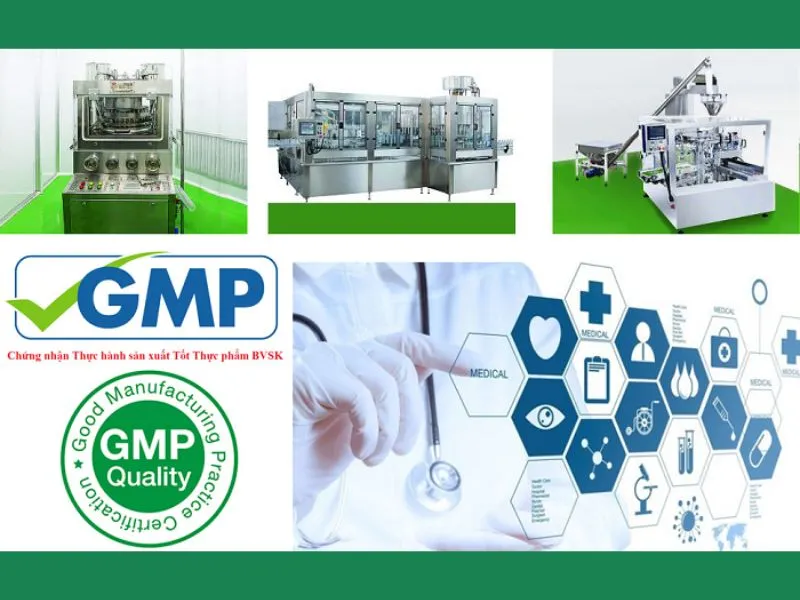
- ISO 22716 Standard
ISO 22716 is an international standard on good manufacturing practices (GMP) specifically for the cosmetics industry. This standard, with the full name "Cosmetics – Good Manufacturing Practices (GMP) – Guidelines on Good Manufacturing Practices," provides detailed instructions to ensure product safety and quality throughout the manufacturing process.
To achieve ISO 22716 certification, cosmetic factories must fully meet the requirements on production processes, safety management and quality control. Compliance with this standard not only helps businesses build an effective production system but is also a way to enhance brand reputation in the international market.
Achieving CGMP and ISO 22716 standards not only helps cosmetic manufacturing businesses ensure quality and safety for consumers but also creates a great competitive advantage in the industry. This is a clear demonstration of the company's commitment to providing the best products while meeting strict requirements from regulatory agencies and the market.
Tips for choosing the right machinery for a cosmetics production line
- Understand your production needs
Before choosing any equipment, it is important to clearly identify the specific requirements of the production process.
- Consider the type of cosmetic products you want to produce, such as creams, serums or lotions.
- Evaluate factors such as product viscosity, raw material compatibility and production volume. There are many units that provide consulting and design services on demand, ensuring that the selected machinery is perfectly suited to your production needs.
- Prioritize hygiene and safety standards
Hygiene and safety are top factors in cosmetics production because the products come into direct contact with the skin.
- Choose equipment that is manufactured to high hygiene standards.
- Prioritize materials such as AISI 316L stainless steel, known for its durability, ease of cleaning and prevention of cross-contamination.
- Flexibility and line expansion
Choose equipment that is flexible and adaptable to changing production needs.
- Make sure that the machine can handle a wide range of cosmetic formulations, from light lotions to thick creams.
- Choose equipment that is scalable to accommodate increased production volumes. Solutions such as agitators and emulsifiers, which are both flexible and easily scalable, can meet a wide range of production needs.
- Advanced mixing technology
The quality of cosmetics depends largely on the mixing process.
- Effective mixing helps ingredients to be evenly mixed, ensuring consistent product quality.
- Advanced emulsification technology enhances the efficiency of mixing ingredients.
- Reliable support and maintenance services
Choosing a supplier that guarantees excellent technical support and maintenance services is an important factor in maintaining long-term efficiency.
- Regular maintenance helps prolong the life of machinery and ensure stable performance.
- Timely technical support helps minimize downtime and keep production running smoothly.
Building a standard cosmetic production line is not only the foundation for ensuring product quality but also the key for businesses to build a reputation in the market. Investing in technology, processes and complying with international standards helps optimize production, save costs and meet the increasing expectations of consumers.
