


Explore the industrial yogurt production process
16-08-2025 903
The yogurt production process is a complex process, requiring strict control of temperature, time and other factors. Each stage plays an important role in creating quality yogurt products, ensuring food safety and hygiene and meeting consumer needs.
Mục lục
Yogurt is not only a nutritious food but also a favorite choice of many people thanks to its delicious taste and health benefits. To create perfect yogurt jars, the yogurt production process plays an important role in ensuring food quality and safety. From raw material selection, fermentation, to packaging, each step is carried out under strict control, bringing standard products to consumers.
Overview of the current yogurt market
The Vietnamese yogurt industry has been growing strongly in recent years, with many positive prospects in 2024. According to forecasts, the market will reach a revenue of 0.86 billion USD in 2024, with a compound annual growth rate (CAGR) of 7.59% in the period 2024-2029.
Yogurt consumption in Vietnam is also expected to reach 385.50 million kg by 2029, with a growth rate of about 5.8% in 2025. On average, each Vietnamese person can consume 3.2 kg of yogurt and contribute revenue of 8.62 USD/person in 2024.
Not only limited to the domestic market, Vietnamese yogurt products are also targeting the international market. In particular, China, with its large population and increasing demand for dairy products, is an attractive destination. It is forecasted that by 2029, the revenue of the yogurt industry in this country can exceed 73 million USD, opening up many opportunities for manufacturers, including Vietnam.
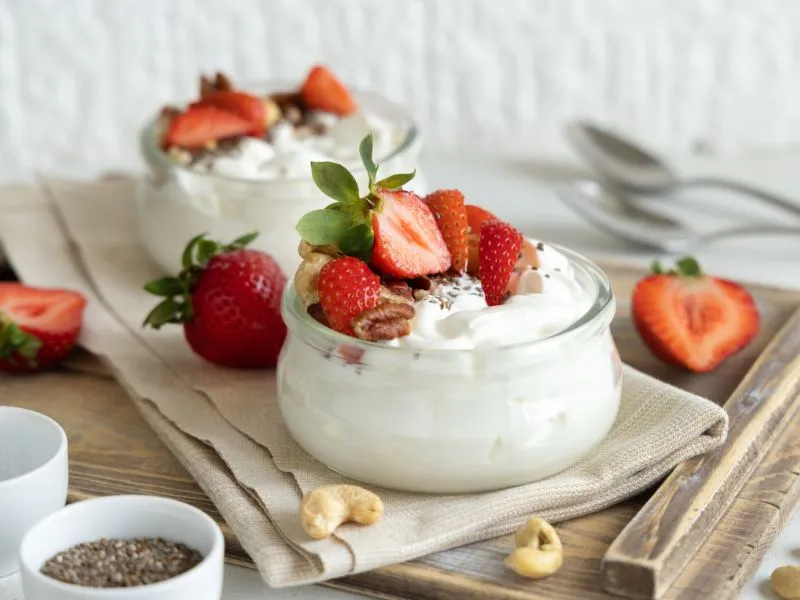
What ingredients is yogurt made from?
Yogurt is made from fresh milk or dissolved milk powder, combined with fermented bacterial strains, mainly lactic acid bacteria. In the yogurt production process, milk plays the role of the main ingredient, providing nutrients such as protein, lactose, lipids, minerals and vitamins, while fermenting bacteria convert lactose in milk into lactic acid, creating the characteristic sour taste and thick texture of yogurt.
- Milk - Main ingredient of yogurt
Milk is a nutritious food with the ability to provide essential nutrients that are easily absorbed. The main ingredients include protein, lactose, lipids, and minerals, and also contain all the necessary vitamins, enzymes and trace elements.
Protein in milk provides balanced amino acids, while high levels of calcium and phosphorus support bone development and brain activity, which is especially important for children. In addition, milk also has the effect of supporting health and detoxifying the body.
- Microorganisms during and after the yogurt fermentation process
Yogurt is formed through the fermentation process due to the action of bacteria. In milk, the raw material, there are many types of microorganisms such as lactic acid, butyric acid, propionic acid, yeast and other bacteria such as intestinal bacteria, acetic acid bacteria, etc.
They participate in the metabolism of lactose, producing compounds such as lactic acid, acetic acid, ethyl alcohol, and 2,3-butanediol. Fermentative microorganisms can be one type or a combination of many species, and the selection and combination of these bacteria to achieve optimal efficiency is an area of interest to scientists. In particular, lactic acid bacteria use lactose as a carbon source, producing lactic acid.
The fermentation process can produce lactic acid as the sole product (homoferted fermentation) or other substances such as acetic acid, CO₂, and hydrogen (heterofermented fermentation).

Standard industrial yogurt production process
Steps in the industrial yogurt production process
Step 1: Receiving and checking raw materials
The first stage in yogurt production is receiving raw materials such as fresh cow's milk, skim milk powder, full-fat milk powder, water, stabilizers and flavorings. Raw materials need to undergo strict quality control to ensure they meet standards.
Tools and equipment that come into direct contact with raw materials must be thoroughly cleaned and sterilized before use. After inspection, the milk is measured, mixed well and evaluated for the necessary parameters.
Step 2: Mixing raw materials
Fresh cow's milk is combined with skim milk powder, full-fat milk powder and heated water to form a homogeneous mixture. The mixing process requires the milk powder to be completely dissolved, leaving no residue or undissolved particles. Stabilizers are added to help the product achieve a smooth consistency, avoiding separation during storage. The mixing method usually follows these steps: cooling fresh milk, diluting, heating, adding milk powder and other additives, then stirring for a specified time.
Step 3: Filtering the mixture
The mixture after mixing is filtered to remove impurities arising during the milking and transportation process. This stage uses a specialized tube filter to ensure the product is clean and uniform before moving on to the next steps.
Step 4: Balancing in the tank
The milk mixture is stored in the balancing tank, helping to maintain a continuous flow in the yogurt production process. This ensures that there is no interruption or air bubbles, maintaining the quality and uniformity of the product.

Step 5: Heat treatment
Milk is heat-treated at temperatures from 90°C to 95°C for about 3-5 minutes. The purpose of this step is to kill unwanted bacteria and denature proteins, creating conditions for milk to ferment and form a characteristic structure. This process is usually carried out using specialized heat exchange equipment, ensuring that the product meets safety and quality standards.
Step 6: First homogenization of raw materials
The homogenization process aims to reduce and disperse fat particles evenly, helping the milk achieve a stable structure, avoiding separation during incubation and fermentation. At the same time, components such as casein and fat are mixed to form a homogeneous mixture, helping to improve the quality and smoothness of the product later.
Step 7: Preliminary sterilization
To eliminate unwanted microorganisms, milk is sterilized at 62°C for 30 minutes. This stage takes place in a plate heat exchanger, where the milk temperature is raised by indirect contact with the heat source. The automatic control system monitors and maintains the correct temperature to ensure safety without losing the nutritional value of the milk.
Step 8: Pre-cooling
After sterilization, the milk needs to be cooled quickly to about 4 - 8°C to prepare for the next steps. The cooling process is divided into three consecutive stages, using a plate heat exchanger to effectively reduce the temperature. At each stage, the milk temperature is gradually reduced until it reaches the required level. The mixture is then kept at a stable temperature for about 5 - 20 hours to reach the ideal state for the next process.
Step 9: Second homogenization
The main goal of the second homogenization is to further stabilize the milk mixture structure, ensuring that the ingredients are completely blended. This process also improves the fermentation capacity, facilitating the next steps. The equipment and methods used in this step are similar to those used in the first homogenization.
Step 10: High-temperature sterilization
The milk is sterilized at a higher temperature, up to 95°C, to kill as many harmful microorganisms as possible. The milk passes through the first compartment of the heat exchanger, where the temperature is automatically controlled to ensure that it meets the standard. If the required temperature is not reached, the milk is returned to the tank and sterilized again until it reaches the optimum level. This stage lasts for 5 - 10 minutes.
Step 11: Cooling down
After sterilization, the milk is cooled down to about 45°C, the ideal temperature for fermentation. This process is carried out in three stages similar to the previous cooling, ensuring that the temperature drops evenly and uniformly.
Step 12: Fermentation
Milk is inoculated with lactic acid bacteria and grown at a stable temperature for fermentation. The bacteria grow vigorously, converting lactose into lactic acid, while also coagulating the milk, creating a thick structure. There are three main types of fermentation: lactic fermentation, butyric fermentation and alcoholic fermentation, of which lactic fermentation is the most common in industrial yogurt production.
Step 13: Second cooling
After the fermentation process is complete, the yogurt is cooled to prevent further bacterial growth and to keep the structure stable. The milk is gently stirred for a few minutes before the temperature is reduced to 15 - 20°C and finally maintained at 10°C. This step helps the yogurt reach its ideal state before packaging.
Step 14: Packaging and storage
Yogurt is packaged in different forms depending on the type of product:
- Stirred or traditional yogurt: Packed in small jars or boxes, using a filling machine and sealing the lid for easy storage.
- Drinking yogurt: Filled into bottles using an automatic bottling machine.
- Frozen yogurt: Usually packaged in triangular bags using a specialized packaging machine.
After packaging, the product will be stored at low temperatures to ensure quality and extend shelf life.
Optimizing the yogurt production process with modern production lines
Optimizing the yogurt production process with machinery plays an important role in ensuring product quality, increasing productivity and reducing costs. Using a modern production line is an advanced solution to comprehensively improve this process.
The machines used in the yogurt production line include:
- Heated mixing and emulsifying tank: This is a device that helps mix ingredients such as milk, water, sugar, and stabilizers. The heating function ensures that the ingredients reach the appropriate temperature, while supporting the dissolution and emulsification process, creating a smooth, homogeneous mixture.
- Homogenizer: Makes fat particles smaller and disperses them evenly in the milk, giving the product a smooth and stable structure. This device prevents separation, while improving the quality and shelf life of yogurt.
- Yogurt incubation tank: Designed to maintain a stable temperature during the fermentation process. This tank creates ideal conditions for lactic acid bacteria to grow, convert lactose into lactic acid, coagulate milk, and create the characteristic flavor of yogurt.
- Pasteurization tank: Uses high temperature to kill bacteria and harmful agents in milk, while preserving nutrients. This tank helps ensure food hygiene and safety and creates a clean environment for fermenting bacteria to work effectively.
- Cooling tower: Supports rapid cooling of raw materials after pasteurization or fermentation, ensuring suitable temperature for the next stages. Cooling tower helps maintain product quality, reducing the risk of unwanted microorganisms developing.
- Yogurt filling machine: Automatic equipment for filling yogurt into bottles, cups, or jars according to predetermined capacity. The machine operates quickly and accurately, ensuring hygiene and minimizing waste of raw materials.
- Conveyor system: Helps move yogurt through stages such as cooling, packaging, and putting it into the finished product warehouse.
- Yogurt packaging machine: Used to seal products in different types of packaging such as boxes, bags, or bottles. This machine protects yogurt from environmental impacts, ensures quality and convenience in transportation and distribution.
Optimizing the production process is not only a trend but also an essential requirement for competition. Modern production lines not only help businesses save time and resources but also bring yogurt products that meet quality standards and satisfy the increasing needs of consumers.
In general, the current yogurt production process has been optimized thanks to modern technology, ensuring delicious and safe products. Understanding the production steps not only helps you trust the quality of yogurt more but also appreciate the meticulousness in each stage of the process. That is also the reason why yogurt has become an indispensable nutritious food in daily life.
In general, the current yogurt production process has been optimized thanks to modern technology, ensuring delicious and safe products. Understanding the production steps not only helps you trust the quality of yogurt more but also appreciate the meticulousness in each stage of the process. That is also the reason why yogurt has become an indispensable nutritious food in daily life.
