


Food production line: Machinery, methods, standards
14-08-2025 1.228
Food production lines play an indispensable role in the food industry. Thanks to the development of modern technology, production systems are becoming increasingly automated, efficient and meeting high standards of safety and quality. This is not only a key factor in helping businesses optimize their processes but also contributing to bringing high-quality products to consumers.
Mục lục
What is a food production line?
A food production line is a system of equipment, machinery and processes designed to produce, process and package food continuously, efficiently and synchronously. This system includes many stages such as raw material handling, processing, shaping, packaging and preservation, ensuring the final product is of high quality and food safety.
A food production line not only helps to optimize productivity but also meets international standards such as HACCP and GMP, and is capable of integrating modern technologies such as automation and IoT to improve efficiency and quality control.
Processing methods in food production lines
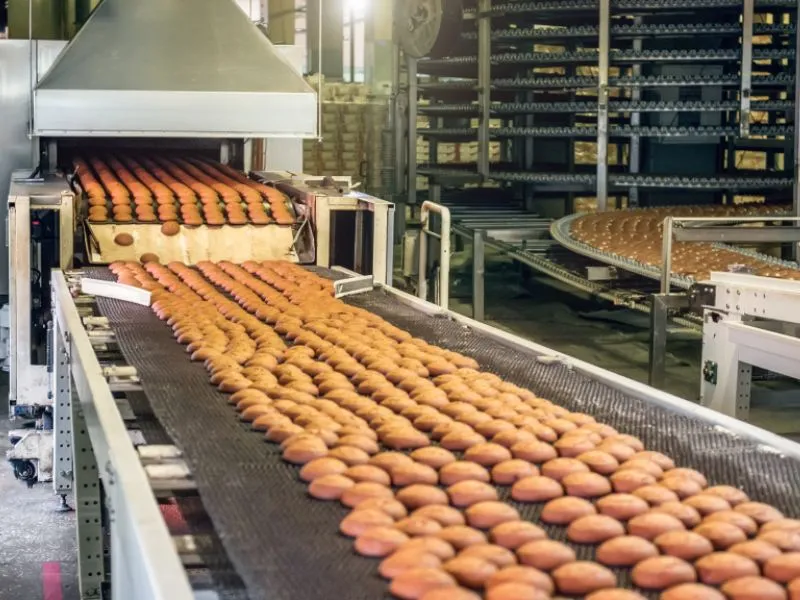
Food processing methods are techniques used to transform raw food ingredients into edible products with improved shelf life, flavor, texture and nutritional value. These methods have been used for centuries to preserve food, making it easier to store and transport, and enhancing the sensory properties of food.
Some common food processing methods include canning, freezing, dehydration, and fermentation.
- Canning
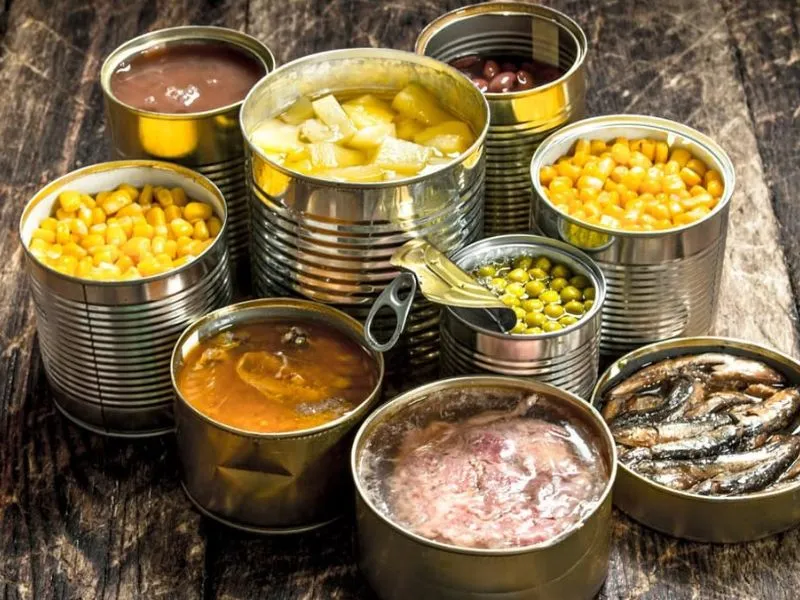
Canning is a method of preserving food by packaging it in a sealed container and heating it to kill microorganisms that could spoil the food. The process involves:
- Pour the prepared food into a clean, sterilized container.
- Cover it with a lid.
- Heating at high temperatures will kill any bacteria present.
This method can be used to preserve a wide variety of foods, including fruits, vegetables, meat, and fish. Canned foods have a long shelf life, are convenient to store and transport, and can be used year-round.
- Freezing
Freezing is a food preservation method that involves reducing the temperature of food to below its freezing point (-18°C) to slow the growth of microorganisms that can spoil the food. This method can be used to preserve a wide range of foods, including fruits, vegetables, meat and fish.
Frozen foods are convenient to store and can be consumed all year round. They retain their nutritional value and sensory properties, making them a popular choice among consumers.
- Drying
Drying is a food processing method that involves removing water from food to prevent the growth of microorganisms that can spoil the food. This can be achieved through a variety of techniques, such as sun drying, oven drying and freeze drying.
Dried foods have a long shelf life, are lightweight, easy to store and transport. They can be used in a variety of dishes and can be enjoyed all year round.
- Fermentation
Fermentation is a food processing method that involves the conversion of sugars and other carbohydrates into organic acids and alcohols by microorganisms such as bacteria, yeasts or fungi.
This method can be used to preserve a variety of foods, including dairy products, fruits, vegetables and grains. Fermented foods have unique flavors and aromas and are rich in probiotics that can improve gut health. Some examples of fermented foods include yogurt, sauerkraut, kimchi and sourdough bread.
Food Production Machinery
Food production machinery and equipment are tools used to prepare, process and package food. Using high-quality equipment plays an important role in ensuring the consistency, safety and quality of food products.
- Mixing equipment helps blend ingredients to create a homogeneous mixture, suitable for a variety of foods such as doughs, sauces and liquid mixtures. Examples: Mixers, grinders, dough kneaders.
- Separators help remove impurities or separate ingredients in a mixture of ingredients, ensuring the quality of the ingredients before processing. Examples: Centrifuges, filters, sieves.
- Heating and cooling equipment ensures that food is cooked or cooled at the right temperature, helping to prevent bacteria growth and maintain product quality. Examples: Ovens, refrigerators, freezers.
- Cutting and slicing equipment helps to cut and slice food into certain shapes and sizes, meeting production or packaging requirements. Examples: Knives, slicers, food cutters.
- Forming equipment is used to create specific shapes for food products, such as cakes, balls or fibers. Examples: Presses, extruders, molding machines.
- Packaging equipment is machinery used to package the final product, including filling, sealing and labeling the product, ready for distribution. Examples: Filling machines, sealing machines, labeling machines.
- Cleaning equipment is used to clean and disinfect machinery during the production process, ensuring hygiene and food safety. Examples: High pressure washers, steam cleaners, disinfectants.
- Inspection equipment helps ensure the quality and safety of food during and after the production process, detecting errors or impurities if any. For example: Metal detectors, X-ray machines, quality inspection cameras.
What standards must the food production line comply with?
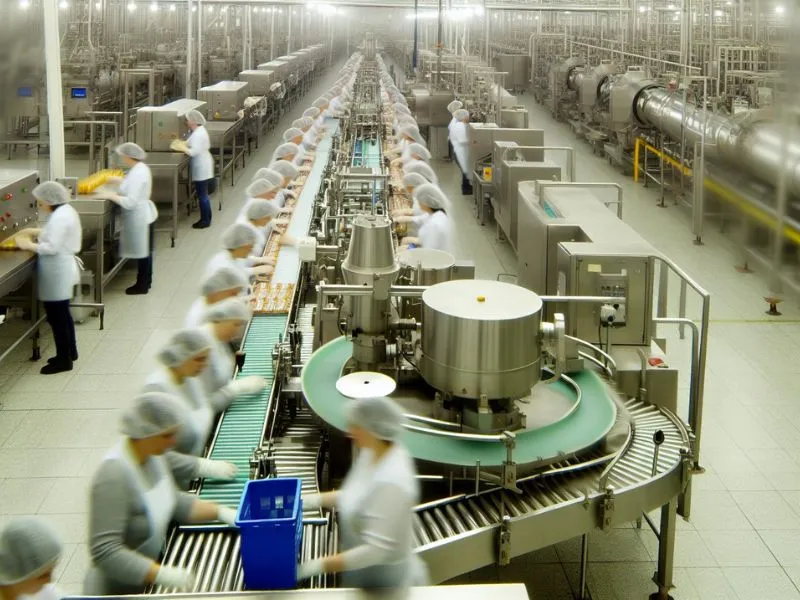
Food safety in the food production line plays an extremely important role in human health. Food not only needs to ensure quality but also must meet the requirements of origin, hygiene and safety in the production and processing process.
In the world, each country develops its own regulations on food safety. However, these regulations are often based on two common international standards:
- HACCP (Hazard Analysis and Critical Control Points) standards
HACCP is a management system that helps identify and control potential food safety hazards throughout the entire production process, from input materials, processing, packaging to distribution.
- HACCP focuses on preventing biological, chemical, and physical hazards that may affect food, rather than just checking after the product has been produced.
- This standard requires strict control of contaminants at important points in the production process, while complying with hygiene rules at all stages.
- GMP (Good Manufacturing Practices)
GMP is an international set of guidelines established to ensure quality in the production chain of food, beverages, pharmaceuticals, and other products.
- This standard sets out the general principles that manufacturers need to follow to ensure that products are of high quality, safe to use, and do not harm the health of consumers.
- Mandatory food inspection procedures must be carried out at important control points to maintain stable quality.
- Regulations on food safety in Vietnam
In Vietnam, to operate in the field of food production and trading, organizations and individuals must strictly comply with food safety regulations. Necessary documents include:
- Business registration certificate.
- Food safety and hygiene certificate (FSH).
- Food quality testing certificate.
- Environmental testing certificate (for production facilities).
- Other documents depending on each specific type of food.
Full compliance with standards and regulations not only helps businesses ensure quality products but also contributes to protecting consumers' health and creating trust in the market.
Current development trends of food production lines
The food industry is constantly changing to meet the increasing demands of consumers, from prioritizing health-friendly products to protecting the environment. In particular, the food production chain plays an important role, not only improving in terms of technology but also keeping up with sustainable trends.
- Plant-based production
With the increasing awareness of health and the environment, more and more consumers are prioritizing plant-based products. This promotes the development of food production chains based on ingredients such as beans, grains, vegetables and meat alternatives.
- Advanced technology: Modern machines help extract nutrients from plants, while optimizing the flavor and texture of the product.
- Typical examples: Plant-based milk, artificial meat, and vegetarian confectionery production lines are growing strongly.
Plant-based production not only meets the trend of sustainable consumption but also contributes to reducing the impact on the environment.
- Switch to green, environmentally friendly production lines
Environmental protection is a key factor in the sustainable development of the food industry. Enterprises are converting production lines towards "greening" with solutions such as:
- Energy saving: Using renewable energy (such as solar power, wind power) to operate machinery.
- Emission reduction: Integrating water recycling technology, waste gas treatment, and minimizing plastic waste in the packaging process.
- Environmentally friendly packaging materials: Switch to using biodegradable or reusable packaging.
These improvements not only help reduce long-term costs but also enhance the image of the business in the eyes of consumers.
- Ensuring food safety
Food safety is an indispensable factor in every production line. International standards such as HACCP and GMP have become the foundation for ensuring food quality and hygiene.
- Hazard Control: Modern production lines are designed to prevent biological, chemical and physical contamination from the start.
- Strict compliance: Production processes must always ensure hygiene and comply with international food safety standards.
This helps protect consumer health and maintain confidence in the product.
- Automating production lines
The development of 4.0 technology has brought automation to every stage of the food production line, from raw material processing to finished product packaging.
- Increased productivity: Robots and automated systems help reduce production time, increase efficiency and accuracy.
- Cost savings: Automation helps reduce labor and limit errors.
- Smart monitoring: IoT (Internet of Things) and AI (artificial intelligence) technology allows monitoring the entire production process in real time, thereby optimizing operations.
Conclusion
The development of technology in the food production chain not only promotes the food industry to move forward but also meets the increasing demand of the market for quality, safety and environmental friendliness. Investing in modern and sustainable production lines is an important step for businesses to affirm their position and build trust with consumers.
