


How can you reduce surface roughness when milling metal?
19-08-2025 355
There are several ways to reduce surface roughness in milling, which can be divided into several main categories: reducing feedrate, eliminating built-up edge formation (BUE), reducing tool wear, reducing vibration, using the right technique, using different tools for roughing and finishing passes, and increasing speed.
Mục lục
Milling is a common machining process used to produce parts with precise dimensions and shapes. However, one of the challenges of milling is maintaining a smooth surface finish on the final product.
Surface roughness is an important factor to consider when choosing the material and type of machine used in metalworking, as it can affect the overall quality and functionality of the product. Rough surfaces can lead to reduced performance, poor aesthetics, and even safety issues. Therefore, it is important to try to reduce surface roughness as much as possible during the machining process.
There are several ways to reduce surface roughness in milling, which can be divided into several main categories: reducing feedrate, eliminating the formation of built-up edges (BUE), reducing tool wear, reducing vibration, using the right technique, using different tools for roughing and finishing passes, and increasing speed. When these factors are considered, users can reap the benefits of CNC Milling for their manufacturing process.
Surface roughness is an important factor to consider when choosing the material and type of machine used in metalworking, as it can affect the overall quality and functionality of the product. Rough surfaces can lead to reduced performance, poor aesthetics, and even safety issues. Therefore, it is important to try to reduce surface roughness as much as possible during the machining process.
There are several ways to reduce surface roughness in milling, which can be divided into several main categories: reducing feedrate, eliminating the formation of built-up edges (BUE), reducing tool wear, reducing vibration, using the right technique, using different tools for roughing and finishing passes, and increasing speed. When these factors are considered, users can reap the benefits of CNC Milling for their manufacturing process.
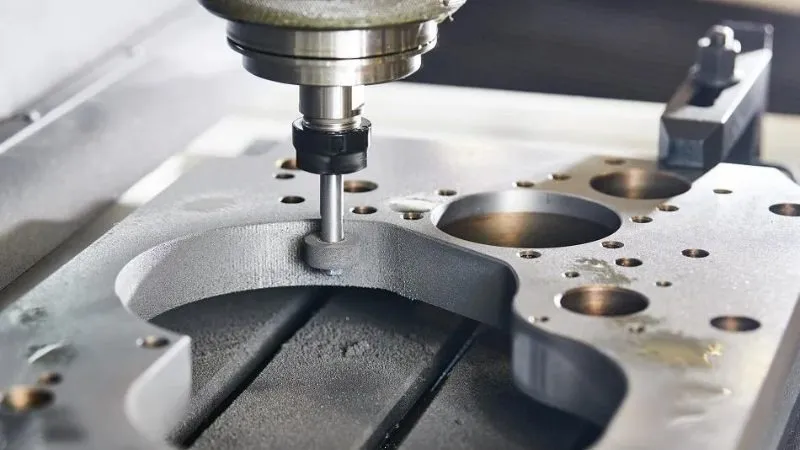
Effective ways to reduce surface roughness
1 - Reduce feed rate
One of the main factors that can affect surface roughness is the feed rate, or the speed at which the tool moves through the material. If the feed rate is too high, it can cause the tool to skip or bounce, resulting in rough machining. On the other hand, if the feed rate is too low, it can lead to excessive tool wear and longer milling times. To reduce surface roughness, it is important to find the optimal feed rate for your particular milling setup. This may require some trial and error, but it can significantly improve the surface finish of your final product.
2 - Eliminate the chance of BUE Build-Up:
BUE build-up is a layer of material that can build up on the cutting edge of a tool during milling. BUE can cause the tool to cut unevenly or unpredictably, resulting in a rough surface. To reduce the risk of BUE formation, it is important to use tools with sharp, clean cutting edges and to periodically clean or replace the tool as necessary. Additionally, using coolant or lubricant during milling can help prevent BUE formation.
3 - Reduce the rate of tool wear:
Tool wear is another factor that can affect surface roughness when milling. As the tool wears, it becomes less effective at cutting and can produce a rough surface. To reduce tool wear and improve surface roughness, it is important to use tools made from durable materials and to properly maintain tools by sharpening or replacing tools when necessary. Additionally, using tools with wear-resistant coatings or substrates can help extend tool life and improve surface finish.
4 - Reducing vibration:
Vibration during milling can also contribute to surface roughness. Vibration can be caused by many factors, including the tool, machine, and workpiece. To reduce vibration and improve surface roughness, it is important to use tools with a balanced design and to properly secure the workpiece to the machine. Additionally, using a machine with good damping properties can help reduce vibration and improve surface finish.
5 - Using the right technique:
Another important factor in reducing surface roughness is using the right milling technique. This includes selecting the appropriate tool and feed rate for the material being milled, as well as using the correct cutting direction and toolpath. It is also important to use a consistent and controlled cutting motion to ensure a smooth finish.
In some cases, it may be necessary to use different tools for roughing and finishing passes to achieve the desired surface finish. For example, a roughing tool with a larger diameter and a more aggressive cutting edge may be used for the first cut, followed by a finishing tool with a smaller diameter and a finer cutting edge, such as a tungsten carbide blade, for the final cut. This can help reduce tool wear and improve surface finish.

6 - Use a stiffer machine:
A stiffer machine will produce less vibration during milling, resulting in a smoother surface finish. Investing in a more robust machine can be a worthwhile investment in the long run as it can improve overall performance and reduce the need for rework.
7 - Use a softer material:
Softer materials are generally easier to machine and can produce smoother surfaces. However, it is important to consider the balance between finished product characteristics and machinability when selecting a material.
In addition to these steps, it is essential to follow proper machining techniques and safety procedures while milling to ensure a smooth and accurate finish. This includes using appropriate personal protective equipment, following proper cutting tool handling procedures, and following the manufacturer’s instructions for the milling machine.
Conclusion
Surface roughness is an important factor to consider when milling parts and can affect the overall quality and function of the product. By considering these factors and implementing best practices such as using sharp, clean tools and maintaining a consistent and controlled cutting motion, smooth surfaces can be achieved in milling operations. This can improve the performance, aesthetics, and safety of the final product.
