


Industrial Material Handling Systems: What You Need to Know
19-08-2025 400
AMHS automated material handling systems are growing in popularity and expanding their presence across a wide range of sectors from manufacturing to construction The industrial landscape is evolving rapidly as intelligence and advanced technology take center stage
Mục lục
Globally, industries are deploying these systems at every stage to improve efficiency, safety and labor shortages, while optimizing operations like never before. This aligns with the broader trends of smart manufacturing, the 4th Industrial Revolution, which highlights the growing importance of integrating advanced technologies in the industrial sector.
In this guide, we will take a closer look at some of the key trends we are seeing emerging in AMHS, different material handling principles, and their various applications across a number of industries.
In this guide, we will take a closer look at some of the key trends we are seeing emerging in AMHS, different material handling principles, and their various applications across a number of industries.
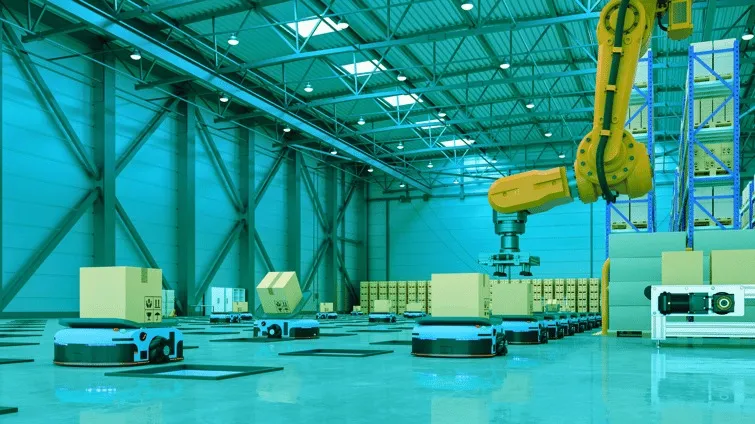
Material handling automation trends
Material Handling Automation is evolving rapidly, with many emerging trends promising to bring many benefits to businesses.
1. Increased data collection and analytics
The first major trend following material handling automation is increased data collection and analytics, which is emerging as a driver for informed decision making. Automation systems are becoming powerful data generators, helping organizations learn, adapt, and optimize operations.
2. Expanded Use of AI
In material handling, AI is being used to make better decisions, predict maintenance needs, and optimize operations. Combining AI with IIoT technology can help organizations improve cost efficiency and overall adaptability.
3. Implementing IIoT (Industrial Internet of Things)
The Industrial Internet of Things IIoT integrates smart devices and sensors, enabling material handling to become more adaptive and connected. As a result, industrial equipment and machinery have become seamlessly connected to each other. This results in a network where data is not only collected but also intelligently shared across the entire ecosystem.
4. Addressing cybersecurity risks
With increasing intelligence and data, potential threats will emerge. To combat these cybersecurity threats, companies are increasingly incorporating preventative measures and authentication protocols to help monitor, detect, and respond to these risks in real-time. By addressing cybersecurity risks, businesses can ensure the security and optimal functionality of their material handling systems.
5. Predictive Maintenance and Optimization
Organizations are also adopting predictive maintenance in the coming years. By leveraging analytics, businesses can now anticipate equipment failures before they occur. This allows for timely intervention and reduces unplanned downtime, ensuring that material handling systems operate at peak performance.
6. Managing the Labor Shortage
Material handling robots have emerged as a key solution to directly address this issue. By performing repetitive tasks and transport routes, industrial robots can free up approximately 30-50% of skilled workers’ time. In doing so, companies can increase production with fewer employees, while also assigning their workers to more valuable tasks.
7. Energy-saving solutions
Automated solutions, from energy-efficient conveyors to robotic systems, are key to minimizing environmental impact and optimizing operating costs. Additionally, as environmental regulations become more stringent, adopting these solutions helps businesses comply with regulations and demonstrate their commitment to long-term sustainable practices.
8. Using Swarm Robots
Inspired by the behavior of social insects, swarm robots are groups of robots that work together. Each robot follows simple rules, communicates with its peers, and adapts to its environment cooperatively. This allows them to perform tasks efficiently by responding to changing conditions and demands in a coordinated manner, which is important in material handling automation.
Types of material handling equipment
Here are the types of equipment used for efficient material handling
- Engineered Systems
Engineered systems are the foundation of modern material handling. In material handling, these systems integrate various technologies to streamline and automate the movement, storage, and control of materials in industrial environments.
Examples include AGVs, AS/RSs, AMRs, and other specialized industrial vehicles, each specifically designed to complete industrial tasks. Let’s explore each in more detail.
- AGVs
Automated Guided Vehicles (AGVs) play a pivotal role in material handling automation and are essential for automating movement across structured environments. These intelligent, driverless vehicles navigate pre-determined routes within a facility using embedded guidance systems such as lasers, magnets, and vision systems. You can think of AGVs as similar to the way a train follows a predetermined track.
AGVs tend to be associated with tasks that require repetitive, safe and efficient deliveries, such as material handling, pallet handling and order picking. While AGVs are efficient in simple loops, they can become inoperable if the route becomes congested and are therefore best suited for simple use cases.
- Automated Storage and Retrieval Systems (ASRS)
Automated Storage and Retrieval Systems (ASRS) replace large storage areas with vertical storage spaces, changing the conventional approach to storing and retrieving materials in a warehouse. AS/RS systems combine automation with strategic planning to automatically place, store and retrieve products or inventory on demand. This ensures quick access to goods while saving floor space by increasing inventory storage density.
Some examples of AS/RS include conveyors, small loads, unit loads, cranes, and shuttles that replace large storage areas and save floor space. By optimizing vertical storage space and improving retrieval speeds, AS/RS contribute to increased efficiency and reduced operating costs.
- Autonomous Mobile Robots (AMRs)
Autonomous Mobile Robots (AMRs) use advanced technologies such as artificial intelligence, machine learning, sensors, and path planning to navigate autonomously without direct human supervision. Compared to AGVs and AS/RS systems, these vehicles can navigate intelligently without a fixed route and without the need to adhere to the fixed infrastructure of a storage structure.
As a result, AMRs are more intelligent and flexible, making them optimal for more complex environments. In fact, according to the 2022 Automation Trends Report, businesses using AMRs have increased both productivity and efficiency by 31%.
- Other Industrial Robots
In addition to AGVs, AS/RS, and AMRs, there are many other industrial warehouse robots equipped with advanced technology to perform a variety of tasks such as material movement, handling, and logistics operations. These include palletizing robots, shuttle systems, sorting robots, and goods-to-person systems, all of which contribute to optimizing warehouse operations to improve efficiency, accuracy, and productivity.
Bulk Material Handling equipment
Systems are designed to leverage various technologies to improve the efficiency of the supply chain and logistics. In contrast, bulk material handling equipment is designed to focus on managing, storing, and moving large amounts of raw materials efficiently. This includes the use of equipment such as conveyors and hoppers specifically designed for bulk applications.
- Conveyors
Conveyors efficiently transport large quantities of bulk materials throughout a facility. Whether facilitating continuous flow on a conveyor belt or ensuring controlled transport on a roller conveyor, these machines are designed to handle a wide variety of bulk goods – from raw materials such as loose grains to finished products such as packaged goods – with greater accuracy and reliability.
- Hoppers
Hoppers are designed to store and guide the flow of bulk materials, ensuring a steady supply of materials. These funnel-shaped containers act as a storage area for bulk materials, facilitating the smooth flow of materials and making it easier to load subsequent processes within the facility. They therefore play a vital role in enhancing material flow control and overall efficiency within the warehouse.
Hoppers can hold a variety of materials, such as grains, powders or aggregates, and are therefore commonly found in various industries from agriculture to manufacturing. In fact, they are often used in conjunction with conveyors or other handling systems.
- Industrial Vehicles
In addition to engineered systems and bulk handling equipment, automated forklifts, tow trucks and other specialized machines are often used to enhance the efficiency and adaptability of material handling systems.
Designed systems are specialized solutions and advanced technologies designed for specific tasks in industrial automation. Industrial vehicles, on the other hand, include a wider range of motorized vehicles that have long been used in industrial environments, including both manual and automated versions. As we will explore, this includes automated forklifts and automated tow trucks.
- Automated Forklifts
Forklifts are one of the most commonly used industrial vehicles in material handling operations globally. Predictably, the automation of these worker vehicles is revolutionizing the way work is done and specifically the way materials are moved around facilities.
Leveraging advanced technology that uses multiple sensors, cameras, LiDAR, and positioning systems, automated forklifts can automatically lift, transport, and stack heavy materials without human operators.

- Automated Tractors
Automated tractors are designed to transport and distribute materials efficiently. By automating repetitive tasks and adapting to dynamic environments using real-time data, automated tractors help organizations improve overall efficiency and adaptability in their material handling systems.
10 material handling principles
The 10 Material Handling Principles are important to organizations involved in material handling. As we will explore, they serve as a guide to ensure the full optimization of their MHS. When organizations commit to these 10 principles, they will increase their productivity and profitability.
1. Planning
Organizations should strive to guide seamless operations through planning. This involves organizing resources, workflows, and timelines to ensure optimal efficiency throughout the material handling process.
2. Standardization
To unify operations, organizations should standardize their processes, equipment, and procedures.
3. Work
To avoid impeding productivity or output levels, businesses should consider automating their processes to reduce physical stress. For example, a manufacturing facility could use automated guided vehicles (AGVs) to transport raw materials directly to the production line, maximizing productivity and minimizing physical stress.
4. Ergonomics
Organizations can help reduce physical stress, worker fatigue, and potential injuries by prioritizing ergonomics. In doing so, you can optimize human health and system performance.
5. Unit Load
Organizations can optimize unit loads by strategically grouping and consolidating materials into a single load to maximize material flow and improve efficiency. For example, a practical example is palletizing goods before shipping.
6. Space Utilization
Companies can also use space strategically by optimizing available space for storage and movement. For example, you can implement a vertical storage system to take advantage of available space without expanding your facility's footprint.
7. Systems
Organizations can use a coordinated system of various processes, equipment, and people to improve operations. An example might be implementing conveyor systems that connect packing, sorting, and shipping stations, promoting a continuous and efficient flow of goods.
8. Automation
By implementing automation solutions to improve speed and accuracy in material handling, organizations can increase productivity and reduce reliance on manual labor.
9. Environment
Material handling systems must be designed with sustainability in mind, including the implementation of safety and sustainability measures. In doing so, organizations can align their material handling operations with broader environmental goals, contributing to long-term ecological sustainability.
10. Lifecycle
Finally, organizations must consider the total cost of material handling processes such as the lifetime of the equipment. Companies can use technology, strategic planning, and standardization to develop systems that meet current needs and anticipate future challenges throughout the life of the equipment.
Applications and Uses of Material Handling Systems
- Warehousing
Material handling systems also play a key role within the warehouse by monitoring the movement and storage of goods. These systems contribute to a seamless flow of materials, improving overall efficiency in warehouse operations.
This includes automating tasks such as inventory management, loading, order picking, and establishing efficient processes for handling items. Warehouses also leverage MHS to optimize space utilization, ensuring efficient storage and retrieval of goods.

- Manufacturing
Manufacturers often use conveyor systems and robotic handling systems to assemble, pick, pack, and sort materials.
- Construction
Material handling systems are used to transport and manage construction materials, such as concrete, steel, and aggregates on site. Some examples include conveyor systems, cranes, hoists, and material handling robots.
Today, construction companies are implementing automated material handling systems and are seeing immediate impacts. Caterpillar’s semi-automatic compact wheel loaders use the same robotic technology as their material handling robots. This allows workers to control up to four machines at once to handle monotonous and repetitive tasks, giving them the opportunity to do more engaging tasks.
Conclusion
Material handling systems play a vital role in improving the efficiency, safety and competitiveness of a business. Choosing and implementing the right system will bring many benefits to the business in the long term. Equipment and processes are designed to move, store, protect and control materials throughout the production, distribution and consumption process.
