


Learn about the bottling line in detail
12-08-2025 547
Bottling lines have become an indispensable solution in manufacturing industries such as food, beverage, cosmetics and pharmaceuticals. With the ability to optimize processes, improve productivity and ensure product quality, this system helps businesses quickly meet increasingly demanding market demands.
Mục lục
What is a bottling line?
A bottling line is an automatic or semi-automatic equipment system designed to perform the steps in the production and packaging of liquid products into bottles. This process usually includes steps such as liquid filling, capping, labeling and product orientation.
Bottling lines are widely used in many industries such as food, beverage, pharmaceutical and cosmetic. Thanks to the ability to automate and optimize performance, this line helps businesses increase productivity, ensure consistent product quality and save production costs.
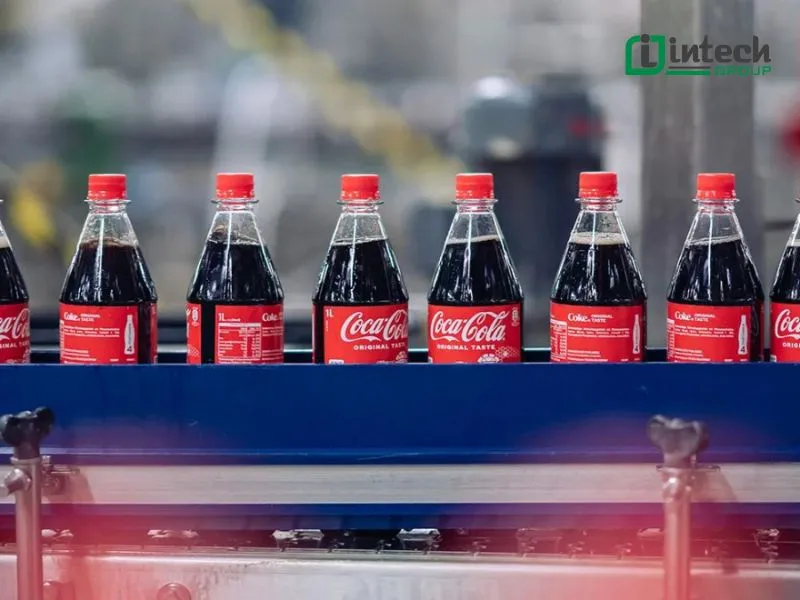
How does a bottling line work?
Below is a detailed description of how a bottling line works:
- Step 1: Filling
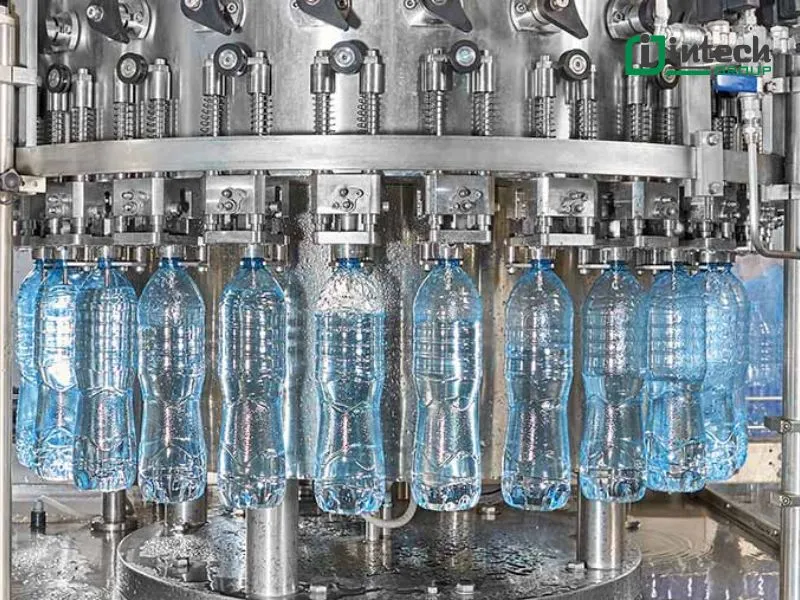
A filling machine is a device that helps put liquids of different viscosities into bottles or containers. Products can range from thin liquids like water to thick liquids like skin creams. Therefore, filling beverages will be completely different from filling ointments.
Some important factors to consider when choosing a filling machine include:
- Type of bottle/container
- Accuracy requirements
- Temperature during filling
- Chemical compatibility between product and packaging
- Particle size in product
Popular filling machine types
- Inline fillers: This type of machine uses a conveyor to continuously fill bottles. With a flexible design, low cost and easy adjustment, this is a suitable choice for small and medium-sized production businesses.
- Rotary fillers: This machine has multiple filling heads and faster speed. Some machines also integrate bottle cleaning and capping functions, helping to optimize the production process.
- Monoblock fillers: This system integrates multiple devices on the same machine frame, usually including a filling machine and a capping machine. The star wheel saves space and optimizes the packaging process.
Regardless of the type of machine used, the general principle is that the bottle is transported through the conveyor, filled with product and prepared for the next step.
- Step 2: Capping
The capping machine helps to tighten the plastic or metal cap onto the bottle quickly and accurately, ensuring high production speed, cost savings and a clean working space.
The capping process is as follows:
- The cap is fed into the feed hopper, then transferred to the sorting bowl.
- The sorting bowl helps to distribute the cap efficiently before transferring to the capping machine.
Popular types of capping machines
- Single-head cappers:This machine holds the bottle in a fixed position to tighten the cap. Some machines use a star wheel to attach the cap before returning the bottle to the line.
- Rotary chuck cappers: This type of machine rotates both the bottle and the cap to ensure the cap is tightened, creating a strong seal.
- Step 3: Labeling
Once the bottle is securely capped, the next step is labeling. The labeling machine operates through a conveyor system, helping to apply labels to the bottle at a stable and accurate speed. The structure of this system usually consists of three main components:
- Drive wheel: Pulls the label string out of the label roll, ensuring a continuous supply of labels.
- Labeling wheel: Presses the label tightly against the bottle surface as both the wheel and the bottle move at the same speed.
- Label roll: Holds and adjusts the tension of the label string thanks to the open displacement control mechanism.
Because the labels are located close together on the roll, the labeling system must continuously stop and start during operation to attach each label to the correct position.
To ensure high accuracy, the system often integrates sensors and positioning marks to detect and adjust label position errors. When the speed is reduced, the drive wheel can readjust the label position, correcting errors if any.
Automatic labeling machines not only increase production speed but also create highly aesthetic products, helping to improve business efficiency.
- Step 4: Product orientation
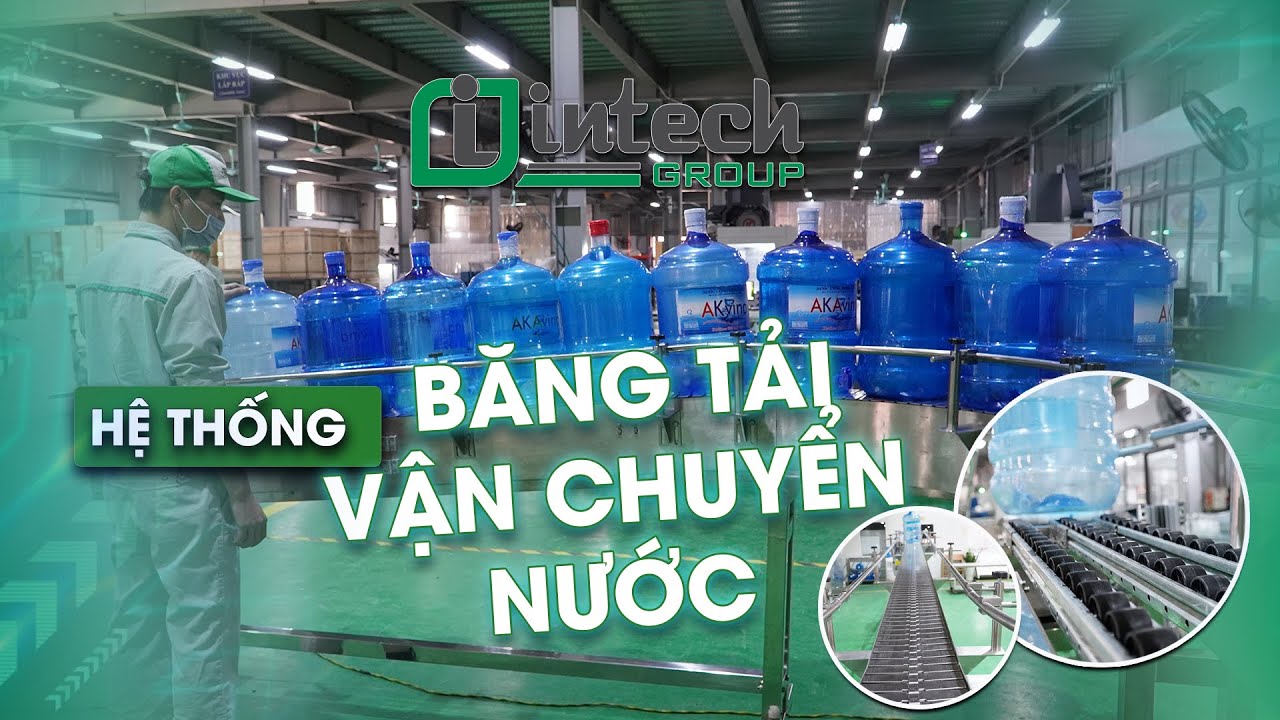
Product orientation is the final step in the bottling process. When put into the production line, the bottles are often messy and uneven in direction. Therefore, reorientation is needed to ensure consistency before packaging.
The bottle orientation machine helps to rotate and adjust misaligned bottles to the correct direction. The type of bottle and orientation will determine the type of machine to use.
- Vertical orientation: The machine helps to arrange the bottles upright.
- Axial Orientation: After vertical orientation, some products require axial orientation to achieve the final position.
Orientation technology is especially useful for bottles with handles or off-center mouths, such as laundry detergent bottles. The machine will ensure that the handle is always on a fixed side, helping the bottle mouth align with the filling spout.
Thanks to its flexible processing capabilities, the orientation machine can work effectively with many types of special shaped bottles such as trigger spray bottles, bear-shaped honey bottles and many other products.
Thanks to its flexible processing capabilities, the orientation machine can work effectively with many types of special shaped bottles such as trigger spray bottles, bear-shaped honey bottles and many other products.
Benefits of using a bottling line
Automatic bottling lines are increasingly widely used in manufacturing industries, from food, beverages to pharmaceuticals and cosmetics. The application of this technology not only optimizes the production process but also brings many practical benefits to businesses.
- Increase productivity and production efficiency
Automatic bottling lines help reduce time and effort for filling, capping, labeling and product orientation. Instead of relying on manual labor, automated machines help produce continuously at a faster speed, meeting market demand in a timely manner.
- Ensure product accuracy and quality
Thanks to the use of advanced sensors and control systems, the bottling line helps minimize errors in the filling and capping stages. This ensures that each bottle has the correct capacity, the cap is properly tightened and the label is neatly affixed, contributing to enhancing the brand image in the market.
- Save operating costs
Although the initial investment cost for an automatic bottling line may be high, in the long run, businesses will save significantly on labor costs and minimize material waste. The closed process also helps minimize the risk of loss in production.
- Ensure hygiene and safety
In manufacturing industries such as food, beverage and pharmaceuticals, compliance with hygiene standards is very important. Automated lines operate in a closed environment, limiting direct human contact with the product, thereby ensuring hygiene and safety for consumers.
- Flexible and easy to expand production
Modern bottling lines can be flexibly adjusted to suit many different types of products and capacities. Businesses can also easily upgrade or expand production scale by integrating new equipment without changing the entire system.
Important notes for choosing a bottling line
When choosing a bottling line, businesses need to consider many factors to ensure efficiency and suitability for production needs.
- Determine the type of bottled product (drinking water, shampoo, pharmaceuticals, etc.) and the characteristics of the liquid such as viscosity, corrosiveness or strict hygiene requirements.
- Consider the operating capacity of the line to meet the desired output, while balancing the investment budget.
- Consider the size and type of bottle you need to fill. Some filling machines are designed for specific bottle sizes, while others are flexible enough to handle many different sizes and shapes of bottles and jars.
- Choosing integrated technology such as automatic filling, capping, and labeling systems is also important to optimize the production process.
- Prioritizing reputable suppliers with good warranty and maintenance services will help businesses operate the line more stably and durably.
Investing in and applying a bottling line is an important step for businesses to improve production capacity, optimize costs and affirm their position in the market. By choosing the right production line and operating it effectively, businesses not only improve performance but also create products of superior quality, meeting the diverse needs of customers.
