


Learn about the carton production line in the most detail
14-08-2025 329
Carton production lines play an important role in meeting the needs of packaging and transporting goods safely and effectively. Modern production lines not only help optimize processes and reduce costs, but also ensure consistent quality, meeting the strict requirements of the market.
Mục lục
What is a carton production line?
A carton production line is a system of automated machines and equipment arranged and operated according to a certain process to produce carton boxes to serve the needs of packaging and preserving goods. This system includes many stages, from processing raw materials (such as kraft paper, recycled paper) to cutting, printing, gluing boxes and finishing products.
With the support of modern technology, the carton production line helps optimize the production process, ensure consistent quality, save raw materials, labor costs, and meet large quantities in a short time. This is an essential solution for businesses in the packaging and shipping industry.
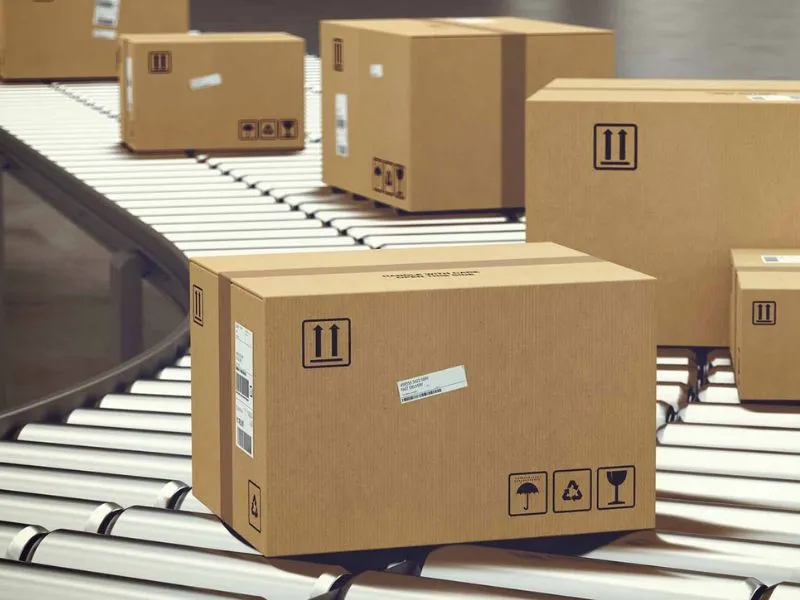
Machinery in the carton production line
The main types of machinery are often found in a modern carton production line:
- Corrugated paper machine
The corrugated paper machine is the first and most important equipment in the carton production line. The main task of the machine is to create corrugated paper layers - the factor that determines the stiffness, elasticity and load-bearing capacity of the carton.
Structure and function:
- The machine includes parts such as the corrugated shaft, heating system and laminating unit.
- The paper is passed through the rollers and heat-treated to form the wave shape, then bonded to the flat paper layer with specialized glue.
Benefits:
- Creates uniform corrugated paper, ensuring the quality of the carton.
- Helps optimize raw materials, minimize paper waste.
- Paper cutting machine
After the corrugated paper and flat paper are joined together, the next step is to cut the paper to the correct size of the carton. The paper cutting machine plays an important role in ensuring the exact, uniform size of each product.
The machine uses an automatic cutting knife or a rotating saw blade to divide large sheets of paper into small pieces according to the set specifications. Integrating CNC control technology helps achieve high accuracy.
Advantages:
- Increase production speed and ensure accuracy for each product.
- Reduce manual paper cutting errors, save materials.
- Flexo or offset printing machine
After the paper is cut, the printer will take on the role of printing information and images on the surface of the carton. The two common types of machines in the production line are flexo printing machine and offset printing machine.
Flexo printing machine:
- Suitable for printing large quantities and simple images and text.
- Uses water-based ink, environmentally friendly and cost-effective.
- Especially suitable for rough paper surfaces and large sizes.
Offset printing machine:
- Used to print images with high detail and high aesthetic requirements.
- Suitable for businesses that need high-quality printing on smooth, smooth paper surfaces.
- Carton Sealer and Stapler
The final step in the carton production process is to join the cut and printed pieces of paper into a complete carton. Carton Sealer and Stapler play an important role in this.
- Carton Sealer: Uses glue to connect the pieces of paper together. Creates smooth, sturdy seams, ensuring the aesthetics of the carton.
- Stapler: Suitable for cartons that require high durability, often used to contain heavy goods. Staples metal pins at the joints, increasing the load-bearing capacity of the carton.
Carton production process
Step 1: Prepare raw materials and materials
The carton production process begins with the selection of suitable raw materials, which greatly affects the quality and durability of the final product. Based on the needs and usage, businesses can consider:
- Paper weight: This index determines the load-bearing capacity and stiffness of the carton.
- Number of paper layers: You can choose between single-wave, double-wave or combined-wave.
- Paper color: Suitable for printing and aesthetic requirements.
In addition, businesses need to determine between using custom-made paper or paper available on the market. If the production volume is small, using available paper will help save significant costs.
Step 2: Determine carton packaging specifications
To ensure that the carton meets the needs of use, choosing the design and number of paper layers is essential:
- Box design: Popular types include snap-lid cartons, yin-yang cartons, removable-lid cartons, etc. The choice depends on the characteristics of the product to be packaged.
- Number of paper layers: Depending on the load-bearing requirements, businesses can choose 3-layer, 5-layer or 7-layer cartons. Large thickness helps the carton withstand better force, suitable for heavy goods.
Step 3: Cut paper according to specifications
Once the shape and size of the carton have been determined, the next step is to cut the paper. Technicians will adjust the parameters on the paper slitting machines to create paper sheets of the exact size required by the customer.
- The paper slitting machine cuts the roll paper into flat sheets.
- The paper slitting machine ensures that the sheets are cut neatly and to the correct specifications.
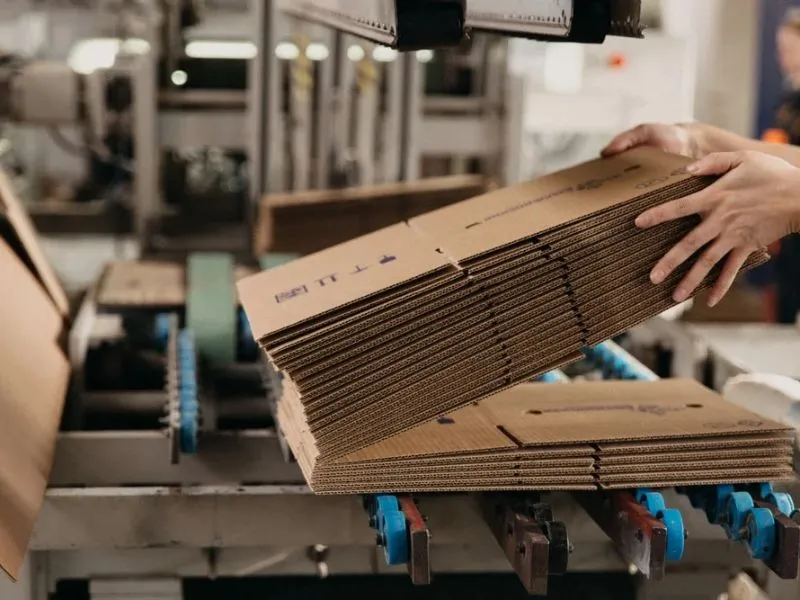
Step 4: Print on the surface of the carton
After cutting the paper, information such as logo, business name, product image will be printed on the surface of the carton. This not only helps to identify the brand but also supports product promotion.
- Manual printing: Suitable for small quantities and simple requirements.
- Machine printing: Used for large production, ensuring uniformity and high accuracy.
Step 5: Finishing the carton by gluing or stapling
This stage is the final step to shape the carton. Depending on the requirements, the pieces of paper will be joined together by:
- Glue: Creates a flat surface and high aesthetics.
- Stapling: Provides superior strength, suitable for heavy goods.
Automatic gluing or stapling machines will ensure this process is quick and accurate.
Step 6: Check and transport
Before delivering to customers, the carton needs to be carefully checked:
- Check the size: Ensure the product meets the order specifications.
- Check the print quality: Ensure clarity and aesthetics.
After meeting the standards, the cartons are packaged, stored and transported to customers according to the committed schedule.
Benefits of using a carton production line
Using a carton production line brings many significant benefits compared to manual or semi-automatic methods
- Increase productivity and production efficiency
Modern carton production lines are equipped with automation technology, helping to optimize processes from paper cutting, printing to gluing boxes and finishing products.
- Fast production speed: The machines operate continuously and stably, allowing mass production in a short time.
- Minimize errors: Advanced technology helps to accurately control the size, style and quality of each product, limiting errors in the production process.
Therefore, businesses can meet large orders in a short time, increasing competitiveness in the market.
- Ensure consistent product quality
One of the important factors in the packaging industry is the quality of cartons. Modern production lines ensure that every product meets the highest standards.
- High precision: Equipment such as paper cutters, flexo or offset printers are programmed to perform each step accurately.
- Uniformity in design and size: The final product has consistent quality, helping businesses maintain their reputation with customers.
- Increase professionalism: Cartons printed with sharp, clear images not only protect goods but also contribute to enhancing brand value.
- Save on labor and material costs
The application of automated production lines significantly reduces dependence on labor and optimizes the use of materials.
- Reduce labor costs: With the support of machinery, the number of workers needed for a production line is minimized, thereby saving labor costs.
- Optimizing raw materials: Advanced technology helps cut paper precisely, limiting material waste, thereby reducing production costs and increasing profits.
- Economic efficiency: Mass production at low cost helps businesses gain price advantages in the market.
- Environmentally friendly thanks to the use of recycled paper
Modern carton production lines are often designed to operate effectively with recycled paper - a sustainable and environmentally friendly solution.
- Paper recycling: Using recycled paper helps reduce waste, save resources and protect the environment.
- Reduce emissions: Advanced production technology consumes less energy, reducing the amount of CO2 emitted into the environment.
Responding to the green trend: Using this line helps businesses meet environmental protection requirements, while creating sympathy with consumers who love products that are friendly to nature.
Conclusion
Carton production lines are the optimal solution for businesses to improve productivity, ensure product quality and save costs. Moreover, applying environmentally friendly technologies in the production process also helps businesses develop sustainably and create a positive impression in the hearts of customers.
With outstanding benefits, investing in modern production lines is a strategic step for businesses to affirm their position and compete effectively in the market.
