


Learn Automation in Heavy Industry from A to Z
10-08-2025 374
Automation in heavy industry is a major transformational turning point where high performance, high precision and continuous operation are required. The application of automation technology not only helps improve productivity, but also contributes to ensuring labor safety and optimizing costs for businesses.
Mục lục
So how has automation been and is being applied in heavy industries today? What are the solutions for heavy industry automation? Let's find out more details through the article below.
What is automation in heavy industry?
Automation in heavy industry is the application of modern technologies, control systems and machinery (such as sensors, robots, PLC programming control systems, SCADA, AI, IoT...) to replace or support humans in the production, operation and monitoring process in heavy industrial fields such as mining, metallurgy, cement production, shipbuilding, mechanical engineering...
The goals of automation in heavy industry are:
- Increase productivity and accuracy
- Minimize risks and occupational accidents
- Optimize production costs
- Improve working conditions in hazardous or toxic environments
Automation not only helps heavy industrial enterprises improve production efficiency, but also plays an important role in the digital transformation and sustainable development process.
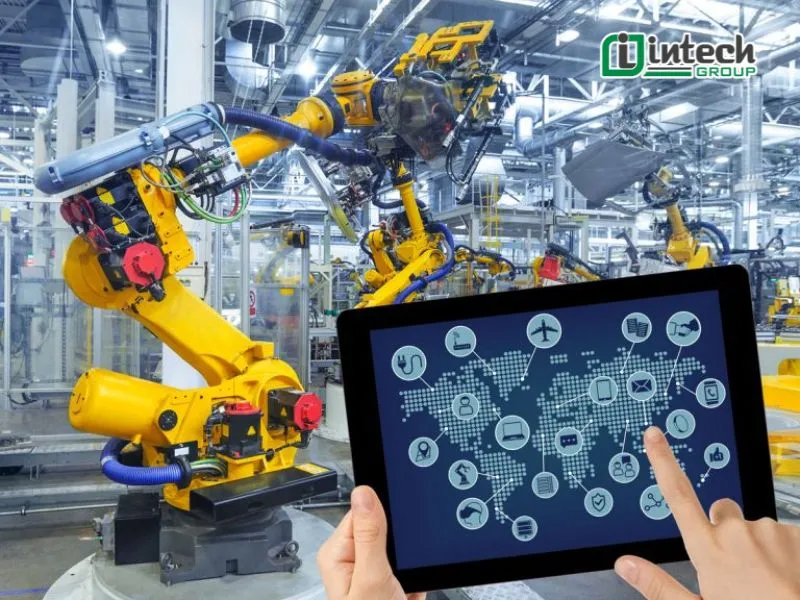
Benefits of automation in heavy industry
Automation is becoming the optimal solution in heavy industry, bringing many practical benefits to businesses and workers. Outstanding benefits include:
- Increased labor productivity: The automatic machinery system is capable of operating continuously 24/7, not affected by human factors such as fatigue or errors, thereby helping to increase output and ensure production progress.
- Improved product quality: Automation helps to strictly control technical parameters in each stage, ensuring uniformity and accuracy, minimizing technical errors and waste in the production process.
- Reduced operating costs: Although the initial investment cost may be high, in the long run, automation helps save on labor, maintenance, energy and raw material costs, while optimizing the production process.
- Ensuring labor safety: In dangerous working environments such as mines, smelters or mechanical factories, automation replaces humans in performing heavy, toxic work, thereby minimizing accidents and occupational risks.
- Increased system monitoring and control capabilities: Thanks to modern control and data collection technologies such as SCADA and IoT, businesses can monitor and analyze production activities in real time, easily detect and fix problems.
- Optimize resources and protect the environment: Automated systems can effectively control the amount of raw materials and energy used, reduce emissions and waste, contributing to green and sustainable industrial development.
- Promote digital transformation and competitiveness: Automation is an important stepping stone to help heavy industry adapt to the digital transformation trend, thereby improving competitiveness in domestic and international markets.
Applications of automation in heavy industry
Below are specific applications in some typical heavy industry fields:
- Mining
The mining industry is famous for its harsh working environment, with many potential risks of accidents. The application of automation has significantly changed the way of operation. Geological exploration and mining robots are used to survey dangerous areas that are difficult for humans to access.
In addition, remote control and operational monitoring systems help control mining machinery such as excavators and drills without the need for on-site operators, minimizing risks and increasing work accuracy.
- Steel and metal production
In the field of metallurgy, especially steel production, automation plays a key role. Automatic steel rolling lines are controlled by complex PLC (Programmable Logic Controller) systems, allowing precise control of the thickness, flatness and other mechanical properties of steel. This system is capable of self-adjusting operating parameters based on input and output data, helping to maintain stable product quality even when there are changes in input materials.
A network of temperature and pressure monitoring sensors is installed throughout the production process, from the furnace to the heat treatment stages. These sensors continuously collect and transmit data to the central control system, allowing precise temperature and pressure adjustment. At the Formosa Ha Tinh steel plant, the automatic temperature monitoring system has helped reduce energy consumption by 15% and improve the quality of finished steel.
The application of AI and machine learning in production data analysis is also gradually becoming popular, helping to predict equipment wear, optimize maintenance schedules and minimize unnecessary machine downtime. In some modern plants, the automation system is also capable of adjusting alloy composition and heat treatment conditions to achieve specific mechanical properties according to customer requirements.
- Cement production industry
The cement production process includes many complex stages such as grinding raw materials, mixing, burning, cooling and packaging. The integration of the SCADA (Supervisory Control And Data Acquisition) supervisory control system allows monitoring and adjusting all technical parameters in real time. Thanks to that, cement plants not only maintain stable output but also save energy, reduce material loss and improve product quality.
Typically, the SCADA (Supervisory Control and Data Acquisition) system has become the backbone of the automation process. This system allows comprehensive monitoring and control of complex processes from grinding raw materials, burning clinker to grinding and mixing finished products. At Nghi Son Cement Plant, the SCADA system controls more than 5,000 data points, helping to maintain continuous operation 24/7 with minimal human intervention.
- Shipbuilding and mechanical engineering
The shipbuilding and mechanical engineering industries require extremely high precision in every detail and weld. Industrial welding robots and modern CNC (Computer Numerical Control) plasma cutting systems have been widely applied to improve product quality and shorten construction time. 6-axis automatic welding robots are capable of performing complex welds with high precision and much faster than manual welders. At the Hyundai Vinashin shipyard, automatic welding robots have helped increase welding productivity by 300% and reduce defect rates to less than 2%.
The CNC (Computer Numerical Control) plasma cutting system allows cutting thick steel plates with millimeter precision, optimizing the use of raw materials and minimizing waste. Modern CNC laser cutting machines are also capable of cutting complex shapes without the need for templates, increasing production flexibility and reducing product changeover times.
Automation in warehouse management has become an inevitable trend with AGV (Automated Guided Vehicle) systems and smart warehouses. AGVs can automatically transport heavy materials in the factory along optimal routes, minimizing the risk of accidents and improving transportation efficiency. Smart warehouse systems with automatic storage and retrieval mechanisms help save space, reduce the time spent searching for materials and enhance inventory management.
In particular, digital technology combined with 3D simulation is being widely applied in design and assembly, allowing for design testing and optimization before actual production. In advanced shipyards, Digital Twin technology has helped reduce design and manufacturing time by 30%, while improving the quality of final products.
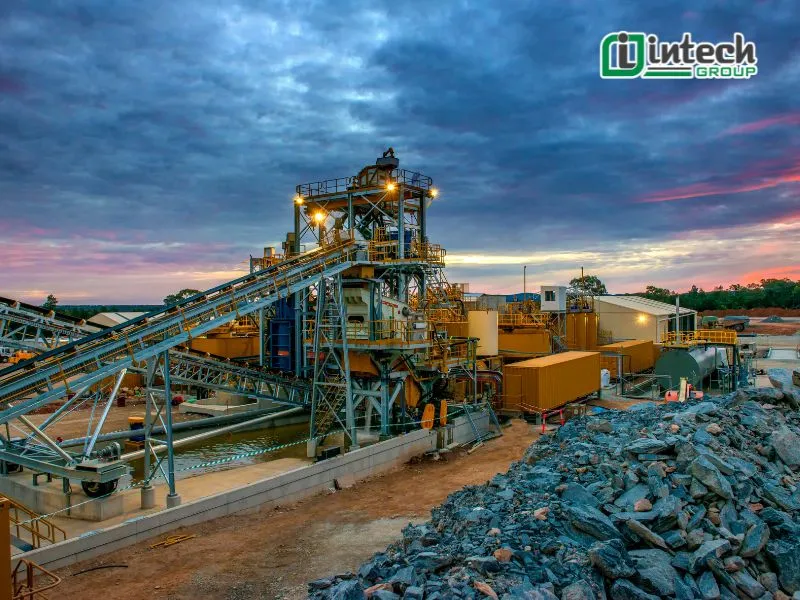
Challenges in automating heavy industry
Although automation in heavy industry brings many outstanding benefits, the implementation process of this industry still faces many challenges, specifically as follows:
- High initial investment costs: Purchasing equipment, control software, as well as upgrading technical infrastructure requires large capital, making many businesses, especially small and medium enterprises, hesitant to implement.
- Short of high-quality technical human resources: Operating and maintaining automatic systems requires a team of engineers and technicians with deep expertise, while human resources meeting this requirement are currently scarce.
- Difficulties in integrating with old systems: Many heavy industrial factories are still using traditional machinery, so integrating modern automation systems into old production lines faces many technical and cost obstacles.
- Cybersecurity and data risks: When automated systems are networked, the risk of cyber attacks, data leaks or loss of control of equipment becomes a serious threat, especially for critical control systems.
- Slow change in management thinking: Some businesses still maintain traditional management methods, not fully aware of the long-term benefits of automation, leading to delays or half-hearted implementation, not bringing the expected efficiency.
- Difficulty in standardizing and synchronizing technology: Each factory can use many different devices and software, without synchronization, the automation system is easily fragmented and operates inefficiently.
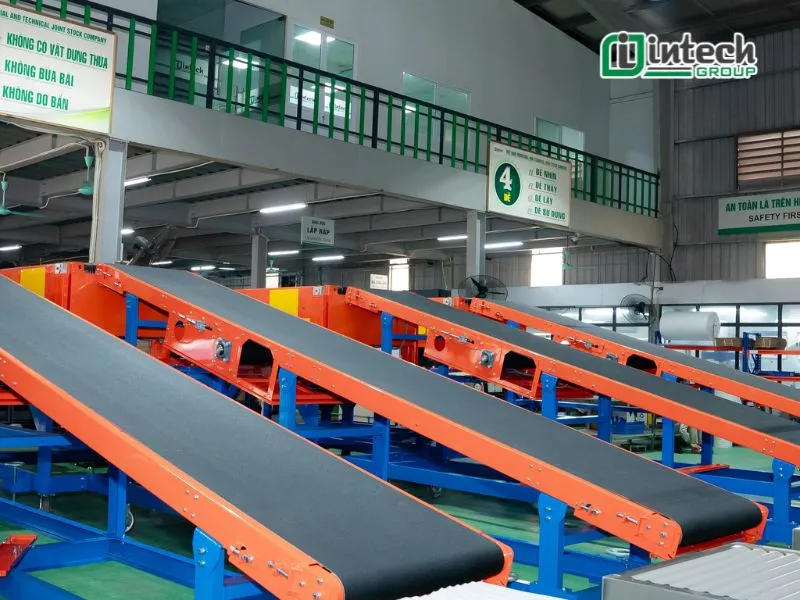
Heavy Industry Automation Solutions from Intech Group
Intech Group provides a wide range of automation solutions for heavy industry, focusing on improving efficiency, safety and sustainability. These solutions include:
- Heavy-duty conveyor systems
Intech Group's heavy-duty conveyors are specially designed to transport large-volume materials such as stone, coal, ore, cement and other heavy industrial products. With a large load capacity, this conveyor system meets the transportation needs in the harshest environments.
Outstanding features of Intech Group's heavy-duty conveyor systems:
- High-strength steel frame structure: Made from special alloy steel, with high load-bearing capacity and corrosion resistance, ensuring durability during long periods of continuous operation.
- Multi-layer anti-abrasion conveyor belt: Using special rubber technology with multiple layers of nylon canvas and polyurethane coating, it increases the durability and abrasion resistance 3 times compared to conventional conveyor belts.
- Intelligent control system: Integrated PLC and conveyor inverter, allowing the conveyor speed to be adjusted to suit the volume and type of transported materials, optimizing energy consumption.
- Online monitoring system: Using IoT sensors to monitor the temperature, load, speed and operating status of the conveyor belt, early detection of abnormalities and maintenance warnings.
- Industrial material handling system
Intech Group provides smart material handling solutions such as sorting, packaging, automatic feeding systems, etc. to help manage materials scientifically and effectively. These devices are often integrated with PLC control systems, sensors and monitoring software, allowing businesses to control the flow of materials accurately, minimizing loss and waste.
- Industrial Rollers
Industrial rollers are one of Intech Group's strong products, specially designed for heavy industrial applications such as steel, cement, mining and shipbuilding. These rollers play an important role in moving, positioning and processing products of large size and weight.
Intech Group's industrial roller product line:
- Super heavy duty rollers: Withstand loads up to 100 tons, use special alloy materials and high-precision industrial bearings, suitable for production lines of steel coils, plates and large metal structures.
- Smart navigation rollers: Integrate servo motors and position sensors, automatically adjust the direction of material movement, helping to accurately position during processing.
- Measuring rollers: Equipped with a precise measuring sensor system, helping to monitor and control the thickness, flatness and other technical parameters of the product during the production process.
- Heat-resistant rollers: Specially designed with heat-resistant materials up to 1000°C, used in hot rolling and heat treatment processes of metals.
- Abrasion-resistant rollers: The surface is coated with a special tungsten carbide or ceramic layer, which has high hardness and excellent wear resistance, extending the service life 5 times longer than conventional rollers.
- Laser Cutting Technology
Intech Group invests in a high-tech CNC laser cutting system, allowing metal cutting lines to be performed with absolute precision and outstanding speed. This technology is suitable for mechanical manufacturing, shipbuilding, and steel production factories - where high precision and the ability to process thick, hard materials are required. This solution not only shortens processing time but also saves materials and labor costs.
Intech Group's AGV (Automated Guided Vehicle) self-propelled robots are specially developed to transport heavy materials in complex industrial environments. This is an effective solution to increase transportation productivity, minimize work accidents and optimize working space.
Outstanding features of Intech Group AGV robots:
- High load capacity: AGV models can carry loads from 1 ton to 50 tons, suitable for a variety of transportation needs in heavy industry.
- Advanced guidance system: Combining many technologies such as laser mapping, SLAM (Simultaneous Localization and Mapping), magnetic guidance and AI camera, helping AGV move accurately in complex environments and adapt to changes in the working environment.
- High capacity lithium battery: Allows AGV to operate continuously for 12-16 hours and supports fast charging, reducing waiting time and increasing efficiency.
- Multi-layer safety system: Equipped with ultrasonic sensors, radar, 3D cameras and pressure sensors, helping to detect obstacles and people from all directions, ensuring absolute safety during operation.
- Smart AGV fleet management software: Optimize the travel route of multiple AGVs at the same time, allocate work reasonably and coordinate traffic in the factory, avoid congestion and collision.
- Smart warehouse system
Smart warehouse solutions integrate technologies such as barcodes, RFID, sensors and warehouse management software (WMS), helping to control inventory in real time, optimize storage locations and automate import and export processes. This system is especially suitable for heavy industrial enterprises with large and diverse volumes of materials, helping to save space and increase warehouse operation efficiency.
Automation solutions from Intech Group have been affirming their position as a trusted partner of many enterprises in the heavy industry. From heavy conveyor systems, industrial material handling, industrial rollers to laser cutting technology, AGV robots and smart warehouses - all are designed with advanced technology, meeting strict industry standards and bringing clear economic efficiency.
Automation in heavy industry is not only a tool to improve production efficiency, but also the key to helping this industry adapt to the trend of modernization and sustainable development. Although there are many challenges in the implementation process, with the right investment and the right solution selection, automation will continue to play a central role in the development strategy of industrial enterprises in the future.
With a team of experienced engineers, advanced technology and professional support services, Intech Group is committed to accompanying businesses on the journey of digital transformation and automation, towards sustainable development in the future. Contact Intech Group today for detailed advice and quotation:
- Hotline: 0966 966 032
- Address: Lot 6, Lai Xa Industrial Cluster, Tay Tuu Ward, Hanoi City
