


Overview of product sorting line
13-08-2025 143
Product sorting lines are an indispensable part of manufacturing and logistics systems, helping to optimize the distribution and management of goods. These lines are becoming increasingly automated and efficient, playing an important role in improving productivity, minimizing errors and saving time.
Mục lục
Accurate and fast classification of products not only helps businesses save costs but also improves service quality, creating sustainable values in the supply chain.
Main components of the product sorting line
Below is a list of the main components of the product sorting line
- Conveyor system
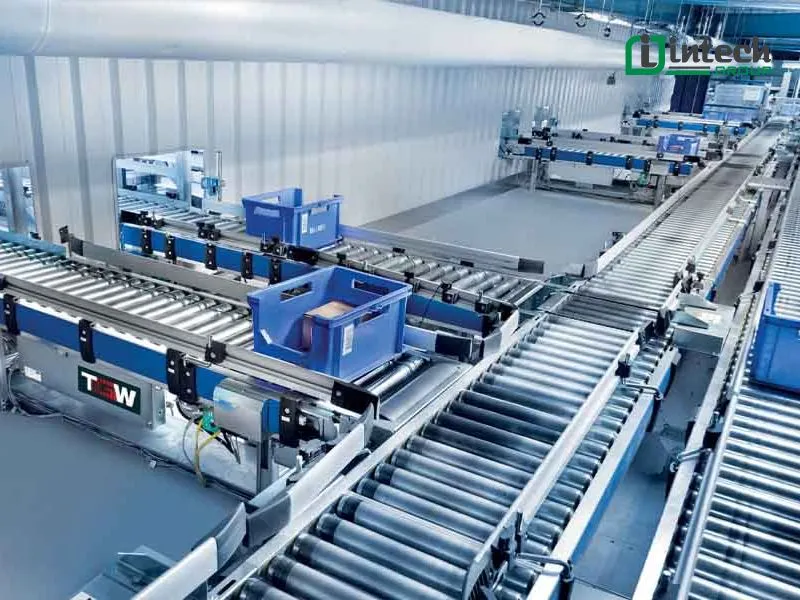
The conveyor is an important component in the product sorting line, helping to move goods automatically and continuously through sorting positions. Used to transport products through sorting stations (sensors, sorting mechanisms) from input to output.
Ensure continuous, stable, and synchronized flow between stages.
The conveyor system can be designed according to the specific requirements of the process, including factors such as speed, size, and weight of the product.
There are two common types of conveyors in sorting lines:
- Belt conveyors: This is the most common type of conveyor, using a continuous belt to transport products along the sorting line.
- Roller conveyors: This type of conveyor uses rollers to move goods. It is often used for larger or heavier products.
Conveyors help automate product transportation, reducing manual handling, thereby improving productivity and efficiency. In addition, this system also helps synchronize processes, such as scanning, sorting and packaging, thanks to the ability to adjust the speed and travel time of the product.
- Sensors and detection devices
Sensors and detection devices play an important role in collecting information about products during the sorting process. Some commonly used types of sensors include:
- Barcode scanners: Use laser or imaging technology to scan barcodes on products. This information helps identify and locate each product for sorting.
- Computer vision systems: Cameras and image processing algorithms allow for the analysis of product characteristics such as shape, color, and size. This system is flexible and can serve many different sorting applications.
- Proximity sensors: These sensors help detect the presence of objects without direct contact. They use electromagnetic waves, ultrasound, or infrared to sense objects within close range.
- Weight sensors: Used to measure the weight of products, helping to sort items based on volume. Weight sensors are integrated into conveyor systems, supporting applications that require sorting by weight criteria.
The quality and accuracy of sensors greatly affect the efficiency of the sorting line, including the speed of operation, the ability to detect errors, and the accuracy of data. Precise sensors ensure that the sorting process is fast, efficient and accurate, and help make optimal decisions based on the collected data.
- Sorting mechanism
+ Sorting arm
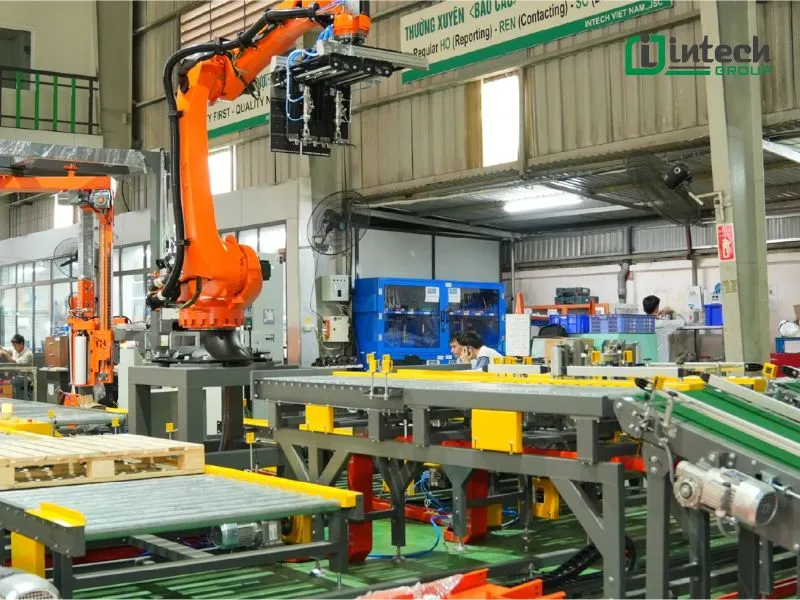
A sorting arm is a mechanical device used to move products to the appropriate sorting position. This arm is fixed on the conveyor line, and as the product moves, the arm moves across and pushes or pushes the product into the correct required area.
+ Cross-belt sorter
A cross-belt sorter consists of a series of conveyors attached to a continuous conveyor system. As the product moves through, the upper conveyors move to bring the product into the required sorting position.
+ Swivel wheel sorter
This system has conveyors combined with swivel wheels, located at the intersections of the conveyor and the sorting points. As the product moves through, these wheels rotate 360 degrees to push the product into the correct position, then continue to move it to the destination on the conveyor system.
+ Lifting roller sorter
This is a system that includes thin conveyor belts combined with push bars underneath. As the goods move, these push bars will rise and push the product into the correct position. This system is often used in distribution centers and logistics facilities to sort products according to many criteria such as address, size or product type.
+ Skate sorter
The skate sorter uses skates to position and push the product into the sorting areas. As the goods pass through, the skates will move across the conveyor and push the product into the appropriate sorting areas, especially useful for products of different sizes and weights.
- Control systems and software
Control systems and software are important factors in the management and optimization of the sorting line. They help ensure that the sorting process is accurate and efficient according to established criteria.
- Automatic sorting:The control system automatically receives information from sensors such as barcode scanners or vision systems to identify and sort products. Based on the installed algorithms, the system will direct the products to the appropriate sorting location.
- Conveyor control: Conveyor control systems are responsible for managing the speed, direction, and acceleration of the conveyor, helping to optimize the product transportation process and ensure a smooth product flow.
- Sorting algorithms: Sorting algorithms consider factors such as product type, size, weight, destination, and related criteria. The control software executes these algorithms in real time, allowing flexible adjustments to product sorting decisions.
- Error detection and recovery: The system is capable of identifying problems such as misclassified products or congestion. When an error occurs, the control software automatically triggers corrective actions, such as adjusting the product path or notifying the operator.
Integration with enterprise systems: The control system can be connected to enterprise management systems such as warehouse management systems (WMS) or enterprise resource planning (ERP) systems, helping to synchronize and optimize sorting processes throughout the supply chain.
Currently popular product sorting lines
Based on their specific characteristics, current sorting lines are divided into many different types such as by weight, barcode, color and size.
- Product sorting line by weight
Weight sorting lines are widely used in industries such as food, packaging and component manufacturing. This system includes electronic scales combined with automatic conveyors, allowing quick and accurate product sorting by weight.
Applications:
- Sorting fruits by size and weight.
- Production of food packaging according to specified weight.
- Barcode product sorting line
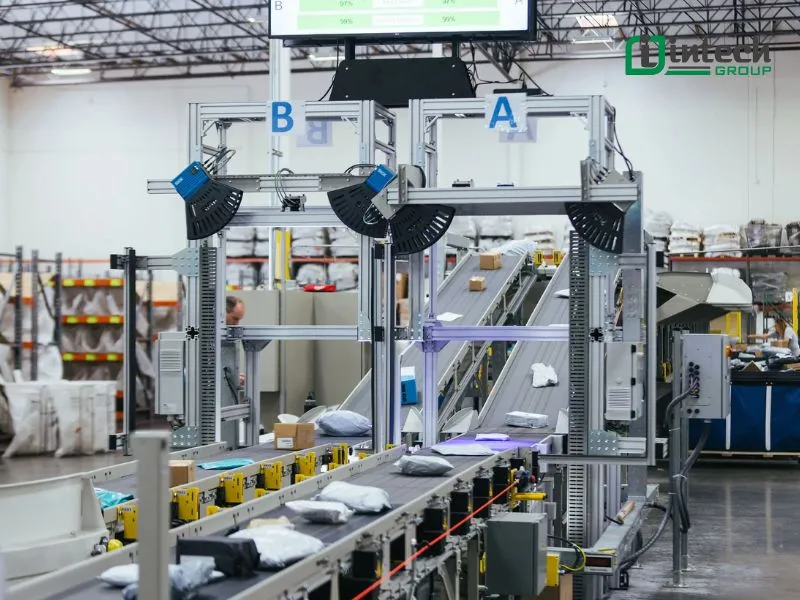
The barcode sorting system meets the need for fast and accurate sorting in industries such as logistics and warehousing. Barcode or QR code sensors are integrated on the conveyor belt to read product information and automatically sort.
Applications:
- Sorting goods in the shipping warehouse center.
- Processing products on the packaging line in factories.
- Color sorting line
This line uses optical sensors or AI cameras to distinguish products based on color. This type of sorting is suitable for the food industry (tomatoes, chili, coffee, colored plastic beads, rice, ...) and textiles.
Applications:
- Sorting vegetables by age.
- Distinguishing fabrics or components by color.
- Product sorting line by size
This type of line uses sensors or automatic measuring systems to determine product size. This is an important system in electronic or food manufacturing plants.
Applications:
- Sorting electronic components based on diameter or length.
- Sorting product packaging by size on the line.
Benefits of product sorting lines
Here is a detailed analysis of the benefits that product sorting lines bring.
- Increase labor productivity
The product sorting line integrates modern technologies such as automatic conveyors, sensors and AI cameras. Thanks to that, the system can classify products quickly and accurately, helping to increase production speed without relying much on manual labor.
- Reduce operating costs
Using a sorting line helps businesses save significantly on personnel costs and reduce resource waste. Thanks to its automation and continuous operation, the system meets the needs of large-scale production without significantly increasing costs.
- Improve product quality
The sorting line system uses modern sensors to accurately evaluate each product based on criteria such as size, weight, color or barcode. Thanks to that, businesses ensure the uniformity and high quality of products when they reach customers.
The application of modern systems such as product sorting lines not only increases production efficiency but also helps businesses build prestige and enhance their professional image in the eyes of customers.
- Increase accuracy in warehouse management
In the logistics and warehousing industry, product sorting lines help to quickly process goods according to barcodes or QR codes. This helps to optimize warehouse management, minimizing errors in sorting and receiving goods.
Summary
Product sorting lines are not only an important part of production and distribution systems, but also play a key role in improving the operational efficiency of enterprises.
With the support of modern technologies such as sensors, automatic control systems and intelligent sorting mechanisms, the sorting process is becoming increasingly accurate, fast and cost-effective. Therefore, investing in a product sorting line is a strategic step to help businesses maintain competitiveness in an increasingly fierce market.
