


Snack Production Line: Optimizing the Food Industry
12-08-2025 919
Crispy snacks are a familiar snack and are loved by many people thanks to their diverse flavors and attractive crunchiness. To meet the increasing demand of the market, the crisp snack production line has been applied with modern technology, helping to optimize the production process from raw material processing to finished product packaging.
Mục lục
What is a snack production line?
A snack production line is a system of automatic or semi-automatic machines and equipment that operate in a continuous process to process raw materials, such as potatoes and corn, into crispy snack products with many different flavors.
This process includes many stages such as washing, peeling, slicing, frying or baking, seasoning, cooling and packaging. Using an automatic production line not only helps improve product efficiency and quality but also ensures consistency, saves labor costs and quickly meets market needs.
How does a snack production line work?
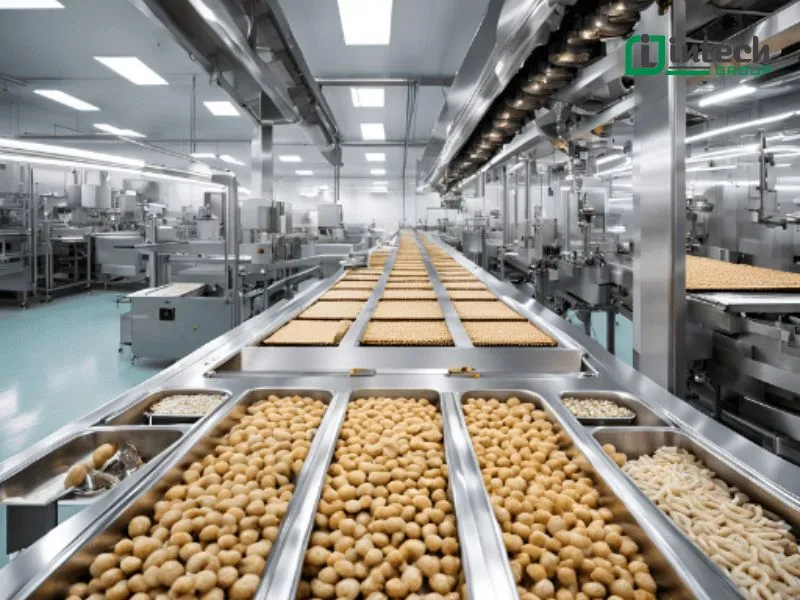
A snack production line is a combination of mechanical and automation technology, helping to optimize the process from raw material preparation to finished product packaging. This process takes place in the following specific steps:
- Feeding and mixing raw materials: Raw materials such as corn flour or potatoes are fed into the automatic feeding system in a predetermined order, then mixed well with a high-capacity mixer.
- Shaping: The dough is fed through an extruder or mold to form chips of uniform size and shape.
- Cooking/Baking: The shaped chips are transferred to an oven or high-capacity frying system. The oven and conveyor belt are programmed to ensure the product has the desired crispiness and flavor.
- Seasoning: After frying or baking, the chips are fed through conveyor belts and sprinkled with spices from the flavoring hoppers.
- Cooling: The vortex fan system cools the chips, helping the product achieve optimal crispiness and prepares it for the next step.
- Packaging: After cooling, the chips are automatically packaged according to weight and size specifications, ready to be marketed.
This line not only helps to increase productivity but also ensures the quality and consistency of each snack product.
Benefits of snack production line
The application of automatic production lines in the snack manufacturing industry brings many outstanding benefits:
- Increased efficiency: Automatic lines reduce dependence on manual labor, shorten production time and increase product output.
- Ensuring quality and consistency: Thanks to precisely programmed technical parameters, each snack product meets the standards of crispness, flavor and shape.
- Reducing waste: The automation process helps to optimize raw materials, save resources and minimize loss thanks to accurate measurement in each production stage.
- Saving labor costs: Replacing manual labor with machines helps to reduce labor costs and increase economic efficiency.
- Easy scalability: When production needs to increase, businesses only need to adjust the machine capacity without having to change the chain structure.
- Improving labor safety: Reducing manual work helps reduce the risk of accidents, ensuring a safer working environment for employees.
Automatic production lines not only help businesses meet market demand quickly but also maintain stable product quality, increasing competitive advantage in the food industry.
Popular snack production lines today
- Potato chip production line
Potato chips are one of the most popular snacks worldwide. The industrial potato chip production process usually includes the following main steps:
- Selection and washing: High-quality potatoes are carefully selected and washed with water to completely remove dirt.
- Peeling and slicing: Potatoes are peeled, then sliced into thin, even slices to ensure they are crispy and have a nice texture.
- Blanching: Potato slices are quickly blanched in hot water to remove excess starch, which helps increase crispiness when fried.
- Frying: Potatoes are deep-fried in oil at temperatures from 170°C to 190°C until they are puffed, golden brown and crispy.
- Seasoning: After frying, the chips are coated with additional seasonings or flavorings according to taste, providing a variety of flavors for consumers.
- Cooling and packaging: Potato chips are cooled quickly to maintain their crispiness, then packaged in specialized waterproof and light-proof bags to preserve the product for longer.
This process helps create high-quality potato chips, meeting the growing demand of the snack food market.
- Corn Snack Production Line
Corn snacks are increasingly popular due to their variety in processing methods and flavors. The production process of this snack includes the following main steps:
- Corn milling: Corn kernels are ground into coarse or fine powder as required, which is the basic material for the corn snack production process.
- Mixing and extruding: Wet corn flour is mixed with other additives, then passed through an extruder at high temperature and shaped with various molds.
- Puffing: Corn products are baked at high temperature to form crispy, spongy cakes with a characteristic structure.
- Seasoning: Depending on taste, corn cakes are coated with spices from spicy to sweet, bringing a rich flavor experience to consumers.
- Packaging: After completion, corn snacks are packaged in polythene bags or specialized boxes to maintain freshness and extend shelf life.
Corn snack production lines apply automation technology and modern techniques, contributing to improving productivity and meeting diverse market needs. It is the sophisticated combination of advanced technology and optimized processes that has become the foundation for innovation and development of the snack industry.
Essential machinery in the snack production line
The snack production line cannot operate effectively without modern machinery. Each device plays an important role, contributing to creating products that meet quality and quantity standards.
- Washing and peeling machine: This is the first device in the line, helping to clean and remove the skin of potatoes, corn and raw materials, ensuring clean and safe input materials.
- Slicing or shaping machine: This machine cuts potatoes into uniform thin slices or shapes corn raw materials into beautiful snack pieces.
- Frying machine: Programmed to fry snacks at a stable temperature from 170°C to 190°C, the frying machine helps the product achieve perfect crispiness and beautiful golden color.
- Seasoning machine: After frying, the chips are transferred to the automatic seasoning sprinkler system, which helps to evenly coat the flavors.
- Cooling machine: This device helps to reduce the temperature of the chips after frying, keeping them crispy before packaging.
- Packaging machine: The final chips are put into the automatic packaging system, ensuring the product is airtight, keeping them fresh and extending their shelf life.
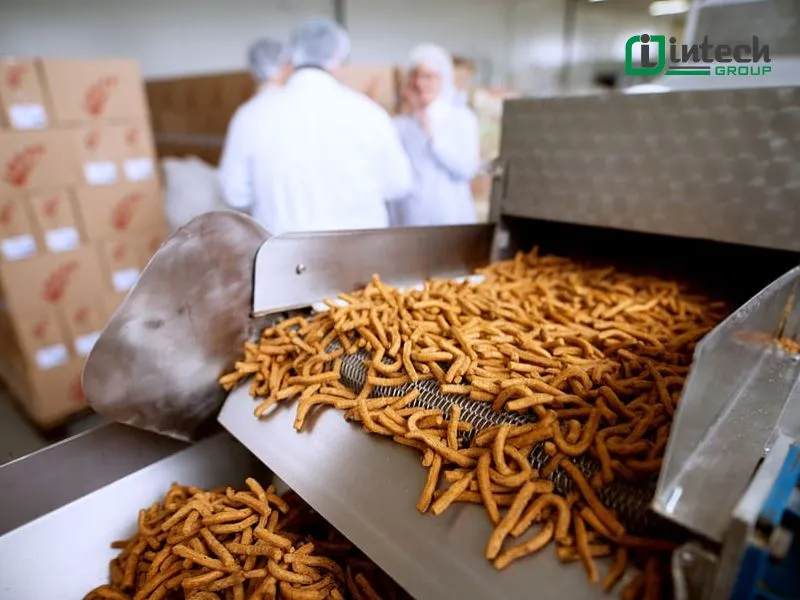
Conveyor belt: helps move raw materials such as potatoes or corn from the preparation area to the next steps such as peeling, slicing or mixing ingredients. The conveyor belt connects the machines in the line, from frying, seasoning to cooling and packaging, helping the process to be continuous and automatic.
Thanks to the coordination of these machines, the production process of chips becomes fast, efficient and meets the increasing demands of the market.
Thanks to the application of automatic snack production lines, the process of creating this product becomes fast, efficient and meets food hygiene and safety standards. This not only brings high quality products to consumers but also helps businesses improve their competitiveness in the snack food market.
Thanks to the coordination of these machines, the production process of chips becomes fast, efficient and meets the increasing demands of the market.
Thanks to the application of automatic snack production lines, the process of creating this product becomes fast, efficient and meets food hygiene and safety standards. This not only brings high quality products to consumers but also helps businesses improve their competitiveness in the snack food market.
