


The most detailed explanation of cereal powder production line
11-08-2025 415
Cereal powder production line is becoming the optimal solution for businesses in the food industry. With a closed, highly automated process, this system helps improve productivity, ensure product quality and meet the growing needs of the market.
Mục lục
So what equipment does a cereal powder production line include and how does it work? Let's find out the details in the article below.
Main ingredients in the cereal powder production line
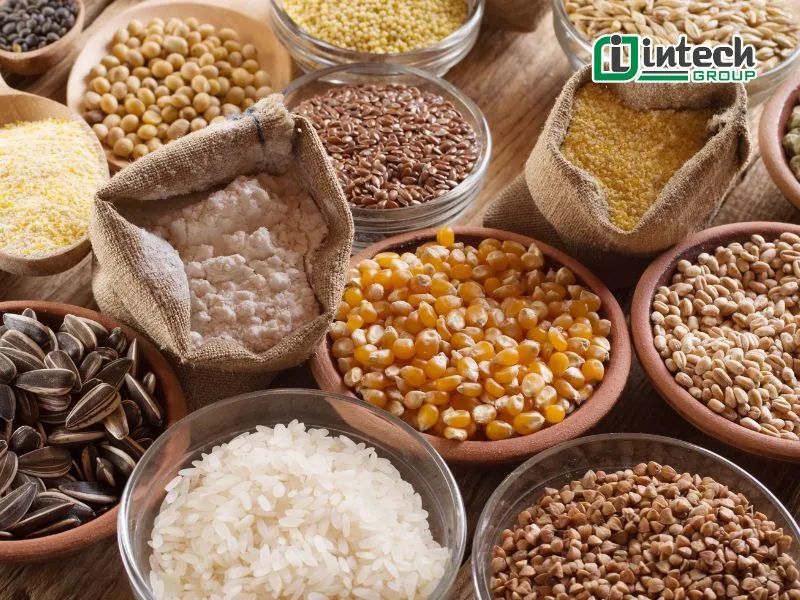
Cereal powder is an important nutritional food, providing essential energy and nutrients. The main ingredients in the cereal powder production line include:
Main cereal grains:
- Brown rice: Rich in fiber, vitamin B, aids digestion.
- Wheat: Provides starch, protein, energy.
- Oats: Helps reduce cholesterol, good for the heart.
- Corn: Rich in carbohydrates, vitamin A.
- Soybeans: Provides vegetable protein.
Nutritional supplements:
- Chia seeds: Rich in omega-3, fiber.
- Cashews, walnuts, flax: Provide healthy fats, antioxidants.
Natural additives:
- Honey, cane sugar: Create natural sweetness.
- Cocoa powder, milk powder: Add flavor, protein.
The raw materials must meet food safety standards, not contain toxic chemicals and be properly preserved. Choosing quality raw materials helps cereal powder to be nutritious, safe and good for health.
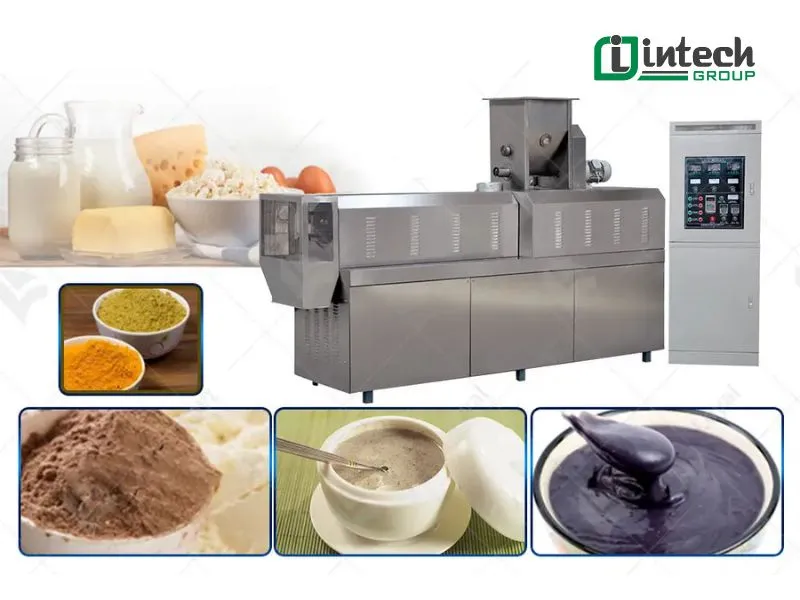
Operating process in cereal powder production line
- Raw material preparation stage
The cereal powder production process begins with the selection and careful inspection of raw materials. Cereals such as rice, corn, soybeans, oats, almonds, and other nuts are carefully selected to ensure quality.
These raw materials must meet standards of cleanliness, free of impurities, mold or insects. Raw material inspection is carried out by qualified specialists, using specialized methods and equipment.
- Cleaning and screening
After being selected, the cereal grains will be put through a modern cleaning system. Here, the grains will be washed with pure water, completely removing dirt, sand, small stones and other impurities. Specialized screening machines will classify and remove substandard grains, helping to ensure product consistency.
- Roasting and heating
The roasting stage is one of the most important steps in the production process. The grains are put into the roaster with precisely controlled temperature and time. This process helps:
- Break down the starch structure
- Enhance flavor
- Sterilize
- Reduce the moisture content of the raw materials
The roasting temperature and time are adjusted depending on each type of raw material to bring out the color and flavor.
- Grinding and milling
After roasting, the grains are put into a modern grinding and milling system. Specialized grinding machines will turn the raw materials into fine powder with precisely controlled fineness. This process is carried out under sterile conditions, preventing contamination from the outside.
- Mixing and blending
At this stage, cereal powders are mixed according to each product's own formula. Nutritionists will calculate the nutritional ratio, ensuring that the final product has all the necessary nutrients. Modern mixers help to mix evenly and accurately.
- Packaging and storage
After being mixed, cereal powder products will be put into the automatic packaging system. This process takes place in a sterile environment, using specialized bags and packaging to protect the product from light, moisture and air. Each product is printed with labels, production date and expiration date in detail.
- Quality control
Throughout the process, quality control is carried out continuously. Professional laboratories conduct microbiological tests, safety and nutritional value of the product. Only products that meet the standards are allowed to circulate on the market.
The process of producing cereal powder is not only a technological process but also a combination of science, technology and human dedication to bring nutritious, safe and quality products to consumers.
.webp "explanation of cereal powder production line")
Main equipment in the cereal powder production line
To produce cereal powder that meets quality standards, factories need to use a modern production line with the following main equipment:
- Raw material cleaning machine: Before processing, grain materials such as soybeans, brown rice, wheat, oats, etc. need to be cleaned to remove impurities, dirt, grit and broken grains. The cleaning machine includes a vibrating screen system, a fan and a magnet to remove metal.
- Dryer: After cleaning, the raw materials need to be dried to preserve them longer and create crispness for the roasting process. The dryer can use convection drying, infrared drying or freeze drying technology depending on production requirements. A conveyor dryer can be used to increase the efficiency of grain drying many times over.
- Roaster: Roasting is an important step to help the raw materials have a more delicious flavor and be easier to grind. The roaster can be a rotating drum, a fluidized bed or use infrared roasting technology to ensure even temperature and avoid burning.
- Grinder: After roasting, the raw materials will be put into the grinder to form a fine powder. Common types of mills include hammer mills, roller mills or superfine mills. Depending on the desired fineness, businesses can choose the appropriate equipment.
- Screening machine: After grinding, the cereal powder is screened to ensure uniform size, removing substandard particles. The screen can be vibrating or aerodynamic to help classify the powder according to fineness.
- Mixer: If the product needs to add other ingredients such as sugar, milk powder or flavoring, the mixer will help mix the mixture evenly to ensure consistent quality.
- Packaging machine: Finally, the cereal powder is packaged by an automatic packaging machine to ensure food hygiene and safety. The packaging machine can use vacuum packaging technology, heat sealing or zip bag form to preserve the product for a long time.
Thanks to modern production lines and advanced equipment, cereal powder is produced with high quality, meeting the nutritional needs and convenience of consumers. Optimizing equipment in the process will help improve production efficiency and ensure food safety standards.
Investing in a cereal powder production line not only helps businesses improve production efficiency but also ensures consistent product quality, meeting food safety standards. If you are looking for the optimal solution for the cereal production industry, choose the right system to optimize the process and increase competitiveness in the market.
