


The most detailed explanation of Coca Cola production line
12-08-2025 5.763
Coca-Cola is one of the most famous carbonated soft drink brands in the world, loved by millions of people. To create bottles of Coca-Cola with a distinctive flavor and consistent quality, a modern and highly automated Coca Cola production line is extremely important.
Mục lục
From raw material processing, mixing, CO₂ injection to product packaging, each stage is strictly controlled to ensure food hygiene and safety and optimal performance.
Main ingredients in the Coca Cola production line
The main ingredients in the carbonated water production line such as Coca-Cola or Pepsi include ingredients such as water, sugar or sweetener, CO₂ gas, flavoring and some other food additives.
- Water makes up the majority of the product's ingredients and must go through a strict filtration and processing process to ensure purity.
- Sugar or sweeteners (such as high fructose corn syrup in some markets) help create a characteristic sweetness.
- CO₂ gas is injected into the water to create gas, giving a refreshing feeling when drinking.
- Secret flavoring is the factor that creates the characteristic flavor of Coca-Cola, combining many different ingredients.
- Some additives such as phosphoric acid or citric acid help adjust the acidity, preservatives maintain the quality of the product, and caffeine creates a feeling of alertness when used.
All of these ingredients are mixed in precise proportions to create a consistent, characteristic flavor of Coca-Cola.
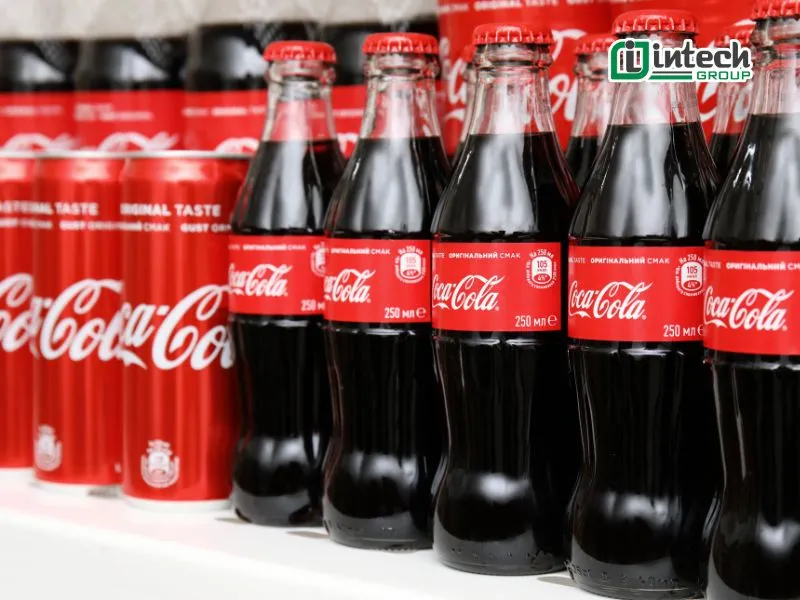
How does the Coca Cola production line work?
The Coca-Cola production line is a highly automated and strictly controlled process to ensure quality, consistent flavor, and large output. Here are the main stages in this process:
- Water treatment
High quality water is essential for the production of carbonated soft drinks. To ensure that the water meets this standard, it must be treated before entering the production line. Natural water can contain bacteria and organic impurities, so they need to be removed before processing.
The water treatment process includes the steps of precipitation, filtration, and chlorination. This helps prevent contamination of the final product, avoiding affecting the health of consumers.
- Syrup production
The first step in the Coca-Cola production process is to create the syrup, as this is the ingredient that determines the flavor of the product. To ensure that the sugar is evenly dissolved, a cooking tank with a hand-stirring speed of about 120 rpm is used, which helps to create a syrup with a stable and smooth texture.
To produce syrup, sugar or artificial sweetener is mixed with the necessary flavorings. This process requires heating and stirring to dissolve the sugar and solid ingredients into a liquid form. However, the sugar mixture must reach 90°C before acidic flavors can be added.
Once the syrup is created, it is transferred to a large tank and stirred slowly to avoid creating air bubbles. Stirring too quickly can introduce air into the syrup, changing the texture and flavor of the product, making the quality inconsistent.
- Mixing water and syrup
The next step is to mix the treated water with the syrup in the tank. In this tank, there is an automatic mixing system that ensures that the mixture is completely dissolved, leaving no residue or impurities. It is important that the final product does not have any impurities floating on the surface.
The mixing system in the tank works more efficiently than a conventional mixer, as it can reduce mixing time by up to 90%, increasing production efficiency and profits.
This mixing system consists of a rotor/stator unit. The rotor rotates at high speed, sucking in raw materials and pushing them through the mixing head. Here, the strong shear force between the rotor and the stator helps clean the mixture, completely removing any remaining impurities. Then, the liquid is pushed through the holes of the stator and returns to the tank to continue the mixing process.
This process is repeated many times until the mixture reaches the desired clarity. The mixture is then transferred to another tank to continue producing a new batch.
The entire system is fully automated, so there is little need for manual labor at this stage in the production line.
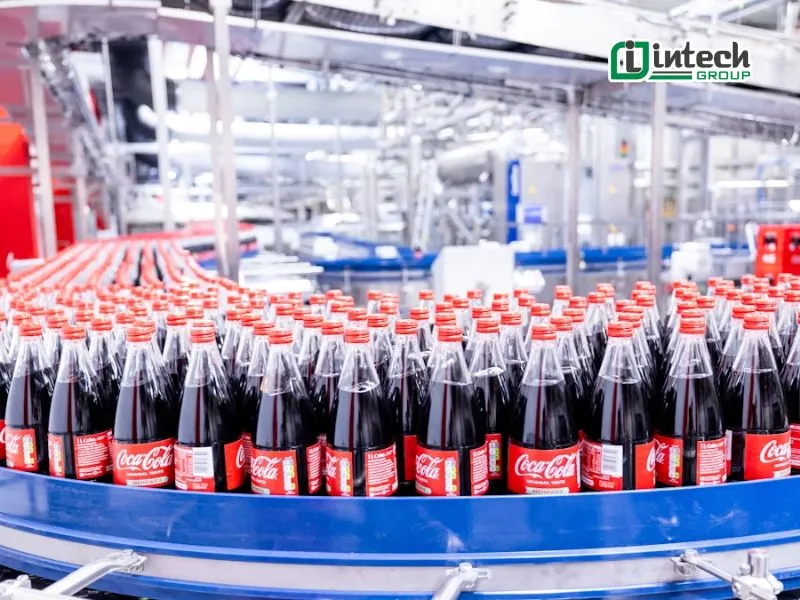
- Pasteurization of the solution
Pasteurization is an important step in the production of carbonated beverages containing fruit or perishable ingredients. This process eliminates bacteria and microorganisms in the solution, ensuring the product is safe for consumption.
Usually, the solution is sterilized right in the tank. There are two main methods: ultraviolet (UV-C) irradiation to kill bacteria or flash pasteurization. Flash pasteurization requires rapid heating of the solution to 71.11°C - 82.22°C for about a minute, followed by rapid cooling. This short period of time helps preserve flavor and avoid over-cooking. Both methods increase the shelf life of the product.
- Injecting CO₂ gas into the solution
Injecting CO₂ gas is the most important step in the production of carbonated soft drinks. Usually, this step takes place at the end of the production process, but in some cases, the water can be injected with gas first.
Before CO₂ is added, the solution is filtered through a filter at the outlet to remove impurities, which helps prevent the risk of contamination.
The solution is then fed into the gas pump, where it is cooled to 5°C. Next, CO₂ gas is pumped in under high pressure. Thanks to the low temperature and high pressure, the solution can absorb the maximum amount of CO₂. This process usually lasts 2 to 3 hours to ensure that the CO₂ gas is completely dissolved, giving the drink a good fizz when the lid is opened.
- Filling into bottles or cans
Once the solution is complete, it is filled into bottles or cans. This process is automatic, requiring only a few supervisors to ensure that no problems occur. To avoid contamination, the filling process usually takes place in a separate area.
The bottles or cans are fed into an automatic conveyor belt, which is operated by a system of rollers and rotating motors. Conveyors have multiple layers of rubber to help maintain structure and transport goods efficiently. To avoid damage, conveyors are always placed high up instead of close to the ground.
The filling machine is one of the most important equipment in the production line. If the machine is not working effectively, CO₂ gas can be lost, reducing the carbonation of the beverage. The filling machine is usually in the form of a container with a piston inside, which helps draw the solution from the tank below and pump it into the bottle or can. There are three common types of filling machines:
- Pneumatic machines - use compressed air to push the solution into the bottle.
- Hydraulic machines - use water pressure.
- Screw-driven machines - driven by mechanical motors.
When setting up a beverage factory, it is necessary to choose a filling machine that can adjust the bottle size to suit different types of products. In addition, the machine must be equipped with an advanced cleaning system to avoid the risk of contamination.
- Capping or sealing the bottle/can
After being filled, the bottles or cans continue to move on the conveyor and are immediately capped to prevent CO₂ gas from escaping, preserving the flavor of the product.
To prevent the bottle/can from falling off the line, a machine protection system is installed around the conveyor, ensuring the capping process is safe and efficient.
- Labeling and packaging
Because the drinks are cold after carbonation, there is a machine that sprays warm water into the bottles so that they reach room temperature and the label sticks.
The label contains detailed information about the ingredients, expiry date and brand. Most labels are made of paper, but some are plastic. The cans are usually printed before being put into the production line.
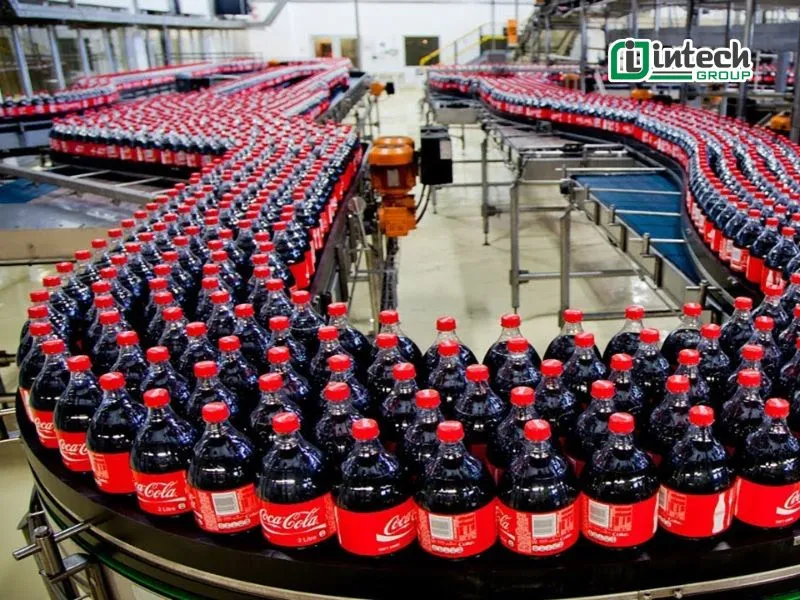
Machinery in Coca Cola production line
The Coca-Cola production line is a highly automated system, using many types of modern machinery to ensure the best quality products and high production efficiency. Each stage in the process is supported by specialized equipment, from raw material processing to finished product packaging.
- Water treatment machine
Water is the main ingredient in Coca-Cola, so it needs to be strictly treated before being put into production. The water filtration and treatment system includes equipment such as:
- Sediment filter to remove solid impurities.
- UV sterilizer or chlorine sterilizer to kill bacteria.
- Water softener helps stabilize pH, ensuring water meets food safety standards.
- Syrup mixing machine
Syrup is the ingredient that creates the characteristic flavor of Coca-Cola. The syrup mixing process requires:
- A cooking tank with a stirring system to dissolve sugar and sweeteners.
- Heater to reach the required temperature before adding flavoring.
The tank system has a slow agitator to help the syrup have a uniform consistency, avoiding air bubbles.
- Water and syrup mixer
After the syrup is mixed, it is mixed with water in a mixing tank with a high-speed agitator. This agitator has a rotor/stator, which helps to mix the ingredients evenly and remove any remaining impurities.
- Pasteurization machine
Sterilization helps to kill bacteria and increase the shelf life of the product. The two main methods used are:
- UV-C irradiation to kill bacteria without affecting the flavor.
- Flash pasteurization heats the solution to 71-82°C for a short time, then cools it quickly to preserve the flavor of the product.
- CO₂ gas pump (carbonation machine)
This is an important device that helps create the carbonation of Coca-Cola. The CO₂ gas injection process takes place in a high-pressure gas pump, with the main steps:
- Cooling the solution down to 5°C to increase the solubility of CO₂.
- Injecting CO₂ gas under high pressure to achieve the desired gas concentration.
- The solution is kept in the machine for 2-3 hours for the CO₂ gas to completely dissolve.
- Filling machine
After completing the above steps, the product is put into the automatic filling machine. This machine can be filled into glass bottles, plastic bottles or aluminum cans. There are three common types of filling machines:
- Pneumatic filling machine - uses compressed air pressure to push the solution into the bottle.
- Hydraulic filling machine - uses water pressure to pump the solution.
- Screw-driven filling machine - uses a mechanical motor to adjust the filling amount.
- Capping machine
After filling, the bottle or can is transferred to the automatic capping machine. This machine helps:
- Close the cap quickly to keep CO₂ from escaping.
- Ensure the cap is tight, avoiding solution leakage.
- Work in sync with the filling machine to maintain high production speed.
- Labeling and packaging machine
After capping, the product will be transferred to the labeling and packaging machine, including:
- Automatic labeling machine, which helps to print and label the bottle/can accurately.
- The packaging machine arranges the cans or bottles into cartons or heat-shrinkable plastic bags before sending them to the market.
- Automatic conveyor system
During the production process, Coca-Cola bottles and cans are transported through the automatic conveyor system. This system ensures:
- Continuous product flow, without blockage.
- Flexible speed adjustment to suit each production stage.
- Ensure safety during transportation, avoid broken bottles/cans.
In summary
Coca Cola production line is not only a modern industrial process but also a combination of advanced technology and high quality standards. Thanks to the automated production system, Coca-Cola can meet global consumer demand with products that are stable in flavor, carbonation and safety. This is an important factor that helps Coca-Cola maintain its leading position in the carbonated beverage market.
