


The most detailed fruit juice production line
11-08-2025 468
Fruit juice is one of the popular products thanks to its delicious taste and high nutritional value. To meet the increasing consumer demand, businesses have applied modern production lines to improve product quality, ensure food hygiene and safety and optimize processing procedures.
Mục lục
So, what stages does the fruit juice production line include and what role does it play in the food industry?
What is a fruit juice production line?
A fruit juice production line is a system of equipment and technological processes designed to process fruit into juice, serving consumer needs or industrial production.
This line includes many consecutive stages, from raw material processing to finished product packaging, ensuring food quality and safety.
In Vietnam, juice is made from many different types of fruit such as: orange juice, carrot juice, tomato juice, apple juice, pineapple juice, mango juice, etc.
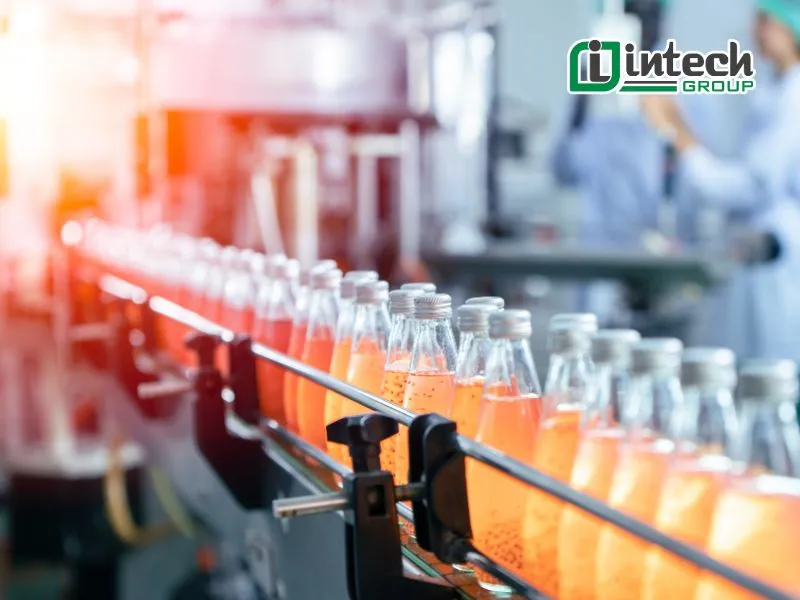
Process in the fruit juice production line
The process in the fruit juice production line can vary depending on the type of fruit, production scale, technology used and final juice type:
- Harvesting and sorting raw materials
- Harvesting fruit at the optimal ripening time
- Checking and sorting fruit according to quality standards
- Removing damaged and substandard fruit
The production process begins with the selection of input materials. Fruits must meet standards of freshness, ripeness, and not be crushed or infected. After that, the raw materials are transported to the factory and quality checked before being put into the production line.
- Pre-processing and cleaning:
- Wash the fruit with clean water or mild disinfectant solution
- Remove the stem, seeds, peel (depending on the fruit type)
- Cut the fruit into suitable size

- Hot water treatment system
The hot water treatment system consists of a plate heat exchanger, a hot water tank, a water pump and a group of steam valves. The main function is to heat the pure RO water to 80-90℃ and supply hot water to the sugar/flour dissolving tank and the mixing tank to dissolve and mix the ingredients.
The whole system is made of SUS304 material and the heating method can be steam or electricity.
- Fruit pressing
- Crush the fruit with an industrial crusher
- Press to separate the juice from the pulp with a hydraulic press or a pressing conveyor
- Recover raw juice
After pre-processing, the fruit is put into the press to extract the juice. Depending on the type of fruit, different pressing methods such as screw pressing, hydraulic pressing or centrifugation can be used. The pulp after pressing can be used as animal feed or processed into by-products.
- Filtration and purification
- Filter the juice through the filtration system to remove residue and solids
- Centrifugation to separate different components (depending on product requirements)
- Adjust the consistency of the juice to the standard
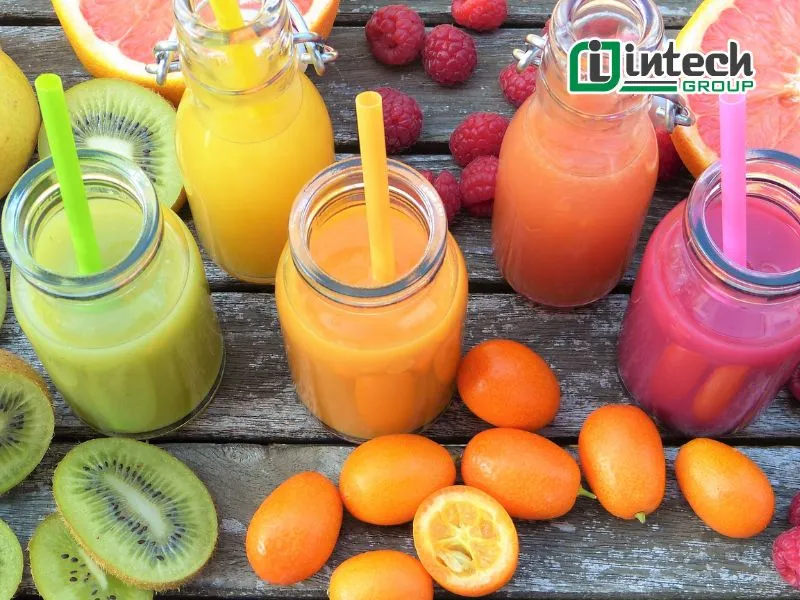
- Juice mixing tank
The mixing tank is also called the mixing tank, suitable for mixing all kinds of fruit juices, can design a single-layer mixing tank, a double-layer insulation mixing tank or a three-layer heating mixing tank according to the customer's customized technology requirements for hot or cold mixing.
In the mixing tank, the concentrated juice/powder, soluble powder agents and RO purified water will be mixed evenly to fix the final volume of the final product. In addition, the flavor of the final product is formed at this stage.
Standard configuration of mixing tank: Liquid material inlet and outlet, airtight side vent, anti-butterfly valve and vent, thermometer, temperature sensor, agitator (propeller, anchor, impeller, frame type), sample valve and CIP cleaning ball. The whole tank uses SUS304/316L material.
- Heat treatment
- Short-term high-temperature pasteurization of juice (HTST method)
- Or use UHT (Ultra High Temperature) method to kill microorganisms
- Rapid cooling after heat treatment
- Add additives (optional)
- Add sugar, citric acid or flavor enhancer (if needed)
- Add vitamins, minerals (for nutritionally enhanced products)
- Add natural preservatives or stabilizers (if needed)
- Aseptic packaging
After the juice is pasteurized or sterilized, the juice drink should be poured into the container immediately to avoid air from entering the juice. The most common packaging for blended juice drinks is PET or glass bottles, some juice processing factories also pour into bags or tins, depending on the consumption habits of consumers in the local market.
Regardless of the type of packaging used, the filling method is hot filling at 89℃. After filling, the container must be transported to the next station immediately for sealing, to ensure that there is no air in the juice container, vacuum sealing method or liquid nitrogen injection into the container after filling.
Some manufacturers also have the need to pack the reconstituted juice into cardboard boxes. When using this type of packaging, the juice needs to be UHT sterilized and then aseptically packed into the sterile cardboard box and does not need to go through the subsequent sterilization/pasteurization process after filling.
- Quality control
- Random microbiological, chemical and sensory testing
- Packaging integrity testing
- Shelf life assessment through testing
Before being released to the market, the product must undergo quality control, including testing for pH, nutritional content, color and flavor. The product is then stored in cold storage or under suitable conditions to maintain quality before distribution.
- Storage and distribution
- Store the product at the appropriate temperature (usually cool or cold)
- Packing and preparing for shipping
- Distribution to sales channels
Modern technologies have added new methods to the traditional process such as:
- HPP (High Pressure Processing) technology - high pressure processing instead of temperature
- Ultrafiltration membrane filtration to increase clarity and extend shelf life
- Automation and continuous quality monitoring systems
The production process can vary depending on the type of fruit, production scale and requirements of the final product.
After completing the above stages, the juice is transported to agents, supermarkets and stores to reach consumers. Storage during transportation also needs to ensure suitable temperature and environmental conditions to maintain product quality.
Thanks to the closed production process and modern technology, fruit juice ensures to retain its natural flavor, rich in nutrients and meets food safety standards. This helps consumers feel secure when using the product, while opening up strong development opportunities for the food processing industry.
After completing the above stages, the juice is transported to agents, supermarkets and stores to reach consumers. Storage during transportation also needs to ensure suitable temperature and environmental conditions to maintain product quality.
Thanks to the closed production process and modern technology, fruit juice ensures to retain its natural flavor, rich in nutrients and meets food safety standards. This helps consumers feel secure when using the product, while opening up strong development opportunities for the food processing industry.
Machinery in the fruit juice production line
The fruit juice production line uses many different types of machinery to perform the stages from processing raw materials to packaging finished products. Below is a list of the main types of machinery commonly used:
- Raw material processing machines
Fruit washing systems
- Preliminary fruit washing machines: Remove dirt, sand and impurities from the outside of the fruit
- High pressure washers: Use high pressure water jets to thoroughly clean the surface
- Ultrasonic washers: Use ultrasonic waves to remove bacteria and impurities on the skin
Fruit sorting machines
- Size sorting machines: Sort fruits by diameter, length
- Color sorting machines: Remove fruits that do not meet color standards
- Ripeness sorting machines: Use NIR (Near-Infrared) sensors to determine ripeness
- Fruit processing machines
Peelers and seed separators
- Automatic peelers: Remove fruit skins without losing much of the fruit flesh
- Seed separator: Separates seeds, cores from the fruit flesh (especially important for apples, pears, peaches)
- Fruit halving machines: Cut fruits in half to prepare for juicing
Juicing machine
- Centrifugal juicer: Extracts juice by centrifugal force, suitable for soft fruits
- Hydraulic juicer: Uses compression force to extract hard fruits such as apples and pears
- Conveyor belt juicer: Continuously extracts with high productivity, suitable for industrial production
- Screw juicer: Slow juicer, retains nutrients and enzymes
- Juice processing machine
Filtering and refining equipment
- Coarse filter: Removes pulp, fibers and large residues
- Fine filter system: Uses a filter membrane to remove fine residues
- Centrifuge: Separates insoluble components by centrifugal force
Sterilization equipment
- Pasteurizer: Short-term heat treatment to kill bacteria
- UHT (Ultra-High Temperature) system: Extremely high temperature treatment in a short time
- High-pressure sterilizer (HPP - High-Pressure Processing): Sterilization without heat
Preservation equipment
- Quick chiller: Rapidly lowers temperature after Sterilization
- Concentrator: Reduces water content of juice to create concentrate
- Spray dryer: Turns juice into powder for longer shelf life
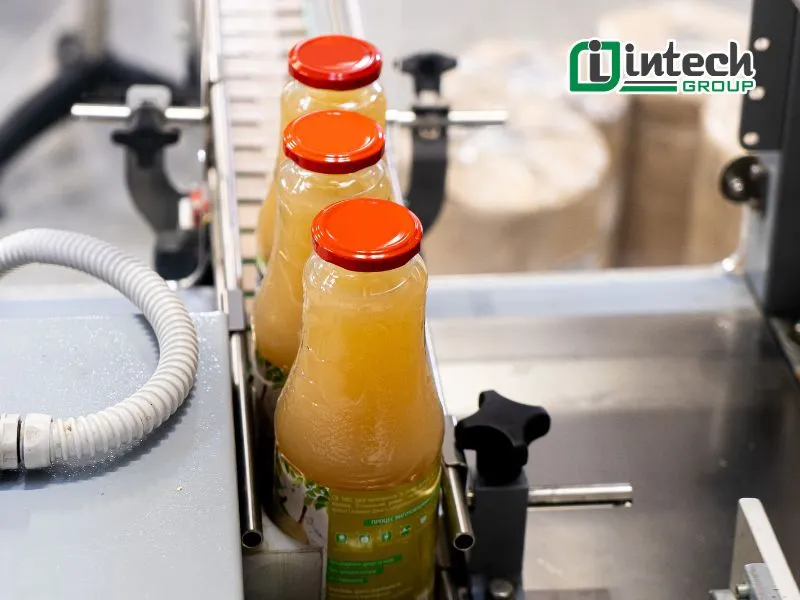
- Packaging Machine
Filling Machine
- Hot Filling Machine: Filling hot sterilized juice
- Cold Aseptic Filling Machine: Filling sterilized juice in a sterile environment
- Pressure Filling Machine: Maintain pressure during filling to avoid oxidation
Packaging and Labeling Machine
- Automatic Capping Machine: Cap bottles and boxes after filling
- Labeling Machine: Attach product labels to packaging
- Date Printer: Print expiry date and batch code on packaging
- Cartoning Machine: Place products in cartons for shipping
- Quality Control System
This is a mechanical system that helps check the pH, Brix (sugar content), color and flavor of the juice before leaving the factory. The machine can integrate optical technology or sensors to detect defective products.
- Storage and transportation system
Finally, the finished juice is stored in cold storage or air conditioning systems to maintain quality. The transportation system uses specialized vehicles to ensure that products reach consumers in the best possible condition.
Conclusion
Modern technology is shaping the fruit juice industry, with highly automated production lines ensuring food quality and safety. Thanks to this advancement, the production process increasingly meets strict nutritional standards while optimizing operational efficiency.
The integration of technologies such as HPP and IoT in monitoring has opened a new era for the industry, meeting consumer demand for natural and safe products.
Investing in automated production lines is an important step to help the food industry develop sustainably and bring the best products to consumers.
