


The role of automation technology in industrial production
09-08-2025 320
Automation in industrial production not only helps to improve productivity, reduce costs and ensure product quality, but also contributes to building a more modern, safe and sustainable production. Join Intechvietnam to learn about the role of automation technology in industrial production through the article below.
Mục lục
What is automation in industrial production?
Automation in industrial production is a concept that refers to the process of applying technology systems and automatic control equipment (such as robots, sensors, control software, digital control systems, artificial intelligence, etc.) to replace part or all of the production activities performed by humans.
The goals of automation are:
- Increase productivity and production efficiency
- Improve product quality
- Reduce errors and operating costs
- Ensure labor safety and optimize resources
Automation can be applied at many different levels, from automating individual stages to the entire production line or smart factory system. This is a core part of the process of modernizing production and transforming industry digitally.
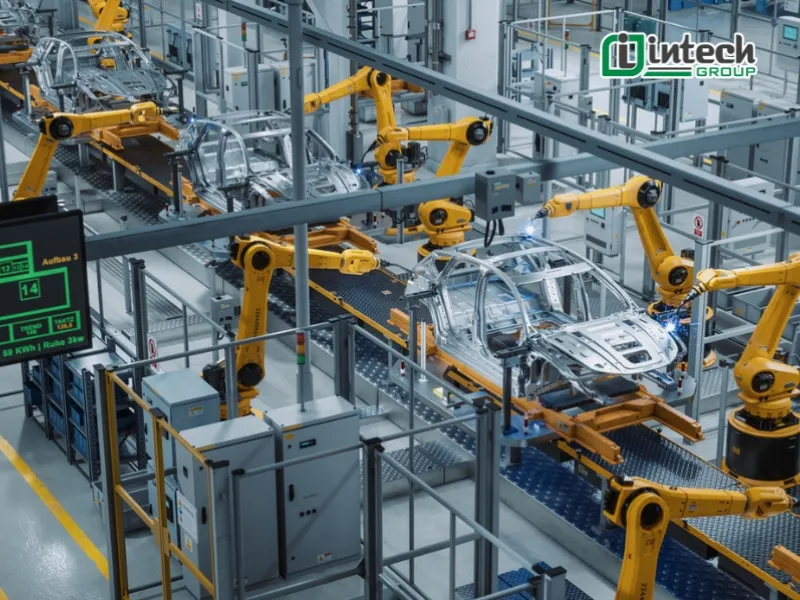
The Role of Automation Technology in Industrial Production
- Improving Efficiency and Labor Productivity
One of the most prominent benefits of applying automation technology to production is the ability to increase efficiency and productivity in a superior way. Modern automated machinery and robots can operate continuously 24/7 without interruption like humans, and at the same time have high precision, helping to minimize errors and ensure a smoother production process.
- Ensuring quality and consistency in each product
Thanks to the superior precision of automated equipment, businesses can ensure more stable and consistent product quality. When the factor of human error is eliminated, each product created meets the same strict standards. This not only enhances brand reputation but also contributes to increasing customer satisfaction, promoting the sustainable development of the business.
- Optimizing production costs
Although the initial investment is relatively large, in the long term, automation brings clear economic benefits. Automated systems help reduce dependence on manual labor, thereby cutting personnel costs, reducing technical errors and reducing material loss. All of these factors combine to create a lean, economical and efficient production line.
- Improving safety in the working environment
Manufacturing plants often pose many potential risks to workers, from heavy machinery to toxic chemicals. When integrating automation, human intervention in dangerous stages is minimized, thereby limiting the risk of accidents and injuries, creating a safer working environment.
Automated systems can also perform tasks that are difficult for humans to undertake, such as working in extreme temperature conditions or transporting heavy objects, contributing to protecting the health of workers.
- Towards green and sustainable production
As the world becomes increasingly environmentally responsible, automation offers an opportunity for manufacturing companies to adopt more environmentally friendly and sustainable processes. Automated systems are often more energy efficient than manual methods, reducing power consumption.
In addition, thanks to high precision, scrap and waste in production are also significantly reduced, thereby reducing negative impacts on the environment. Integrating automation not only helps businesses achieve their sustainability goals but also contributes to reducing their carbon footprint.
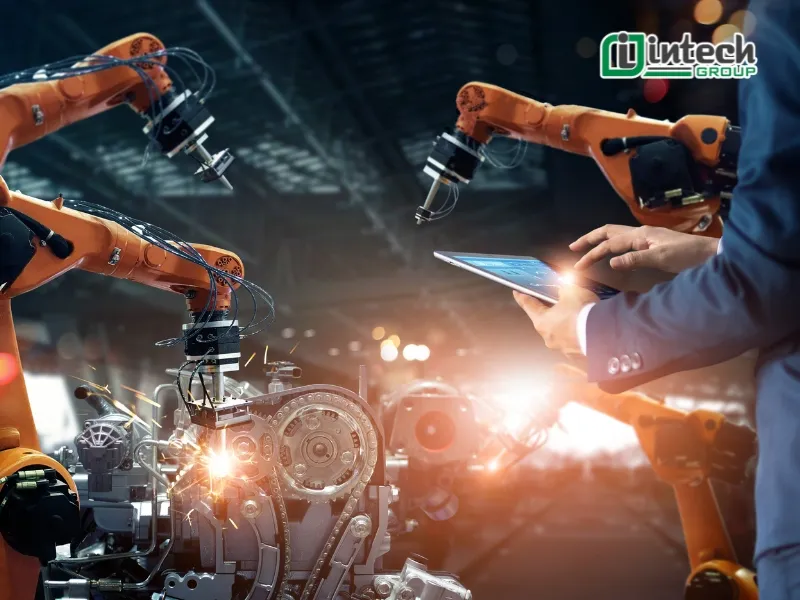
Solving automation issues in manufacturing
Although automation has brought about a leap in productivity and quality, the implementation journey is still fraught with barriers. To fully exploit the potential of technology, businesses and management agencies need to proactively address the following five groups of challenges.
- Developing skills and training the workforce
Technology changes every day, if people do not adapt, they will be left behind. The key solution is:
- Reskill and upskill existing staff, focusing on robot operation skills, data analysis, AI.
- Link businesses and educational institutions to design training programs that meet practical needs, combining vocational training, internships and flexible online courses.
- Encourage lifelong learning with scholarship policies, training credits and clear career paths, reducing the risk of unemployment and narrowing the skills gap.
- Data security and privacy
The more sensors, robots and connected systems, the greater the risk of cyber attacks. Businesses need to:
- Apply encryption, network segmentation, secure storage instead of relying solely on traditional firewalls.
- Conduct regular penetration testing, security drills, and employee awareness training.
- Issue a comprehensive security policy that complies with international standards (ISO/IEC 27001, NIST) and local regulations on personal data protection.
- Ethical and social impacts
Automation raises concerns about job losses and income inequality. For sustainable development:
- Maintain a reasonable balance between automated and human-skilled stages.
- Create new jobs in programming, maintenance, data analysis – positions that arise when applying technology.
- Have transparent dialogue with unions, authorities, and communities to monitor and minimize negative impacts.
- Investment and finance issues
The initial costs of robots, sensors, and network infrastructure can be very high. Businesses should:
- Calculate the cost-benefit (CBA) and return on investment (ROI) clearly for each item.
- Consider leasing and as-a-service models to reduce initial investment and technical risks.
- Combine tax incentives, technology innovation funds, and green credits to optimize capital sources.
- Legal framework and international standards
Technology develops faster than the law; regulatory gaps can lead to risks. Therefore:
- Always update and comply with current regulations on robots, AI, machine safety and data protection.
- Participate in developing international standards, contributing the voice of Vietnamese enterprises to the process of promulgating new standards.
- Share experiences, standardize processes to ensure synchronous and responsible technology deployment.
The role of automation technology in industrial production is not only an inevitable trend of the Industry 4.0 era, but also a golden opportunity to enhance the competitiveness of Vietnam's manufacturing industry. If we cleverly solve the five groups of challenges in human training, data security, ethics, financial optimization and perfecting the legal framework - we will open a period of sustainable, safe and valuable growth for both businesses and workers.
