


Understand the animal feed production line
14-08-2025 575
The animal feed production line plays a key role in improving the productivity and quality of the livestock industry. With automation and advanced technology, this system not only helps optimize the production process but also ensures that the feed source meets nutritional and safety standards, meeting the growing needs of the livestock market.
Mục lục
Types of animal feed production lines
Currently, there are many types of animal feed on the market to meet the needs of buyers. Types of animal feed production lines are also specially designed to meet the nutritional needs of each type of animal.
- Poultry feed: Usually includes the stages of grinding, mixing, pelleting and packaging, helping to provide the necessary nutrients for chickens, ducks, geese, etc.
- Pig feed: For pigs, the feed production line must ensure high nutritional value and ingredients such as cereals and animal proteins are processed and combined properly.
- Livestock feed: Must be easy to digest and suitable for each stage of animal development.
- Shrimp and fish feed: Fish and shrimp feed production lines focus on creating feeds with high protein content and easy to dissolve in water, helping to support their development and growth.
- Pet food: the production line must ensure safety and quality, meeting the special nutritional needs of livestock.
Ruminant feed for animals such as cows, sheep, ... is processed from raw materials such as grass, straw, cereals, with processing technology to improve digestion and growth
Other animal feed may include feed for wild animals, small animals and other specialties, requiring separate adjustment and optimization for each specific nutritional need.
Other animal feed may include feed for wild animals, small animals and other specialties, requiring separate adjustment and optimization for each specific nutritional need.
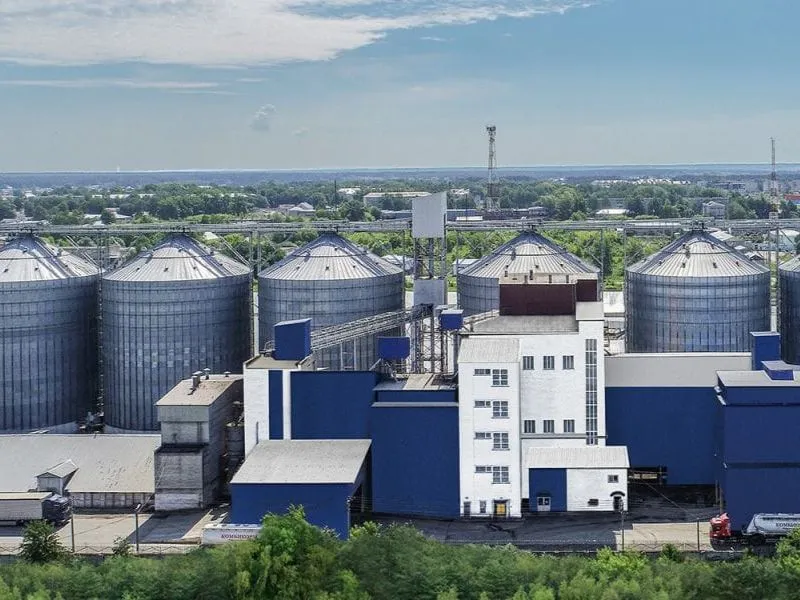
Complete animal feed production line process
Stage 1. Raw material receiving system
Receiving is the first step in the animal feed production process. Receiving equipment is used to store raw materials before entering the silo or warehouse, including weighing system, inspection equipment, unloading system, cleaning system, dust control equipment, receiving conveyor, distribution equipment, mist spraying, etc.
Stage 2. Steel silo system
In order to ensure continuous production, it is necessary to store a large amount of raw materials such as corn, wheat and soybean meal during the feed processing process. The steel silo uses a galvanized steel structure, which is characterized by low investment, quick and convenient installation, little maintenance and long service life, so that the raw materials are not damaged.
Stage 3. Conveying system
Conveying is the process of moving raw materials in bulk or grain, processed materials and finished products horizontally, with little or no inclination to their destination. In feed mills, horizontal conveyors and bucket elevators used to lift dry bulk materials are the most common conveying equipment.
Stage 4. Raw material grinding cleaning system
Broken grains received from farms often include grain by-products and impurities such as straw, stones, metals, paper, small animal carcasses and fine powder. This section removes impurities through magnets, sieves and dust collectors to ensure that the stored grains are of good quality and protect machinery equipment.
The feed mill can grind raw materials into powder as required. The use of the grinding system is to increase the specific surface area of feed, which is good for the digestion and absorption of animals and improves the processing efficiency of raw materials.
The hammer mill is suitable for small and medium-sized feed mills. The water drop hammer mill is commonly used in medium and large feed mills. The superfine feed mill is designed to grind the raw materials of special aquatic feed. In this process, an auxiliary dust removal system is needed. It not only saves energy but also prevents dust from overflowing, lowers the temperature of the material and improves the grinding efficiency.
Stage 5. Weighing System
Proportioning and mixing are the most important steps in the feed production process and have a great influence on the capacity of the plant. Batch processing is an intermittent process. When the allocation command is issued, the batch processing will be carried out according to the specified quantity.
Stage 6. Mixing System
Mixing is an important step in the production of mixed feed. The ingredients with distinct properties will be mixed together under the influence of external forces to create a feed ration, meet the nutritional needs of animals and increase the value of the mixed product.
Stage 7. Pelleting System
The feed pelleting system converts the feed mixture into large pellets of a certain shape. The pelleting process is done through a mechanical process using a combination of moisture, heat, and pressure. The ring die pellet mill will be used in this section.
There are two common types of feed pellet mills: the pressing type feed pellet mill and the extrusion type feed pellet mill. If you want to produce sinking feed pellets in large quantities, the ring die feed pellet mill is the ideal choice. If you want to produce floating feed pellets, you can choose the extrusion type feed pellet mill.
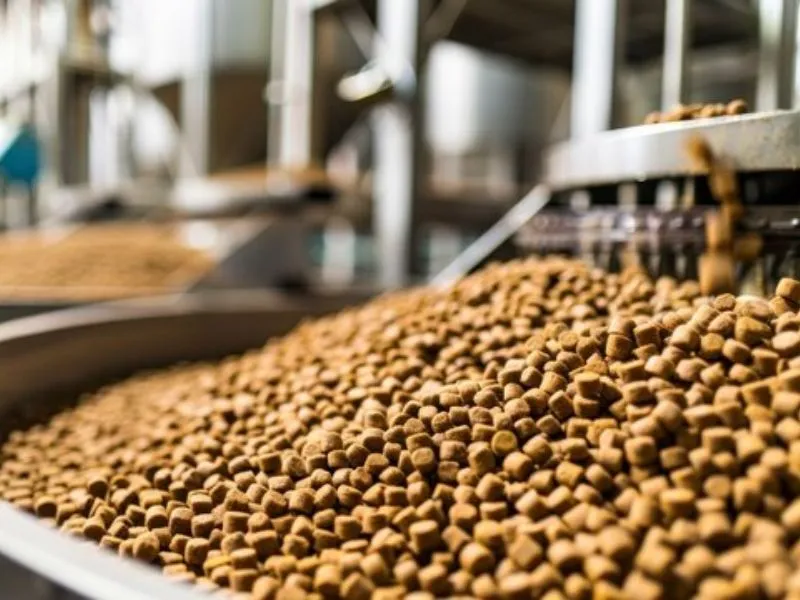
Stage 8. Cooling System
During the pelleting process, cooling the pellets is very important. When leaving the pellet press, the pellets are very hot, soft and have high moisture content. The cooling process reduces the temperature to 3°C-5°C, just slightly higher than room temperature, and reduces the moisture content of the pellets to a safe level (≤12.5%), making transportation and storage easier.
Stage 9. Grinding system
Grinding is the process of reducing the size of feed particles and increasing their specific surface area, which improves the digestibility of animals and enhances the efficiency of feed utilization. This process can also improve the processing quality and work efficiency of subsequent stages such as weighing, mixing and pelleting.
Stage 10. Screening system
After cooling and drying, the pellets will be screened to remove fine dust and excess pellets, and adjust the size of the pellets to an acceptable level. Qualified pellets are packaged, while unqualified products are repackaged.
Stage 11. Liquid Addition and Spraying System
Special quality or nutritional requirements may require the addition of fat, molasses, or other liquids to coat the surface of the pellets. As the cooled and screened pellets pass through a low-speed conveyor or coater, liquids may be sprayed onto the pellets to complete the spraying process.
Stage 12. Packaging System
The packaging process begins when the finished feed enters the feed bin on the packaging machine and ends when the feed bags are placed in storage. This process includes weighing each feed bag, placing the weighed product into the bag, sealing the bag, labeling the bag, coding the bag, stacking the bag on a pallet, and transferring the bag to storage.
Application of animal feed production line
According to the shape of the feed, the animal feed production line can be divided into different types of feed processing.
- Pellet feed
Pellet feed is produced by compressing the powdered feed mixture into feed pellets through a mechanical pressing process, combined with moisture and heat. This is the most commonly used feed form today.
Pellet feeds such as grain pellets, grass pellets, straw pellets, peanut shell pellets, bagasse pellets, fermented pellets or TMR pellets (complete mixed ration) are all produced through the pelleting process. However, to produce each type of pellet feed, different types of pellet presses are required (some require steam treatment, some do not).
- Mash feed/powder feed
Mash feed is the main feed type used for egg-laying poultry breeds worldwide. In addition, some manufacturers also process powdered feed for fish, pigs, cows and other animals. The grinding size of the powdered feed can be customized according to customer needs, and the extrusion process can also be integrated into the production of powdered feed.
- Extruded feed
The extrusion process makes the starch and nutrients in the feed easier for animals to digest and absorb. This is a method to improve the nutritional absorption efficiency of the feed, especially suitable for some livestock species that require specialized nutrition.
- Premix feed
Premix feed production lines are mainly used to process premixed feed and concentrated feed for chickens, poultry, cattle, fish, shrimp and ruminants. The system often uses stainless steel equipment to ensure quality and effectively combine the entire process.
- Crumb feed
Crumble feed is an advanced form of feed for chicks, piglets or other small poultry, helping to develop strong bones and promote even, rapid growth. This is a product recycled from pellet feed.
Why should you invest in an animal feed production line?
According to Tien Phong Securities Company (TPS), Vietnam's livestock industry in 2023 contributed about 26% of the GDP of the agricultural sector. Notably, pig farming accounts for more than 62% of the total domestic meat output. The production trend is increasingly stable thanks to the development of the farm model, with the market share increasing from 30% in 2014 to 51% in 2023.
In addition, in 2024, Vietnam achieved an export turnover of over 1 billion USD from animal feed and raw materials for animal husbandry. Currently, the country has 269 complete mixed animal feed factories with a total designed capacity of 43.2 million tons. Of which, 90 factories belong to FDI enterprises, accounting for 33.5% in quantity and contributing 51.3% in design capacity, the remaining 179 factories belong to domestic enterprises, accounting for 66.5% in quantity and 48.7% in design capacity.
The animal feed production line plays an important role in the modern livestock industry, ensuring the supply of high-quality, uniform and stable feed for livestock. Thanks to the automation and optimization of the production process, the line helps save labor costs, minimize waste of raw materials and increase productivity.
In addition, strict control from the stage of receiving raw materials, processing, to packaging ensures that the feed meets nutritional standards, is hygienic and does not harm animal health. In addition, the modern production line also allows the adjustment of feed ingredients to suit each stage of development and the specific needs of each type of livestock, contributing to improving livestock productivity and economic efficiency, while supporting the development of a sustainable livestock industry.
Conclusion
The animal feed production line is not only an effective technological solution but also an important driving force for the sustainable development of the livestock industry. Investing in this system not only brings economic benefits to businesses but also contributes to improving product quality, meeting domestic consumption and export needs.
