


What is a Packaging Robot? Discover the Benefits and Applications
17-08-2025 475
Packaging robots are becoming popular in many industries, including manufacturing, pharmaceuticals, food and beverage, and many others.
Mục lục
In this blog post, we will learn about robotic packaging, the industries that use this technology, the applications of packaging robots, and the benefits of using them in the packaging process.
What is a Packaging Robot?
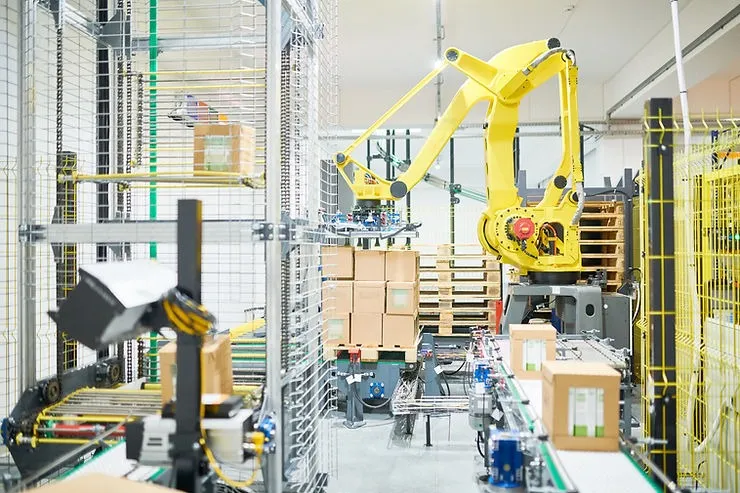
Robotic packaging is the use of robots and automated machinery to handle packaging tasks. Robotic packaging systems include standalone robots that perform specific tasks, such as picking and placing packages, or robots that are integrated into larger manufacturing processes, such as assembly lines.
Industries that use Packaging Robots
Packaging robots are versatile robots that are used in a variety of industries. Generally, any industry that packages products before shipping can take advantage of this technology. Some of the industries that use packaging robots include:
- Food and beverage
- Agriculture
- Manufacturing
- Medical and healthcare
- Logistics
- Automotive
Common applications of packaging robots
Packaging robots are versatile robots that can perform a variety of tasks. From placing manufactured goods into boxes to palletizing products for shipping, packaging robots can automate a variety of processes. Here are some common use cases for robots performing packaging:
- Pick and Place
Packaging robots are capable of picking and placing tasks. Pick and place robots can pick products from conveyor belts, place them into packaging, and even assemble components.
For example, in manufacturing, pick-and-place robots place small electrical components onto circuit boards with incredible precision. This makes them indispensable in the production of laptops, smartphones, refrigerators, microwaves, and other electronic devices.
- Boxing
Boxing typically involves picking up individually packaged products and grouping them into different boxes. Robots are well-suited to box products quickly and accurately.
- Inspection
Packaging robots are not limited to just packaging. Some robots also have advanced vision and sensor systems that can inspect products for any defects before packaging and remove defective components.
- Demolition
Demolition is one of the more specialized tasks that packaging robots perform. Commercially baked goods such as muffins often need to be demolished after cooking for packaging.
Demolition is a delicate process that robots excel at. Unlike humans, robots have robotic arms that can meticulously remove baked goods from their molds without damaging them.
- Palletizing
Manufacturers often palletize products after packaging for easy storage or transportation. Packaging robots can quickly and accurately stack products onto pallets, preparing them for shipping.
This makes palletizing robots especially useful in warehouses with limited space or where products need to be stacked safely to avoid product damage or workplace injuries.
Types of Robots used in Packaging
Different types of packaging robots are designed to perform different tasks. Therefore, no one type of robot is suitable for all packaging applications. Here are the common types of robots used in packaging:

- Articulated robots:
These robots have axes that give them a wide range of motion. They have human-like robotic arms that make them useful for picking and placing objects.
- Cartesian robots:
These robots move in three axes: up, down, and sideways. This feature makes them suitable for palletizing, heavy lifting, and precision spot welding.
- SCARA Robots:
The Selective Compliance Articulated Robot Arm (SCARA) is a unique robot that is capable of excellent pick and place tasks. It is prized for its speed, accuracy, and compactness and is often used in industries that produce small components or products in large quantities.
- Delta Robots:
Delta Robots have three large sweeping arms designed to work in tandem. They are primarily used for pick and place operations, such as primary packaging.
- Collaborative Robots:
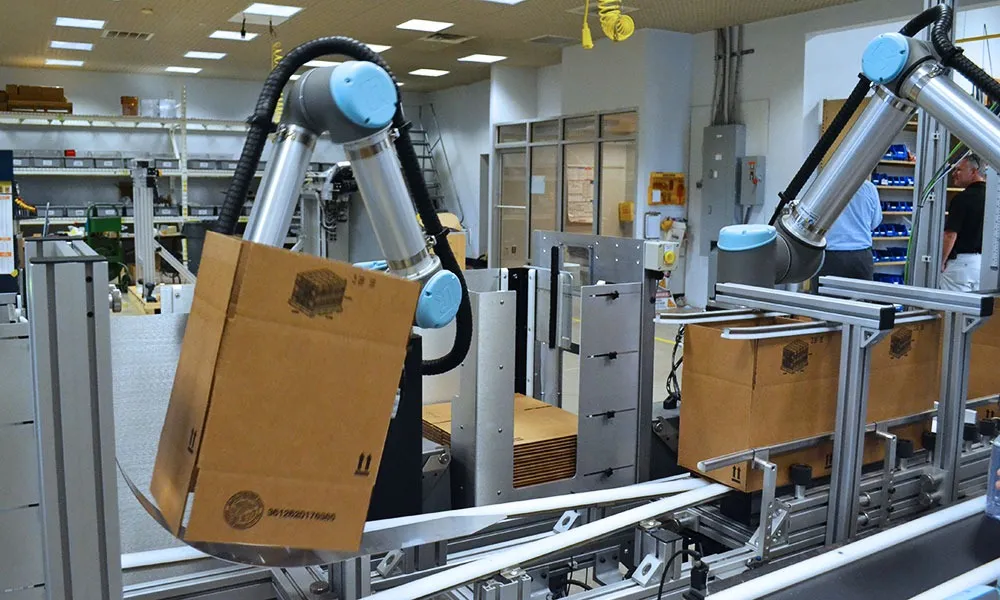
Also known as cobots, these robots are designed to work alongside humans and can assist with a variety of tasks, including pick and place and packaging.
All of these robots are capable of performing different tasks well, and some are better suited to certain applications than others.
For example, while SCARA robots excel at tasks that require high speed and precision, they are not suited to heavy payloads. Therefore, when selecting a robot for packaging, it is important to consider factors such as speed, reach, and payload capacity.
Collaborative Robots for Product Packaging
Benefits of Packaging Robots
Robotic packaging systems offer many benefits. Here are some of their key advantages:
- Increased efficiency
Packaging robots can perform repetitive and mundane tasks with incredible precision and speed. Unlike human workers, they can work around the clock without needing to take breaks or getting tired.
- Improve workplace safety
Employees working in industries such as manufacturing, warehousing, and agriculture are prone to workplace injuries due to the physically demanding nature of their work.
Packaging robots can help workers avoid many of the strenuous tasks that could endanger their safety. In the food and beverage industry, manufacturers often use robots to stack pallets of boxes, allowing workers to focus on less strenuous tasks.
- Reduce packaging costs
While the initial cost of purchasing a packaging robot can be high, in the long run, they can help reduce packaging costs by increasing production and reducing labor costs.
- Reduced material waste
Packaging robots can prevent product defects, resulting in reduced material waste. Unlike humans, robots can handle delicate tasks with the utmost precision, minimizing waste and saving resources.
- Improved quality control
Humans are prone to errors, resulting in sloppy packaging, inefficient use of storage, and inconsistent parts or products across packages.
These issues can lead to product damage during shipping, lost revenue, and reduced customer satisfaction. Packaging robots are less likely to make errors, minimizing the risks associated with poor packaging.
- Reduced downtime
Workers may need to take breaks, sick days, and time off. This can lead to downtime and delays.
- Reduced bottlenecks
The packaging industry faces a number of challenges. In recent years, attracting skilled workers has been one of the biggest challenges many manufacturers face.
Packaging robots can help offset labor shortages by taking over routine and repetitive tasks, allowing workers to focus on higher-level tasks.
Conclusion
Packaging robots are transforming the way the food and beverage industry coordinates consistency. Small failures can lead to major product recalls and serious revenue losses. Automating your packaging system will minimize this risk and allow you to enjoy the benefits of Packaging Robots.
