


What is an embedded system? Meaning, components and applications
17-08-2025 752
An embedded system is a microprocessor or microcontroller-based hardware and software system designed to perform specialized functions within a larger mechanical or electrical system.
Mục lục
What is an embedded system?
An embedded system consists of a processor, memory, and input/output units that perform specific functions within a larger system. Embedded systems have applications in the consumer, home entertainment, industrial, medical, automotive, commercial, telecommunications, military, and aerospace industries.
Embedded systems are also known as embedded computers. They are generally small in size and handle specific computational tasks. Although they are often part of larger systems (hence the 'embedded' moniker), they can also function as standalone devices. Embedded systems are useful in applications where size, power, cost, or weight are limited.
How do embedded systems work?
An embedded system is a computer. Thus, like most other computers, they contain a combination of hardware and software such as microprocessors, microcontrollers, volatile and non-volatile memory, graphics processing units (GPUs), input/output interfaces and ports, power supplies, and system and application code. However, embedded systems have four main elements that distinguish them from conventional workstations or servers: purpose, design, cost, and human involvement.
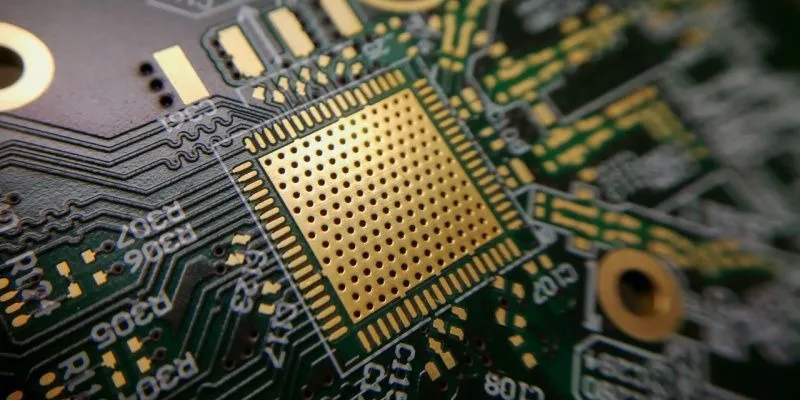
Like any other computer, embedded systems utilize printed circuit boards (PCBs) that are programmed with software that instructs the hardware on how to operate and manage data using memory and input/output communication interfaces. The result is an end product of output that is valuable to the end user. Thus, at a fundamental level, embedded systems are not so different from workstations and servers.
Types of Embedded Systems
When considering performance and functional requirements, embedded systems are classified into real-time embedded systems, standalone embedded systems, network embedded systems, and mobile embedded systems.
- Real-time embedded systems prioritize the generation of outputs quickly and can be classified as soft real-time (flexible deadlines) or hard real-time (strict deadlines).
- Standalone embedded systems can operate independently without a server.
- Network embedded systems rely on network connectivity and communications to generate outputs.
- Mobile embedded systems are small, portable devices such as smartphones and laptops.
Finally, when classified based on the performance of the microcontroller, embedded systems are divided into small, medium, and complex types, depending on the bit size of the microcontroller.
Components of an Embedded System
The components of an embedded system include hardware and software that work together to enable the system to perform its desired function.
1 - Hardware Components of an Embedded System
The hardware components of an embedded system include a variety of physical components that make up the system infrastructure. These include power supplies, microcontrollers and processors, memory, counters and timers, communication interfaces, input/output, and circuitry, all of which work together to enable the desired functionality of the embedded system.
- Power Supply
The power supply component is an electrical unit responsible for supplying power to the electrical load of the embedded system. While a 5V power supply is typically required, the range can range from 1.8V to 3.3V, depending on the application.
To ensure seamless system operation, the power supply must be smooth and efficient. The power supply can be a direct power source (such as from a wall adapter) or a battery. Some embedded systems use a standalone power source, while others utilize the same power source as the larger technology being powered.
- Microcontrollers and Microprocessors
Embedded systems come in two main varieties: microcontrollers and microprocessors. A form of integrated circuit, these components provide the system with computing power. Simply put, the microcontroller or microprocessor acts as the brain of the embedded system and controls its performance.
Processors range from 8-bit to 16-bit to 32-bit, with the main differences being processing speed and throughput. For example, a 32-bit processor has a higher processing speed because it can process 32 bits at a time, while a 16-bit processor has a relatively lower processing speed because it can only process 16 bits at a time. So why aren't all embedded systems equipped with 32-bit processors? It's simple. Not all applications require high processing speeds and the associated higher costs!
- Memory
Memory is an essential component for storing important data in embedded systems. It is usually integrated into the microprocessor or microcontroller. The two types of memory are RAM (random access memory) and ROM (read-only memory).
RAM is also known as 'data memory' and is volatile memory, meaning it only stores information temporarily and is erased when the power is turned off. ROM, on the other hand, is also known as 'code memory' and is responsible for storing program code. It is non-volatile, storing system information even when the power is turned off.
- Timers and Counters
Timers are used in applications that require a delay before a specific function of the embedded system is performed. Counters, on the other hand, are used in applications where the number of times a specific event occurs needs to be tracked. An incrementing counter counts down from a starting value of 0xFF, while a decrementing counter counts down to 0x00. Counters are integrated into the system using register-type circuitry.
- Input/Output
Input components allow other components in the larger interconnection infrastructure to interact with the embedded system. For example, a sensor provides input for the system to process. Once processing (e.g., counting) is complete, the result is transmitted to the required destination via an output component.
- Communication interface
Communication interfaces allow embedded systems to establish communication with each other and with other components in the larger system. Various interfaces include USB, I2C, UART, RS-485 and SPI. For simple applications, the communication ports inside the microcontroller are used and the ports can be installed externally in case of advanced applications.
- Circuit
Depending on the application, embedded systems may contain custom circuits. Some of the basic components used in the circuit of an embedded system are:
- Printed Circuit Board (PCB)
A PCB is an important component in the circuit of an embedded system. It is a mechanical circuit board that uses copper tracks to connect other components electronically. Electronic circuits created using PCBs are more cost-effective and more efficient in terms of operation than wire-wound or point-to-point configurations.
- Resistors
A resistor is an electrical component that is primarily responsible for creating resistance to the flow of current. It reduces the current in a calculated manner to regulate the signal level. Motor controllers and power distribution systems use high-power resistors to dissipate more heat.
The electrical function of a resistor depends on its resistance; the larger the resistance, the greater the resistance created in the current. Resistors are divided into fixed resistors and variable resistors, where fixed resistors change their resistance with temperature, and variable resistors are used as sensors for light, humidity, heat, and force.
- Capacitor
A capacitor is a circuit component that has two terminals. It is mainly used to store and release energy as required by the circuit. While capacitors come in many different forms, most have two electrical conductors separated by a dielectric material. Capacitors are used for a variety of applications, including smoothing, bypassing, and filtering electrical signals.
- Diode
A diode allows current to flow in only one direction. This device is usually made of a semiconductor material such as silicon or germanium. It is useful for applications such as switches, signal mixers, logic gates, voltage regulators, limiters, clippers, gain control circuits, and clampers.
- Transistors
In an electrical circuit, transistors are responsible for switching and amplification. They come in two main types: the metal-oxide-semiconductor field-effect transistor (MOSFET), which is a voltage-controlled device with terminals such as source, gate, and drain; and the bipolar junction transistor, which is a current-controlled device with terminals such as base, emitter, and collector.
Transistors are used in a variety of applications such as computers, airplanes, pacemakers, stoves, and motor control. They operate on a simple principle: a small current at one terminal produces a large current at the other terminals for amplification.
- Integrated Circuit
An integrated circuit combines several electrical components into a single chip. It helps the user by providing a ready-made chip that can be integrated directly into an embedded system without the need to add separate capacitors and resistors. An integrated chip can function as an oscillator, microprocessor, amplifier, memory, timer, etc.
- Light Emitting Diode (LED)
LEDs are widely used in electrical circuits to indicate whether the circuit is operating properly. LEDs allow the user to determine the current state in the circuit.
- Inductor
Finally, an inductor is an electrical component that stores energy in an electric field and in the presence of an electric current. An inductor is in the form of an insulated wire wrapped around a coil. It blocks alternating current while allowing direct current to flow. A coil used for this function is called an 'inductor'.
2 - Software Components of Embedded Systems
Unlike computer software, which can be installed on different devices to achieve the same goal, embedded system software is written specifically for a specific type of device and its goals are much narrower in scope. The software components of embedded systems are:
- Text editor
A text editor is the first software component required to build an embedded system. This editor is used to write source code in the C and C++ programming languages and save it as a text file.
- Compiler
The core function of this component is to develop an executable program. Once the code is prepared in a text editor, the machine must understand it. This is achieved with the help of a compiler, which translates the written code into low-level machine language. Examples of low-level languages include machine code, assembly language, and object code.
- Compiler
A compiler is an example of an assembly language, which is a programming language used to build an application. The assembly language program is translated into HEX code for further processing. Once the code is written, a programmer is used to write the program on the chip.
This is slightly different from the process performed in a compiler. In a compiler, the written code is directly converted into machine language. On the other hand, a compiler first converts the source code into object code, and then the object code is converted into machine language.
- Emulator
This component makes the embedded system behave like a real, live system when it operates in a simulation environment. In simple terms, it simulates the performance of the software and helps ensure that the performance of the written code is ideal. Emulators are used to get an idea of how the code will perform in real time.
- Link Editor
Software code is typically written in small pieces and modules. A link editor, also known as a 'linker', is a component used to take one or more object files and integrate them to develop a single executable code.
- Debugger
Finally, a debugger is a software component used for debugging and testing. It is responsible for scanning code, removing errors and other bugs, and highlighting specific cases where they occur. Debuggers help programmers troubleshoot errors quickly.
Applications of Embedded Systems
Embedded systems play an important role in a number of technologies, including the Internet of Things (IoT) and machine-to-machine (M2M) devices. Almost every smart device today uses this versatile technology in some capacity.
Some practical applications of embedded systems are:
1. Global Positioning System (GPS)
Global Positioning System (GPS) uses satellites and receivers to synchronize position, velocity and time data to provide a navigation system that the world can use. GPS systems are commonly used in vehicles and mobile devices. All 'receivers' (devices that receive GPS data) are integrated with embedded systems to enable the use of global positioning systems.
2. Medical Devices
Advanced medical devices with embedded systems are used for patients who need continuous monitoring. For example, embedded sensors collect health data such as measurements from implanted devices, pulse and heart rate. This data is then transmitted to a private cloud, where it can be reviewed automatically by an alert system or manually by a medical professional.
3. Automotive
Embedded systems in automotive applications enhance overall safety and user experience. Key examples of embedded systems in action are adaptive speed control, pedestrian recognition, vehicle crash warning, lane change assist, airbag deployment, anti-lock braking systems, and in-car entertainment.
4. Automated Fare Collection
Automated fare collection solutions allow public transport passengers to pay their fares through automated machines or even online without interacting with other people. The automated fare collection ecosystem includes ticket vending machines, magnetic and smart cards for frequent travelers, ticket and card verification machines, and automatic gate closers. All these components include embedded systems so that they can communicate with each other and thus keep the mechanism running.
5. Fitness Trackers
Fitness trackers have become increasingly popular wearables, tracking health metrics and tracking activities like running, walking, and sleeping. These devices leverage embedded systems to collect data like heart rate, body temperature, and number of steps taken. This data is transmitted to a server via a wide area network (WAN) like LTE or GPRS.
6. Home Entertainment
Entertainment systems like televisions are a mainstay in homes around the world. Embedded systems play a key role in reading input data from connectors like antennas, DisplayPort, HDMI, and Ethernet.
In addition, remote controls transmit infrared signals for the TV to read. Smart TVs even include an operating system that supports internet and streaming applications. Embedded systems play a key role in these functions and are growing as new ways to make home entertainment smarter are discovered.
7. Automated Teller Machine
An automated teller machine (ATM) is a large computerized electronic device used globally in the banking sector. During a transaction, the ATM communicates with the bank's host computer over a network connection. The bank's computer verifies the data entered during the transaction and stores the processed information. At the same time, the ATM uses embedded systems to process user input from the field and display transaction data from the bank's computer.
8. Manufacturing
Today's factories use robots in a number of processes that require high-precision tasks, work in hazardous working conditions, or both. Conventional automation tasks require robots to be equipped with sensors, actuators, and software that allow them to “sense” their environment and achieve the required output efficiently and safely. Robots are equipped with embedded systems that link them to various subsystems to achieve this goal.
Without these embedded systems, factory automation robots would have to rely on external control and computing systems. This could lead to increased safety risks due to delays in human response or communication errors. Therefore, as Industry 4.0 becomes a full-fledged reality, factory automation systems are increasingly being integrated with embedded systems equipped with artificial intelligence and machine learning to make the equipment safer, more efficient, and smarter.
For example, these systems allow machines to automatically identify and eliminate errors in the production process before the human eye can see them. Embedded factory robots have many applications, including assembly and quality assurance.
9. Electric vehicle charging stations
Electric vehicle charging stations provide electricity to recharge the batteries of connected electric vehicles. Embedded systems are used in charging stations to provide computing power to graphical displays, automatically highlight technical issues, and alert technicians to upcoming maintenance requests, among other functions.
10. Self-Service Kiosks
Finally, we have interactive self-service kiosks that provide users with information and services in environments where the presence of human staff is not feasible. Think of a ticket kiosk serving moviegoers at 2 a.m. in a nearly empty theater.
Self-service kiosks come in many forms, from snack vending machines to fuel stations with self-checkout devices. These kiosks can be found in airports, retail stores, hospitals, government buildings, and many other locations. Embedded systems provide the computing power needed for these kiosks to provide customers with an interactive experience.
Some examples of embedded systems
Here are some common examples of embedded systems in different fields:
In home appliances:
In home appliances:
- Washing machines: Embedded systems control wash cycles, water temperature, spin speed, and time based on user selection.
- Microwave ovens: Embedded systems manage cooking times, power, and modes such as defrost or reheat.
In the automotive industry:
- Anti-lock Braking System (ABS): Embedded systems monitor wheel speed and adjust braking force to prevent wheel slippage.
- Engine control unit (ECU): Controls combustion, optimizes fuel efficiency, and reduces emissions.
In medical devices:
- Heart rate monitors: Embedded systems collect, process, and display real-time heart rate data.
- Glucose Meter: Analyzes blood samples and provides accurate results through embedded microprocessors.
In consumer electronics:
- Smartphones: Embedded systems control sensors, network connectivity, cameras, and software applications.
- Smart TVs: Embedded systems manage user interfaces, internet connectivity, and multimedia content playback.
In industry and automation:
- Automated conveyors: Embedded systems control speed, direction, and stop/start conveyors based on sensors and production requirements.
- Industrial robots: Embedded systems process data from sensors to perform operations such as welding, assembly, or packaging.
Relationship between Embedded Systems and IoT
IoT (Internet of Things) and embedded systems are closely related, with embedded systems serving as the backbone of IoT devices. Here’s how they connect:
- Core functionality:
Embedded systems form the core functionality of IoT devices. They power the sensors, processors, and actuators that collect data, process information, and perform actions based on that data. Data processing: Embedded systems in IoT devices collect data from sensors (temperature, motion, etc.), process this data locally, and often transmit the data to centralized systems or the cloud for further analysis or storage.
- Connectivity:
Embedded systems enable connectivity in IoT devices. They handle the communication protocols (such as Wi-Fi, Bluetooth, or Zigbee) that allow devices to connect to each other or to larger networks.
- Control and actuation:
These systems control how IoT devices operate. For example, in a smart thermostat, the embedded system would interpret sensor data to adjust the temperature or communicate with other devices to adjust settings.
- Resource Optimization:
Embedded systems are designed to optimize resources in IoT devices. They manage power consumption efficiently, ensuring that devices operate reliably while saving energy.

Advantages of Embedded Systems for IoT
Embedded systems offer several advantages when used in the context of IoT (Internet of Things) applications. Here are some of the key benefits:
- Efficiency:
Embedded systems are designed to perform specific tasks efficiently. In IoT devices, this efficiency is important because these systems often operate in constrained environments with limited resources such as power, memory, and processing power. Their optimized design ensures efficient use of resources, allowing IoT devices to operate reliably without consuming too much power.
- Real-time processing:
IoT devices often require real-time processing of data collected from sensors. Embedded systems handle these tasks very well by processing data quickly at the device level. This capability allows for immediate decisions and actions without relying on external systems or delays caused by transmitting data to a remote server.
- Reliability:
Embedded systems are known for their reliability and stability. In IoT applications, reliability is essential, especially in critical environments such as healthcare, manufacturing, or the automotive industry. These systems are designed to operate continuously for long periods of time, ensuring consistent performance of IoT devices.
- Cost-effectiveness:
Since embedded systems are purpose-built for specific functions, they can be designed to be cost-effective. Their optimized hardware and software configurations directly address the needs of IoT devices, reducing unnecessary components and reducing manufacturing costs.
- Security:
Embedded systems can integrate robust security measures directly into IoT devices. By embedding security protocols at the device level, they can better protect sensitive data and prevent unauthorized access or breaches. This approach enhances the overall security posture of the IoT ecosystem.
- Scalability:
Embedded systems offer scalability, allowing the creation of IoT devices that can easily expand or shrink based on requirements. Whether in terms of processing power, connectivity options, or additional functionality, embedded systems can adapt to different needs without compromising performance.
- Customization and optimization:
Developers can customize embedded systems specifically for the intended IoT application. This customization allows for optimizing device performance, minimizing unnecessary functions, and maximizing the device’s effectiveness in its intended purpose.
Conclusion
Embedded systems are becoming increasingly prevalent in our daily lives, and their applications are endless. With real-time feedback and precision, embedded systems are essential to ensure the safety and efficiency of many different applications.
As technology continues to advance, we can expect to see more innovative applications of embedded systems in the future. Embedded systems have the potential to revolutionize many different industries and improve our quality of life.
