


What is CAM software in CAD/CAM/CNC technology?
17-08-2025 701
CAM systems have evolved significantly over the years, from simple NC machines to complex CNC machines and multi-function machines. Today, CAM continues to evolve with the integration of technologies such as AI and machine learning, augmented automation, and additive manufacturing.
Mục lục
Picture this: a sophisticated system where design, manufacturing and quality control are seamlessly integrated to deliver maximum efficiency in manufacturing processes. This is no longer a distant dream but a current reality known as Computer Aided Manufacturing (CAM). This comprehensive guide will delve into the fascinating world of CAM, exploring its history, demonstrating how it works, its benefits and where it is headed in the future.
What is CAM technology?
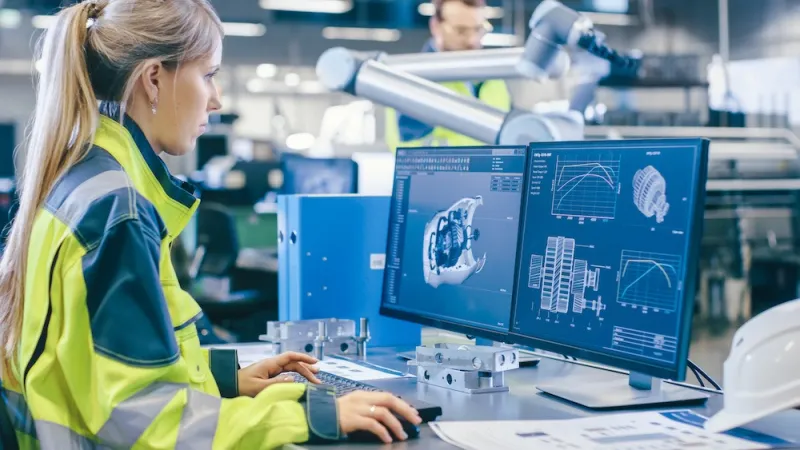
Computer-Aided Manufacturing (CAM) is a technological process that uses computer software and machinery to facilitate and automate manufacturing processes. Used in a variety of industries, CAM enables the conversion of computer-aided design (CAD) into manufacturing instructions for computer numerical control (CNC) machines.
These machines, commonly referred to as machine tools, can include milling machines, CNC routers, CNC machines, and many others. With the help of CAM software, these machine tools perform precise manufacturing processes, transforming raw materials into finished products with minimal waste and human error.
A brief history of CAM Technology
The origins of computer-aided manufacturing can be traced back to the post-World War II era. During this period, the first numerically controlled (NC) machines emerged, laying the foundation for what would become CAM. These early machines were operated manually, using punched tape to control their movements.
The advent of computers in the 1960s brought about a significant evolution in manufacturing. Computer numerical control (CNC) emerged as an improvement over NC, bringing computer automation to the manufacturing industry. The advent of CAD/CAM software in the 1970s revolutionized the industry even further, bridging the gap between design and manufacturing seamlessly.
How does computer-aided manufacturing (CAM) work?
In essence, CAM works by taking CAD files or models as input and then generating instructions, known as G-code, to control CNC machine tools. This conversion from CAD models to CAM instructions is done using specialized CAM software. Let’s take a closer look at the process:
- It all starts with a CAD model, a computer-generated 3D design of the desired product.
- The CAD model is then imported into CAM software.
- Within the software, the CAM system applies predefined machining strategies to generate toolpaths. These paths guide the movement of the CNC machine.
- CAM software translates these toolpaths into a language that the CNC machine can understand – G-code.
- The G-code is then fed into the CNC machine to carry out the machining process according to these instructions.
- The manufacturing process ends with the creation of a finished part that precisely matches the original CAD model.
CAM Technology Applications in Industries
Each industry uses CAM in its own way to suit its specific needs.
- In the Automotive Industry
CAM plays an essential role in the creation of body parts, engine components, and other complex parts. Thanks to CAM, manufacturers can reduce delivery times, increase accuracy, and produce vehicles with high precision and quality.
- Aerospace Industry
The aerospace industry requires parts with complex shapes and strict standards. Here, CAM is used to create components such as turbine blades and airframe structures. The precision provided by CAM reduces errors, resulting in safer and more reliable aerospace systems.
- Electronics Industry
The production of circuit boards, electronic components, and complex semiconductor devices utilizes CAM to achieve precision and efficiency. This use of CAM ensures a high level of accuracy, which is essential given the trend toward miniaturization seen in electronics.
- Healthcare
The healthcare industry uses CAM to create complex biomedical devices such as prosthetics and surgical instruments. In an industry where customization and precision are paramount, the capabilities of CAM are invaluable.
Benefits of CAM for Manufacturing
CAM systems offer many benefits to the manufacturing industry, making them an integral part of modern manufacturing processes. These benefits include:
- Improved efficiency:
CAM systems optimize manufacturing processes, reduce lead times, and improve production speeds. This efficiency translates into cost savings and faster time to market.
- Improved accuracy and quality:
With CAM, the risk of human error is significantly reduced. The precision of computer-controlled machinery ensures the production of high-quality parts to exact specifications.
- Greater flexibility:
CAM software allows manufacturers to quickly adapt to design changes without having to manually adjust machine settings. This ability makes it easier to customize product designs to meet specific customer requirements.
- Reduced waste:
CAM systems ensure minimal waste of raw materials by maximizing material utilization and optimizing cutting paths.
- Improved safety:
Since the manufacturing process is automated, CAM helps reduce the risk of accidents and injuries on the shop floor.

Most popular CAM software and tools
There are many CAM software and tools available on the market, each offering unique features and functions. Some of the most popular software and tools include:
- Mastercam: Known for its powerful features and functions, Mastercam is a popular choice among manufacturers. It offers excellent 3D design capabilities and supports a wide range of machines.
- SolidCAM : Integrated with SolidWorks, SolidCAM provides seamless CAD to CAM conversion. Its iMachining feature optimizes toolpaths, reduces machining time, and extends tool life.
- Autodesk PowerMill : PowerMill is known for its ability to handle complex machining situations. It is ideal for manufacturers dealing with difficult geometries and difficult-to-machine materials.
- GibbsCAM : This CAM system is known for its user-friendly interface and powerful capabilities. GibbsCAM supports a full range of machine tools, from 2-axis milling to multi-task machining.
- Siemens NX CAM : NX CAM is part of Siemens' comprehensive suite of software solutions. It offers advanced capabilities such as robotic machining and additive manufacturing.
Essential skills for CAM
Operating CAM software and systems requires a unique set of skills, including:
- Technical Qualifications: Basic understanding of CAD/CAM software, CNC machine operation, and G-code is required.
- Knowledge of manufacturing processes: A solid understanding of different manufacturing methods, machining processes, and material properties is essential.
- Analytical Skills: CAM operators must be able to interpret complex designs, diagnose problems, and make data-driven decisions.
- Attention to Detail: Accuracy is paramount in CAM operations. A keen eye for detail helps ensure accuracy in the manufacturing process.
Is CAM Hard to learn?
Like any technical field, mastering CAM takes time and practice. However, with the availability of many resources, such as online courses, tutorials, and simulation tools, learning CAM has become more accessible. Prior knowledge of CAD can make the learning process significantly easier.
Advantages of using CAD/CAM technology with CNC
Some advantages of using Cad/Cam technology in CNC machines:
- Higher efficiency
Machine automation is a revolutionary innovation in the manufacturing industry. The combination of CAD and CAM to automate the manufacturing process has increased the efficiency of manufacturers worldwide.
With increased efficiency, companies can take on more difficult and complex tasks with less effort than ever before. Today, there are many products manufactured using CNC machines that could not even be produced by hand.
- Faster project completion times
The responsibility for project delays does not always lie with the manufacturer. Production can be delayed due to customers not submitting CAD models and other required information.
Combining CAD and CAM can help automate this process to receive models from customers faster and even collect additional information during the project quote process. With CAD/CAM, CNC machines can run tests, simulate prototypes, and begin machining faster than ever before!
- More control over your project
Managing manufacturing projects requires a high level of visibility to maximize efficiency. CNC CAD CAM allows you to track your work with the CAM Tree Manager. This technology has many benefits, including the ability to save and load models, reorder sequences, and copy and paste machining operations.
Better control over your project with this advanced technology that reduces errors, thereby shortening production cycles and minimizing the need for revisions.
- Less CNC training required
Technology is only as good as the person operating it—unless the machine can lift heavy objects. CAD/CAM has the ability to train the operator. This is an advanced development that results in less training for new CNC operators.
This not only reduces errors and creates more opportunities for experienced operators to produce complex parts, but also allows new programmers to become successful sooner and learn advanced techniques.
- Increase CNC productivity
With new developments in CNC technology, we now have high-speed machines that allow for reduced cycle times and also minimize wear and tear on both the tool and the machine.
CAD/CAM has improved the actual quality of the cut with high-speed toolpaths that do not have the stop and go of traditional compensation toolpaths. We can now cut deeper with continuous engagement of the tool, allowing for greater use of the inherent qualities of the machine.
- Eliminate errors and waste
In the age of manufacturing, CAD/CAM allows for the inspection of the machining process using advanced simulations. This allows the operator to identify potential tool dents and collisions before they occur. The value of the simulations alone is unparalleled, saving production time, avoiding repairs and replacements, and preserving the company’s money.
Some limitations of using CAD/CAM/CNC
There are some disadvantages to consider:
- Processing power limitations and costs
The software to operate CNC machines consumes a large amount of processing power. That requires some powerful, high-quality computer hardware and can be a large upfront cost. That doesn’t mean you won’t get your money’s worth, but it’s something to consider for running costs.
- Software complexity
CAD/CAM is becoming more flexible and adaptable, which makes it more complex. This can make it difficult for first-time users to learn the software, although the in-software machining training capabilities mentioned above reduce this friction when starting out.
- Technology Failure/Glitch
Any technology, whether it is a personal laptop or a large CNC machine, is at risk of breaking down at any time or requiring regular maintenance and repair. This is a risk with any new technological advancement you are investing in.
That is why having a quality assurance team is so important to the success of your business. To combat this risk of technology failure, they can detect problems as they occur during automated production.
Integration of CAD and CAM in CNC Machining
CNC machining is a process used in the manufacturing industry that involves the use of computers to control machine tools. CAM plays an important role in CNC machining by converting CAD designs into instructions that guide CNC machines. Integrating CAM into CNC machining offers benefits such as increased accuracy, improved feed rates, and optimized cutting speeds. This revolutionizes the creation of complex designs in a variety of materials, from metals to wood.
- Electrical Discharge Machine (EDM):
CAM software greatly enhances the functionality of Electrical Discharge Machine (EDM), which is used to cut complex shapes that are difficult to machine with traditional cutting tools. EDM machining with CAM eliminates the possibility of human error and ensures the production of complex, precise shapes with minimal waste.
- Milling and Turning:
Milling and turning machines, the workhorses of manufacturing, also benefit from CAM. It provides precise control of these machine tools, reducing production times and improving efficiency. For example, milling can be optimized with CAM to control tool life and cutting speeds, producing finished products that adhere to strict specifications with impressive accuracy.
- High Speed Machining:
CAM software is an integral part of High Speed Machining (HSM), providing precise control of feed rates and cutting speeds. It enables the creation of complex parts with sophisticated designs, reducing cycle times while maintaining high accuracy standards.
- Multi-Function Machining:
Multi-Function Machining relies on CAM to seamlessly integrate and synchronize multiple machining processes on a single machine. This ensures optimal use of resources, reduces production time and increases efficiency.
- 5-Axis Machining:
In 5-Axis CNC Machining, CAM software provides comprehensive control over the simultaneous motion of five machine axes. It optimizes toolpaths, resulting in better surface finishes and reduced tool wear.
- 3D Printing:
3D Printing, or additive manufacturing, uses CAM to convert digital CAD models into tangible objects. CAM plays an integral role in generating toolpaths and controlling the layer-by-layer deposition of material, facilitating the production of complex and sophisticated geometries.
- CNC Routers:
CAM software enhances the functionality of CNC routers by controlling the path of the machine tool with exceptional precision. This produces detailed and precise cuts, especially when creating freeform surfaces or working with different types of materials.
- Turning:
In mechanical turning processes, CAM allows efficient and precise control of cutting speed, feed rate and depth of cut. This ensures high-quality surface finish and dimensional accuracy of the final product.
- Waterjet cutting:
For waterjet cutting, CAM software controls the high-pressure water jet carrying abrasive particles. It optimizes cutting speed and feed rate, reducing waste while ensuring high precision, even for complex shapes and thick materials.
How is CAM related to CNC and CAE technologies?
Computer-Aided Engineering (CAE), Computer-Aided Manufacturing (CAM) and Computer Numerical Control (CNC) are all important components of modern manufacturing processes.
- CAM and CNC:
CAM is directly linked to CNC (Computer Numerical Control). CAM systems generate instructions, usually in G-code, to control CNC machines. These instructions instruct CNC machines to manufacture parts according to design specifications. CAM and CNC work in tandem to automate the manufacturing process.
- CAM and CAE:
CAM and CAE (Computer-Aided Engineering) are linked together through CAD modeling. Once a model is designed in CAD, it is used in CAE for testing and analysis. CAM then uses the CAD data for manufacturing. Therefore, CAE helps validate the design before CAM begins manufacturing.
Future trends of CAM
Looking ahead, here are some key trends that will shape the future of CAM:
- AI and Machine Learning: AI and machine learning technologies are increasingly being integrated into CAM systems. These technologies can analyze past data to optimize manufacturing processes, predict errors, and improve efficiency.
- Increasing automation: With the advent of Industry 4.0, CAM systems are becoming more automated. Future CAM systems will be able to control the entire manufacturing process, from material loading to quality control.
- Additive manufacturing: As 3D printing technology evolves, CAM systems will need to adapt to handle both additive manufacturing (material creation) as well as subtractive manufacturing (material removal).
- Cloud-based CAM: Like many other software solutions, CAM systems are moving to cloud-based platforms. This shift brings many benefits, such as improved collaboration, easier updates, and increased accessibility.
Conclusion
In short, Computer Aided Manufacturing (CAM) is an integral part of modern manufacturing processes. It offers a myriad of benefits including improved efficiency, accuracy, flexibility, and reduced waste. The integration of CAD into CAM and its interrelationship with other computer processes such as CAE and CNC make it a comprehensive solution for manufacturers.
Whether it is mass production in the automotive industry, precision machining in the aerospace industry, or custom manufacturing in the biomedical field, CAM has proven itself to be an important tool in the manufacturing industry.
