


What is Mass Production? Features, Advantages and Disadvantages
08-07-2025 1.414
For industrial production, the concept of “doing more” is no longer simply about increasing quantity. What is important is how to do it efficiently, economically and consistently. That is why the high-volume production model is considered the backbone of many industries today.
Mục lục
Mass production has become a strategic solution to help businesses optimize costs and increase productivity. The application of automated production lines allows for consistent quality control, shortens production time and minimizes risks due to dependence on manual labor. Thanks to the integration of modern technology, this model is suitable for factories that need to expand their scale, improve operational efficiency and flexibly meet market requirements.
What is mass production?
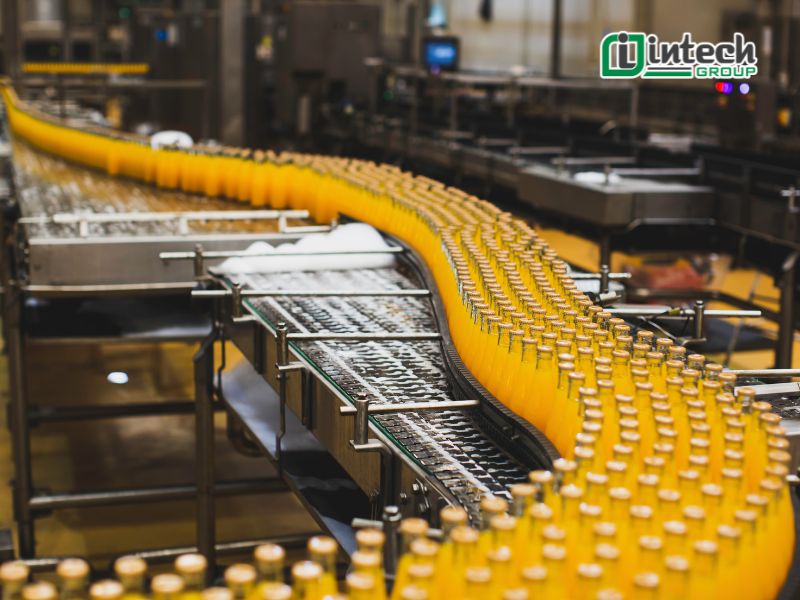
Mass production (or Mass Production - English is mass production, flow production or continuous production) is a method of creating a large number of similar products in a short period of time, by organizing the production process in a highly specialized direction. The stages are often automated, optimally designed to increase speed, reduce costs and maintain consistent quality between each product. This method is suitable for fast-moving consumer goods, electronic components, mechanics, processed foods and many other industrial fields.
Unlike single-piece or small-batch production, mass production focuses on efficiency and scale. Therefore, the production system must be specifically designed to operate stably at high frequency. As a result, the production cost per unit of product is greatly reduced, creating a significant competitive advantage for the business.
Characteristics of mass production
This model is not only a solution for large output but also a strategic problem in optimizing operations, controlling quality and increasing profits.
- Maximum standardized process
The most obvious feature of mass production is the construction of a clear, fixed and repeatable process with high precision. Each stage is programmed, monitored and continuously improved to ensure stable performance throughout the operation. This helps to minimize dependence on individual skills and minimize errors.
- Maximize the capacity of the automation line
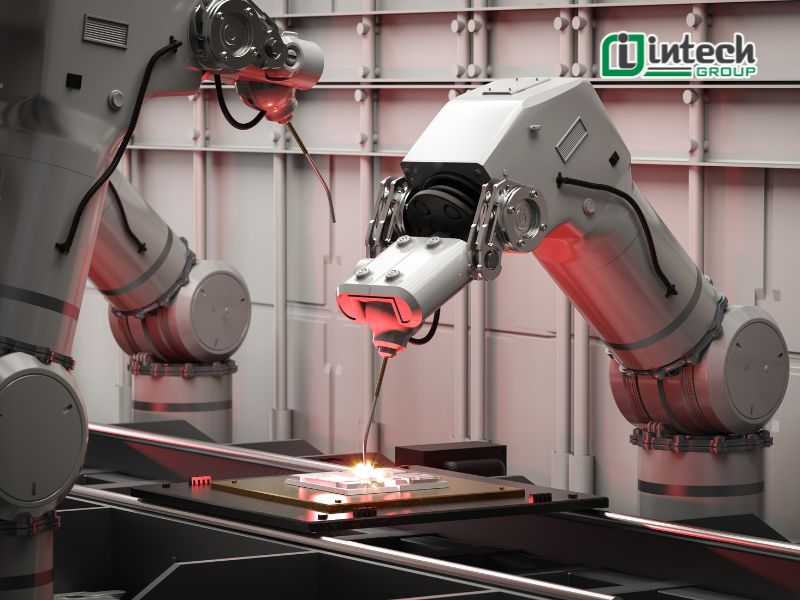
When producing on a large scale, the application of automation lines is almost mandatory. The machine system replaces humans in repetitive steps, thereby shortening production time, reducing labor costs and improving accuracy. Not only that, automation also opens up the ability to manage production data in real time, supporting analysis and faster decision making.
- Fast and flexible market response
With a stable process and high production capacity, this model allows businesses to respond quickly to market demand. When there are large orders or sudden increases in demand, the system still ensures continuous supply capacity without affecting product quality. This is the key point to help businesses maintain market share and expand business scale.
Advantages and disadvantages of mass production
- Outstanding advantages of mass production
- Optimizing unit product costs: When producing in large quantities, fixed costs such as labor, premises, electricity, etc. will be evenly distributed to each product, helping to reduce costs.
- Improving productivity and operational efficiency: The automated production line is set up to operate continuously at high speed, helping to significantly increase output in the same period of time.
- Stable product quality: Thanks to standardized and strictly controlled processes, output products have high uniformity, limiting technical errors.
- Easy scalability: When market demand increases, the production system can be expanded without too many changes in infrastructure or human resources.
- Disadvantages of mass production to consider
- High initial investment costs: To implement this model, businesses need to invest heavily in machinery, control systems and synchronous infrastructure.
- Requires a well-organized process: Mass production is only truly effective if the business has a tight production plan and inventory management, avoiding excess or production interruptions.
- Low flexibility: Large-scale production systems are often set up for a specific product or group of products, making it difficult to adjust quickly when the market changes or requires design customization.
- Risks if the market fluctuates: If the manufactured products cannot be consumed, large inventories will put pressure on storage costs, finance and affect the business's cash flow.
Which industries apply mass production
Not all industries are suitable for implementing a large-scale production model. However, for fields with the characteristics of repetitive production, stable market demand and high-standard products, this is an almost mandatory choice if you want to develop long-term.
- Electronics and industrial components industry
Products such as microchips, circuit boards, capacitors, sensors or machine assemblies often require high-precision mass production. The application of automation helps ensure stable quality and timely response to large orders, especially in the global supply chain.
- Food and beverage industry
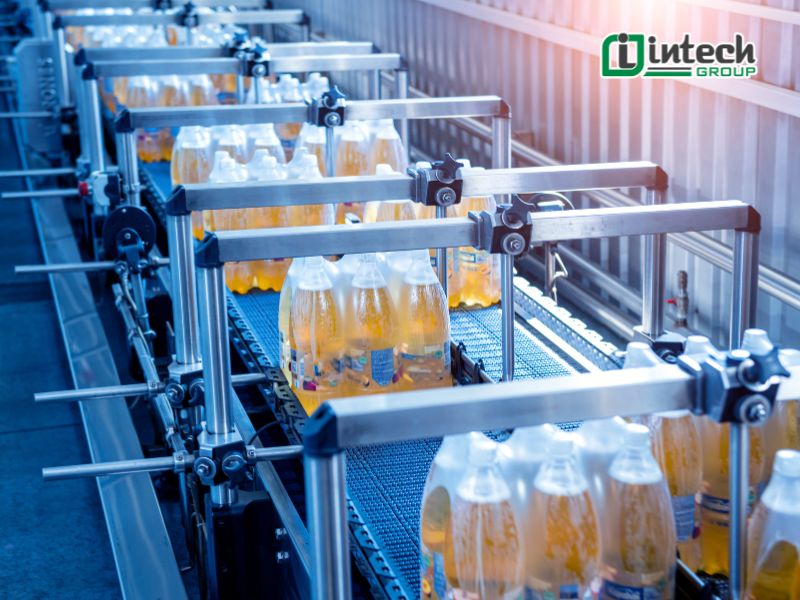
From packaging processed foods to filling beverages, large-volume production is a key factor to ensure fast supply times, maintain consistent quality and control food hygiene and safety. Large factories in this industry invest heavily in automation technology.
- Textile and footwear industry
This is an industry with large orders, highly repetitive according to season or collection. Large-scale production combined with automation machinery helps reduce labor costs while increasing product completion speed, suitable for global retail chains.
- Packaging, plastic, printing industry
Carton packaging products, plastic bottles, nylon bags or labels often have simple designs and are ordered in large quantities from other businesses. Using a mass production model helps save materials and optimize the pressing, cutting and printing processes.
- Automotive and mechanical engineering industry
Production of components, assemblies or even automobile assembly lines all require a high level of automation to achieve high productivity, high precision and ensure consistent quality on each product. This is a typical industry for the combination of mass production and advanced automation.
Mass production not only helps businesses optimize costs but also improves efficiency and ensures consistent quality for each product. When combined with an automated line, this model becomes more efficient, minimizes risks and increases competitiveness in the modern market.
At Intech, we provide comprehensive automation line solutions, tailored to the needs of each factory, from consulting, design to actual implementation. If you are looking for solutions to improve production capacity, do not hesitate to contact Intech via hotline 0966 966 032 to receive detailed advice from our team of engineers.
