


What is Metal Forming? A Detailed Guide
19-08-2025 454
Metal forming refers to the process of reshaping metal into a desired shape or form using force and various means of deformation.
Mục lục
What is metal forming?
Metal forming refers to the process of reshaping metal into a desired shape using force and various means of deformation. It involves processing metal material, which can be in the form of sheets, bars or billets, into specific shapes and sizes.
This is achieved through a variety of processes, each using different forces and equipment, but all with the common goal of transforming raw metal into useful components.
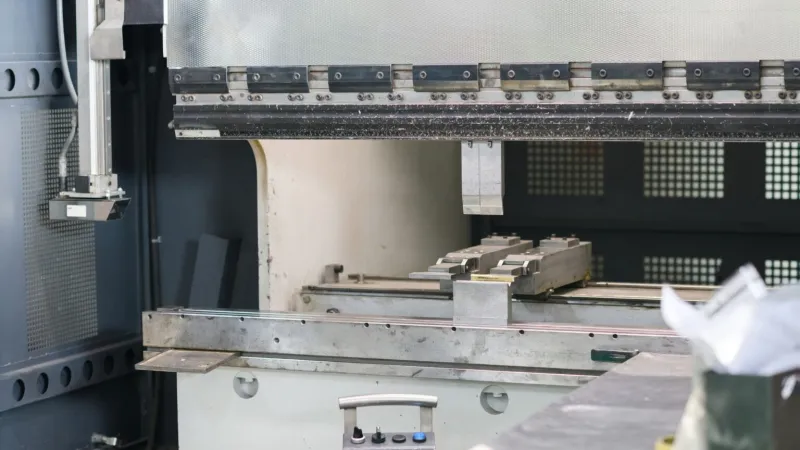
Difference between hot working and cold working metal forming
In metal forming, hot working involves treating metal at high temperatures, increasing its ductility and reducing its strength to make it easier to shape. In contrast, cold working is done at room temperature, increasing its strength but requiring more force.
1. What is hot working metal forming?
Hot metal working is a process carried out at temperatures above 60% of the melting point of the metal. This is usually above the recrystallization temperature of the metal, which varies depending on the type of metal used.
- Temperature range: This usually means working at temperatures from just above the recrystallization point to just below the melting point of the metal. For example, for steel, this temperature ranges from 900°C to 1250°C.
- Process dynamics: During hot working, the metal grains deform as well as recrystallize simultaneously. This continuous recrystallization during deformation helps maintain a constant microstructure throughout the process.
- Applications: Hot rolling of steel, forging of aircraft parts, and hot extrusion of metals are common applications.
- Advantages:
- Hot working increases the ductility of metals, making them more malleable and easier to shape into more complex shapes.
- Makes it easier to work and form because the metal has less resistance.
- Because it is in a soft state, it requires less force to deform, reducing the energy and effort required.
- Hot working reduces internal stresses in the metal, resulting in a more stable and undeformed product.
- Allows for wider deformations without the risk of fracture, especially in metals such as stainless steel and aluminum.
- The process can refine the grain structure of the metal, improving its mechanical properties.
- Ideal for metals that are susceptible to hardening at lower temperatures.
- Disadvantages:
- Considerable energy is required to maintain the high temperatures required for hot working.
- Exposure to high temperatures can cause oxidation of the metal, affecting surface finish and dimensional accuracy.
- Precise control is essential to avoid overheating or uneven heating, which can lead to defects.
- The soft nature of metals at high temperatures can limit the accuracy of the final product.
- High temperatures can accelerate wear on tools and forming machinery.
- Improper control of temperature and cooling rates can lead to undesirable microstructural changes.
- The energy-intensive nature of this process raises concerns about environmental impact and sustainability.
2. What is cold working of metals?
In contrast, cold working is performed at room temperature or slightly above but below the recrystallization temperature of the metal. It involves shaping the metal without preheating.
- Temperature range: Generally, this is at room temperature, meaning that there is no intentional heating of the metal above its recrystallization point. For most metals, this is below 400°C.
- Process characteristics: Cold working hardens metal through strain hardening, also known as work hardening. This occurs when the crystal structure of the metal is deformed and new stress points appear.
- Applications: Cold rolling of sheet metal, cold forging, and wire drawing are typical examples.
- Advantages:
- Cold working strengthens the metal through strain hardening, improving its overall strength.
- It often results in a smoother and more attractive surface finish, which is important for aesthetic applications.
- No heating is required, which saves energy compared to hot working.
- The absence of high temperatures means more precise control of the dimensions of the final product.
- Tighter tolerances can be achieved, which is necessary for precision parts.
- Improves the grain structure of the metal, improving its mechanical properties.
- Avoid scaling and oxidation problems common to hot working.
- Disadvantages:
- Requires more force to deform the metal, requiring more powerful machinery.
- Can lead to cracking, especially in metals with low ductility at room temperature.
- Not suitable for very thick materials due to the large force required.
- Increased hardness can limit further shaping or machining without annealing.
- Unlike hot working, cold working does not relieve internal stresses, which can lead to deformation.
- Reduces the extent to which the metal can be deformed without cracking.
- Increased strength of the metal can cause faster wear on tools and dies.
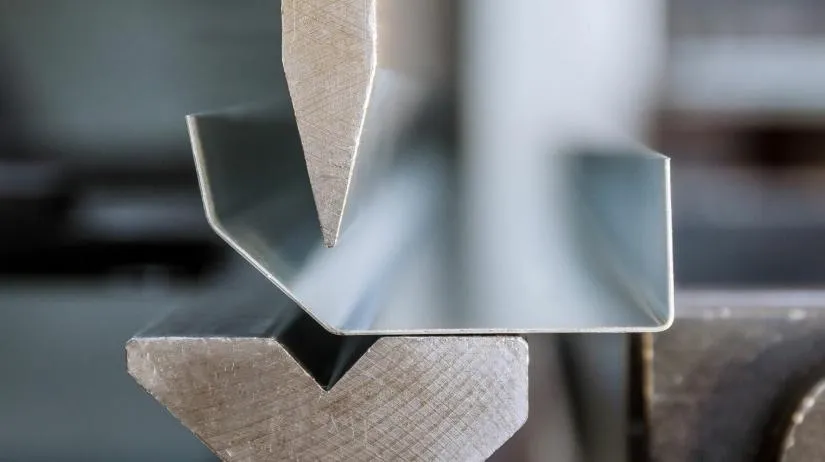
Common metal forming methods
There are many different metal forming processes. Below, we will give you an overview of each and include common applications and advantages.
- Compressive Stress Forming
Compressive stress forming involves applying compressive force to a metal to change its shape. This is similar to pressing or squeezing a metal to change its shape, which can include processes such as rolling, forging, and extrusion. These methods are widely used in various industries to produce a variety of products.
+ Rolling:
Rolling is a metal forming process in which the metal raw material is passed through one or more pairs of rolls to reduce its thickness and make it uniform. The concept is similar to rolling dough with a rolling pin.
- Applications:Forming sheet and plate metal, manufacturing structural parts such as beams and rails.
- Advantages: High production efficiency, uniform thickness and surface finish
- Machinery and tools required: Rolling mill, roller table, auxiliary equipment for material processing.
+ Extrusion:
Extrusion is a process in which metal is forced through a die, creating a product with a uniform cross-section. Imagine you are squeezing toothpaste from a tube; extrusion works on the same principle but with metal.
- Applications: Production of pipes, tubes and structural parts, creating complex cross-sections for the construction and automotive sectors.
- Advantages: Efficient production of uniform cross-section shapes, Ability to form complex shapes with excellent surface finish.
- Machinery and tools required: Hydraulic or mechanical extrusion presses, dies with specific cross-section shapes, processing and cutting equipment for extruded parts.
+ Molding:
Molding involves shaping metal sheets by forcing them into a mold block. This method is similar to using a cookie cutter, where the die acts as a cutter, shaping the metal sheet into pre-determined forms.
- Applications: Creating complex shaped parts for electronics and appliances, manufacturing precision tolerance components in the aerospace and automotive industries.
- Advantages: High precision and repeatability, suitable for mass production with minimal material waste.
- Machines and tools required: Stamping presses, custom-designed dies, Material handling systems for efficient workflow.
+ Forging:
Forging involves shaping metal using localized compressive forces. It is an ancient technique, reminiscent of a blacksmith hammering hot iron, but modern forging uses high-pressure machinery to achieve precision.
- Applications: Manufacturing of durable parts such as gears, automotive parts and hand tools, manufacturing of parts for heavy machinery and aerospace applications.
- Advantages: Excellent strength and durability of forged parts, Improved structural integrity and grain flow.
- Machinery and tools required: Forging press or hammer, anvil and die, heating equipment for hot forging.

- Tensile Stress Forming
Tensile stress forming, another important item in the metal forming process, uses tension to stretch or elongate metal into specific shapes. This process is similar to pulling taffy into thinner and longer pieces, where the metal is similarly stretched to meet the desired specifications.
+ Stretching:
Stretching involves stretching metal sheets by applying tensile forces. This process is important for creating parts with minimal distortion and specific dimensional requirements.
- Applications: Fabrication of large, flat parts such as aircraft skins, production of parts with high strength-to-weight ratios.
- Advantages: Uniform thickness and grain structure throughout the part, reducing the risk of warping or distortion.
- Machinery and tools required: Stretch forming machines, clamping and alignment systems, custom tools for specific part geometries.
+ Expanding:
Expanding metal involves stretching it to create a mesh or mesh structure. This process turns a solid sheet of metal into an expanded mesh, creating a variety of patterns and shapes.
- Applications: production of metal filters and meshes, production of decorative architectural details.
- Advantages: Efficient use of material, weight reduction without sacrificing strength, versatile applications due to the wide range of patterns available.
- Machines and tools required: Press or expander, dies to create specific mesh patterns, expanded metal cutting and processing equipment.
+ Dimples:
Dimples in metal forming refers to creating recesses or depressions in a piece of metal without removing material. It is like pressing a design into clay, but in metal.
- Applications: Creating non-slip surfaces on metal parts, creating decorative patterns on metalware.
- Advantages: Preserves the integrity and strength of the metal, allowing for intricate designs without cutting through the material.
- Machines and tools required: Precision presses, custom designed dimple dies, Surface finishing equipment.
- Combined Stress Forming
Combined stress forming is a complex method of metal forming that incorporates both tensile and compressive stress. This method allows for more complex shapes and designs, expanding the range of metal forming capabilities. It includes a variety of specialized techniques such as deep drawing and wire drawing, which are indispensable in creating a wide range of metal components, from kitchenware to automotive parts.
Combined stress forming techniques:
- Die drawing: Shapes metal by pulling it through a die, changing its cross-section.
- Parallel mill: Uses a series of rolling actions to gradually shape metal.
- Deep drawing: Forms metal sheets into deep, hollow shapes such as pots and pans.
- Rolling: Rotates a metal plate or tube to form symmetrical parts such as cones.
- Flange forming: Bends the edges of a metal sheet to create a flange.
- Unstable Bulging: Expanding a portion of a metal piece, often used to create hollow parts.
Other metal forming processes
Some other commonly used forming methods:
- Shearing
Shearing is a cutting process in which metal sheets are cut by applying a large shearing force, similar to cutting paper with scissors but on an industrial scale.
- Applications: Cutting metal sheets to size, cutting components for further processing in production.
- Advantages: Precise and clean cuts, efficient for high volume production.
- Machinery and tools required: Shearing machines, blades specially designed for different types of metals and thicknesses, material handling systems for processed sheets.
- Bending
Sheet metal bending involves deforming metal around a certain axis, creating a bend or crease. It is like folding a piece of paper, but in metal, requiring considerable force and precision.
- Applications: Creating curved profiles for construction, manufacturing angular parts such as brackets.
- Advantages: Flexibility in creating different bending patterns, high precision can be achieved with modern bending equipment.
- Machinery and tools required: Press brake, different types of dies for different bending angles and radii, support equipment for arranging and moving materials.
- Punching
Punching is a metal forming process in which punches and dies are used to create holes in a metal sheet. It works on the principle of applying enough force to cut a piece of material, similar to using a hole punch on paper.
- Applications: Making holes in sheet metal for the automotive and construction industries, fabricating sheet metal with specific designs or ventilation patterns.
- Advantages:High-speed production capability, ability to produce clean, precise holes with smooth edges.
- Machines and tools required:Punchers or presses, punches and dies specifically designed for specific hole shapes and sizes, material handling systems to move and arrange sheet metal.
- Laser cutting
Laser cutting uses a high-powered laser beam to cut precise shapes from metal. The process involves focusing a laser beam, usually with a lens, onto the metal, melting, burning, or vaporizing the material.
- Applications:Precision cutting for complex designs in the electronics and aerospace industries, machining of machine parts, equipment.
- Advantages: High precision and ability to cut complex shapes, reduce material waste and cut cleanly with minimal finishing required.
- Machinery and tools required: Laser cutting machines, typically fiber or CO2 lasers, computer-controlled programming systems to ensure design accuracy, cooling and ventilation systems to manage heat generated during cutting.
- Casting:
Casting involves pouring molten metal into a mold so that it solidifies into the desired shape. This process is fundamental to metal forming, allowing for complex shapes that are difficult to achieve with other methods.
- Applications: Manufacturing engine blocks and machine parts in the automotive industry, manufacturing complex shapes for decorative items and tools.
- Advantages: Ability to produce complex geometries and intricate parts, scalable for both small and large production runs.
- Machinery and tools required: Metal furnace, molds made of different materials depending on the metal and complexity, processing and finishing equipment for the final product.
- Welding
Welding is a process of joining two pieces of metal by melting the contact surfaces at high temperatures, often adding filler material to form a strong joint. The process can vary, using different techniques such as arc welding, MIG and TIG.
- Applications: Construction of metal frames and structures, pipe joining and fabrication of metal containers in various industries.
- Advantages: Creates extremely strong and durable joints, flexibility in joining different types and thicknesses of metals.
- Machinery and tools required: Welders specific to the chosen welding method, protective gear to ensure safety during welding, clamps and fixtures to hold the workpiece in place.
- Ironing
Ironing in metal forming is a process of reducing the thickness of sheet metal by compressing and stretching it. This process is often used to achieve uniform thickness and surface finish.
- Applications: Manufacturing cans, containers in the food and beverage industry, manufacturing thin-walled metal parts with consistent thickness.
- Advantages: Achieve high dimensional accuracy and surface finish, efficient use of materials to save costs.
- Machinery and tools required: Presses or ironing rollers, dies and tools to control consistent thickness, lubrication systems to minimize friction and wear.
Metal forming tools and equipment
Metal forming, an integral part of modern manufacturing, uses a variety of tools and equipment, each designed for specific processes and results. Understanding these tools is key to optimizing the metal forming process.
Common tools used in metal forming:
- Dies: These are products specifically designed to shape and cut metal into desired shapes. Dies are used in stamping, punching, and extrusion processes.
- Presses: Hydraulic, mechanical, and pneumatic presses, like press brakes, apply the force needed to shape metal. They vary in size and power, and are tailored to specific operations such as deep drawing or ironing.
- Rollers: Essential for roll forming, these cylindrical tools bend and shape sheet metal into long, consistent cross-sections.
- Shears: Laser shears, scissors, and saws are used to cut sheet metal precisely. Laser cutting, in particular, provides high precision with minimal waste.
- Welding equipment: Various welding machines, including TIG, MIG, and arc welders, are used to join high-strength metal parts.
Factors Influencing tool selection:
- Material Properties: Metal type, thickness, and properties such as yield strength and ductility determine tool selection.
- Desired Shape and Size: The complexity of the part design and its dimensions influence the choice of mold and machine.
- Production Volume: High volume production may require automated presses and rollers to be efficient.

Metal Forming applications in various industries
Metal forming is versatile, playing a key role in many industries. Each sector benefits from the ability to transform metal into functional parts and products.
Examples and Case Studies:
- Automotive Industry: Metal forming is important for creating body panels, chassis, and engine components. Techniques such as stamping and roll forming are widely used.
- Aerospace: Precision is key, with forming processes used to produce parts such as landing gear and fuselage panels.
- Construction: Structural components, including beams and scaffolding, are fabricated using metal molds.
- Consumer electronics: Small, complex parts such as connectors and housings are often produced through processes such as molding and extrusion.
How to choose the right metal forming technique?
Selecting the appropriate metal forming technique is critical for manufacturers to ensure quality, efficiency, and cost savings.
Factors to consider:
- Material properties: Understand the properties of metals, such as ductility and recrystallization temperature.
- Complexity of the part: Assess whether the shape requires advanced techniques such as deep drawing or simpler methods such as bending.
- Production scale: High volume operations can benefit from automated processes, while specialized or low volume parts may require more manual techniques.
Common Mistakes to Avoid:
- Ignoring Material Properties: Ignoring metal properties can lead to product failure.
- Ignoring Cost Analysis: Balancing the cost of the process with the desired outcome is critical.
- Underestimating Tolerance Requirements: Accuracy in measurements is key, especially for industries such as aerospace and automotive.
Conclusion
Metal forming is a dynamic and essential area of manufacturing. Its evolution from ancient blacksmithing to modern automated processes reflects both human ingenuity and the growing demands of society.
The future of metal forming, shaped by technological innovation and the drive for sustainability, offers exciting prospects for the industry. As we grow, our core principles of efficiency, quality and safety remain pivotal, guiding the way forward in this important area.
