


What is single-unit production? Characteristics, advantages and disadvantages
08-07-2025 429
The demand for personalization or on-demand production is increasing, making single-piece production a suitable choice for industries that require high technical and flexible capabilities. This form requires a multi-functional equipment system with precise operation capabilities. Integrating automation into each stage helps optimize performance, shorten manufacturing time while still ensuring output quality for each individual product.
Mục lục
What is the concept of "one-off production"?
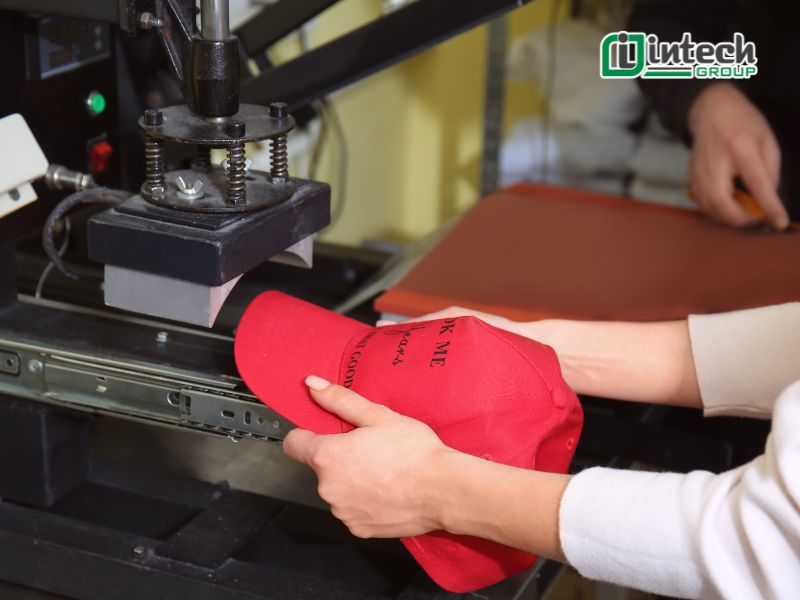
One-off production (English: job production, jobbing production or one-off production) is the process of manufacturing individual products, usually according to specific orders from customers. Each product is a "unique version", designed and manufactured according to specific requirements in terms of style, specifications, materials, functions, etc.
This form of production is popular in industries such as mechanical engineering, automation, mold manufacturing, shipbuilding, or construction of specialized equipment. It serves well in cases where the product is highly complex, requires flexibility in design and cannot be mass produced.
Outstanding features of one-off production
One-off production requires both the operator and the production line system to be "multi-tasking" and ready to adapt to constantly changing requirements. Here are the characteristics you need to understand when applying this model:
- Diverse product types, different production processes: Each product is a separate design, so the manufacturing process also changes with each order, without fixed repetition.
- The number of orders each time is small, the delivery time is not uniform: Single-piece production often only creates one or a few products in an order, so the delivery schedule cannot be standardized like mass production.
- There is no product testing before putting into production: Everything is done directly, there is no test run phase, this requires very high precision and calculation from the beginning.
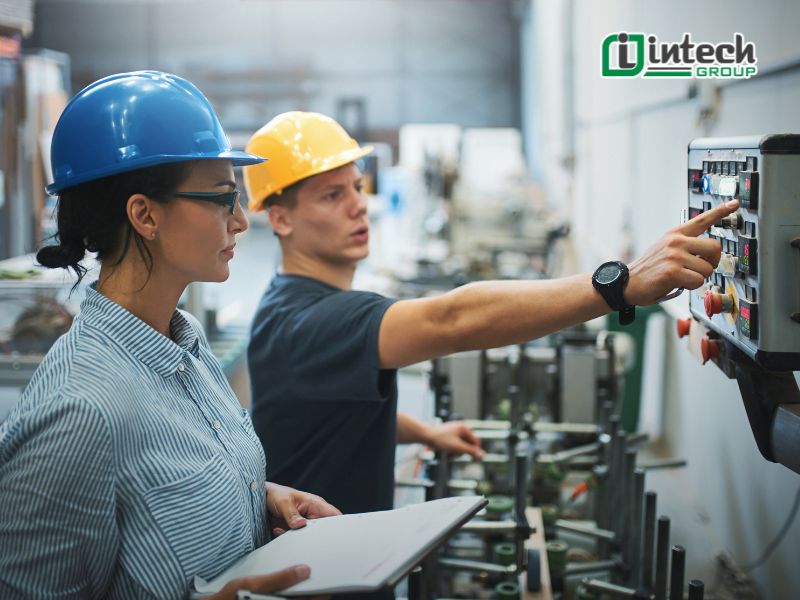
- The requirements for operating skills and professional qualifications of workers are high because they have to do many different types of work: Workers in this model often do not work repetitively but must flexibly handle many different technical steps on each product.
- Machinery and equipment are mainly multi-purpose devices. These devices are arranged according to each type of machine with the same function suitable for different jobs and constantly changing: The arrangement of the equipment must be flexible to handle a variety of tasks, and at the same time easily adjusted to the needs of each product.
Advantages and disadvantages of single-piece production
Single-piece production brings a lot of value when you need a highly personalized product. However, this form of production also comes with many challenges that need to be carefully considered.
Advantages of single-piece production
Single-piece production is often chosen in industries that require high flexibility and creativity. Here are the most obvious benefits:
- High flexibility: Easily meet individual design requirements, suitable for each specific order.
- Suitable for complex products: Suitable for precision mechanical products, specialized equipment or items that require individuality.
- Optimizing product value: Each product is often of high value because it is uniquely designed, non-duplicated and creative.
- Fast adjustment ability: Easy to change designs, materials or stages without affecting the overall production line.
Disadvantages of single-piece production
In addition to the advantages, single-piece production also causes businesses to face many difficulties in terms of cost, capacity and management:
- High production costs: There is no large scale to save costs, leading to high cost per product.
- Requires high technical skills: Workers have to do many different types of work, requiring diverse and specialized skills.
- Long production time: Each order is a new process, leading to having to design, plan and manufacture from scratch.
- Difficult to optimize performance: There is no repetition, so it is difficult to standardize processes or make the most of machinery.
Differences between single-piece production and mass production
| Criteria | Single-piece production | Mass production |
| Production purpose | Produce individual products according to specific requirements | Produce large quantities of similar products to supply the mass market |
| Personalization | High – each product can be completely different | Low – products are identical in design and specifications |
| Production process | Flexible, changing according to each order | Fixed, standardized for each batch of products |
| Equipment, machinery | Multi-purpose equipment, with the ability to adjust flexibly | Specialized machinery, optimized for repetitive processes |
| Technical requirements of workers | High – requires solid skills, flexibility to handle many stages | Medium – workers perform a number of operations that have been clearly instructed |
| Production cost per unit | High – due to design, preparation and processing individual creation | Low – due to mass production, taking advantage of scale |
| Delivery speed | Usually slower, depending on each order | Faster and more stable due to optimized processes |
| Ability to apply automation | Can be flexibly applied at each stage, especially design – processing | Strong application, throughout the entire chain |
| Product repeatability | Almost no repeatability – each product is unique | High repeatability – products are completely identical |
| Common application areas | Precision engineering, machine building, shipbuilding, medical equipment, molds, products according to individual requirements | Consumer electronics, textiles, food, automobiles, household goods, industries that need mass products |
The role of automation in single-piece production
Even with single-piece production, you can still apply automation to improve efficiency, especially in the industrial age 4.0. The problem is to apply it correctly, at the right point and at the right target.
Automation acts as a support tool rather than replacing the entire traditional process. In single-piece manufacturing, automation helps:
- Shorten manufacturing time: CNC control systems, programming robots, simulation software help speed up the machining and testing stages.
- Increase accuracy and consistency: Regardless of the product, cutting, milling, and assembly steps are programmed to maintain consistent quality.
- Support process personalization: Many modern automation technologies (e.g. 3D printers, AI design analysis) allow flexible customization while maintaining productivity.
- Reduce the workload for workers: Automate repetitive, heavy or dangerous steps so that workers can focus on creative, high-tech work.
Optimizing machine resources: Thanks to the intelligent manufacturing management system (MES), businesses can effectively use each device in the constantly changing environment of single-piece production. Single-piece production is a suitable solution when businesses need to create highly personalized products, flexibly responding to specific requirements. Although there are challenges in terms of cost and time, with the support of automation, this process is becoming more and more efficient and easier to implement. Understanding the nature and applying it properly will help manufacturing units optimize resources and increase product value.
