


Wine production line increases efficiency and reduces waste
12-08-2025 84
Modern wine production lines are a combination of advanced technology and traditional techniques, aiming to improve product efficiency and quality. From raw material preparation, fermentation, distillation to packaging, all are optimized to meet the increasing demands of the market.
Mục lục
Main ingredients in the wine production line
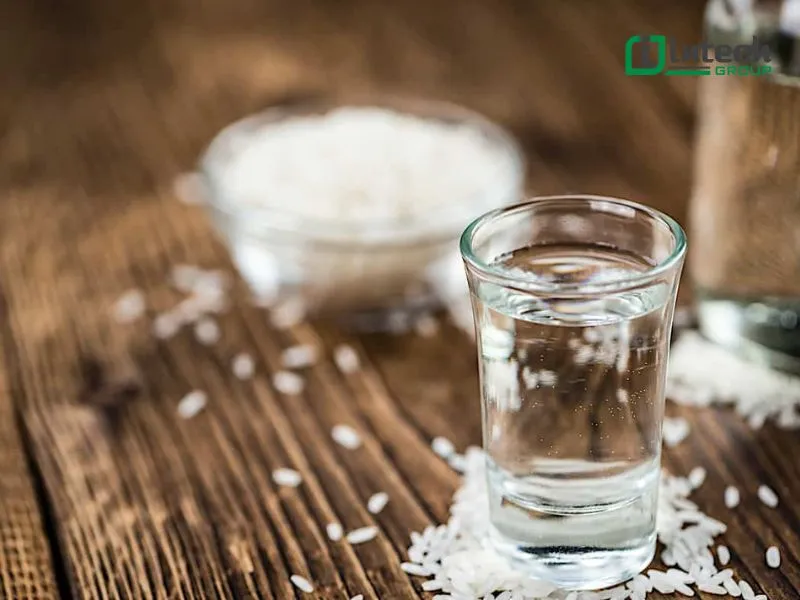
- Rice: Is the main ingredient that provides starch to convert into sugar, which is then fermented to create alcohol. Rice is often carefully selected to ensure the quality of the finished wine. To have a delicious batch of wine, people often choose yellow sticky rice. As for non-glutinous rice, people often use 504 rice, Khang Dan rice, etc. to make wine.
- Water: Plays the role of dissolving the ingredients and is the environment for the fermentation process. Water must be clean, free of impurities to ensure the flavor and purity of the wine.
- Yeast: Is a biological agent that helps convert sugar in rice into alcohol and aromatic compounds. Yeast can be natural yeast or industrial yeast depending on the production technology.
Wine production line operation process
The wine production line operation process is very diverse, depending on the type of wine, below is a general process:
Step 1: Prepare raw materials
Preparing the raw materials fully and according to the standards is an important factor in creating delicious batches of wine.
- Rice: You should use regular rice or sticky rice with the husk and bran intact to preserve nutrients. The rice must be whole grains to ensure the fermentation process is effective, contributing to the formation of the characteristic flavor of the wine.
- Wine yeast: This is the factor that determines the deliciousness of the wine. Choosing the right type of yeast and fermentation technique helps create a unique flavor.
Step 2: Cook rice
Use an industrial rice cooker to cook in large quantities. This device helps the rice cook evenly, does not burn, cooks quickly, and achieves the desired stickiness.
Step 3: Mixing yeast
After the rice is cooked, it needs to be cooled down to about 30 - 32 degrees Celsius to avoid damaging the yeast. Next, the yeast is mixed evenly into the rice. The mixing ratio depends on the recipe and experience of each person.
Incorrect mixing ratio can affect the quality of the wine. Therefore, many people now choose to buy wine from reputable manufacturers instead of cooking it themselves.
Step 4: Fermenting and incubating rice
The fermentation stage plays a key role in the industrial wine production process. After removing the husk, the yeast is crushed or ground. When the rice has cooled to the appropriate temperature, the yeast is sprinkled evenly over the surface of the rice, making sure it is not too cold or too hot to avoid affecting the fermentation process.
To make the yeast cover more evenly, the yeast is often divided into two parts: one part is sprinkled on the top and the other is sprinkled on the bottom. After completion, the rice wine is incubated in a cold storage with a temperature maintained at 20 - 25°C. This stage depends on many factors such as yeast quality, mixing ratio, rice maturity and especially temperature control.
Step 5: Distilling wine
After fermentation meets the requirements, the rice wine is put into the distillation process to collect wine. Normally, the wine is divided into three parts:
First part: Has an alcohol concentration of 55 - 56 degrees, not good for health so it should not be used.
Middle part: Alcohol concentration of 35 - 45 degrees, is commercial wine for the consumer market.
Last part: Wine has a sour smell, loses its aroma, is not suitable for use.
Step 6: Detoxify and age wine
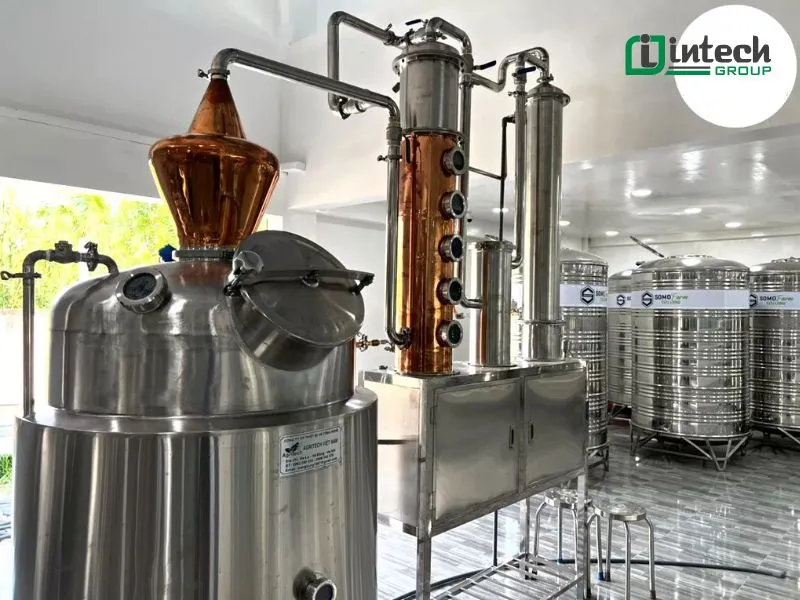
To ensure safety for users, filtering out impurities is necessary. If only using a conventional filter, it can only remove dirt. To thoroughly treat toxins such as methanol and aldehyde, alcohol must go through a specialized distillation tower, which helps separate these substances according to different evaporation temperatures. Thanks to that, the finished alcohol is highly safe and does not cause harm to health.
Machinery in the alcohol production line
Each stage uses specialized machinery:
- Rice washing machine
The rice washing machine is an indispensable device in the rice processing process, helping to remove the hard outer shell and separate the bran layer to obtain pure white rice grains, which are easier to process. Thanks to that, the rice grains after processing become smooth, contributing to the good quality of the alcohol.
The basic structure of the machine includes:
- Washing drum: The area where the rice is placed, with a rough surface or small holes to create friction to peel off the outer shell.
- Motor and steering system: Helps rotate the washing drum and adjust the speed and pressure during the processing process.
- Bran filter: Separates the bran from the rice grains to obtain clean white rice.
- Control system: Monitor and adjust parameters such as speed and pressure.
The rice washing machine is not only used for wine production but also widely used in the rice processing industry, contributing greatly to the creation of high-quality rice products.
- Rice wine cooker
The rice wine cooker is a specialized device for cooking rice in the industrial wine production process and related products such as cakes, jams or herbs soaked in wine. Currently on the market there are many types such as 6-tray, 8-tray, 10-tray, 12-tray, 24-tray rice cookers... and have a cooking capacity of 20 to 300kg/batch.
The main components of the cabinet include:
- Cooking tank: Used to contain raw materials, usually made of stainless steel or wood, depending on the needs of use.
- Heating system: Includes electric stove or gas stove, helps maintain stable temperature during cooking.
- Control system: Allows automatic or manual adjustment of temperature, pressure and cooking time.
- Connecting pipes and valves: Control the flow and pressure in the cabinet.
- Control panel and display screen: Monitor and adjust parameters easily.
This device plays an important role in ensuring that rice is cooked properly, thereby contributing to creating a unique flavor for the finished wine.
- Electric wine cooker set
The electric wine cooker set is a popular tool, supporting the process of cooking and distilling wine effectively. This device not only meets the needs of industrial production but is also suitable for family scale or product research.
Some outstanding features:
- Safe material: The pot is usually made of stainless steel or stainless steel, helping to ensure food safety.
- Electric heating system: Maintains a stable temperature with control buttons or touch screen.
- Controlling the cooking process: Integrated temperature, time and pressure adjustment features help improve efficiency.
- Discharge valve and drain tap: Easily remove the product after cooking, ensuring convenient operation.
- Modern control panel: Helps users monitor and customize parameters quickly.
This device not only helps optimize the production process but also improves the quality of finished wine.
- Detoxifying wine filter
The detoxifying wine filter is an indispensable device in the wine product finishing stage. The main function of the machine is to remove impurities and toxic compounds, ensuring safety for consumers.
Key features include:
- Modern filtration system: Uses activated carbon, filter paper or silica gel to remove residue and impurities.
- Heating or cooling mode: Supports the best filtration conditions for some special wines.
- Automatic control system: Easily control pressure, temperature and filtration speed.
- Convenient discharge nozzle: Helps to quickly sample or collect filtered products.
- Display screen: Allows users to monitor and adjust the filtration process easily.
This device plays an essential role in ensuring the quality and safety of wine before it reaches the user.
- Bottle filling and capping machine
The bottle filling and capping machine helps automate the product packaging process, from soft drinks, wine to other solutions.
The highlights of this device include:
- Filling system: Ensures the correct amount of product is poured into each bottle with high accuracy.
- Automatic cap tightening mechanism: Tightly closes the bottle cap using pressure or mechanical mechanisms.
- Flexible conveyor: Moves the bottle through each stage from filling, capping to quality inspection.
- Inspection system: Detects and eliminates defective products such as leaks or substandard filling.
- Smart control panel: Helps operators monitor and adjust the entire process.
Thanks to its high precision and automation, this equipment not only increases productivity but also ensures that the product meets high quality standards.
The wine production line not only helps optimize the production process but also improves quality, ensuring safety for consumers. With the application of modern technology, the wine industry promises to continue to develop sustainably and meet increasingly demanding consumer trends.
The wine production line not only helps optimize the production process but also improves quality, ensuring safety for consumers. With the application of modern technology, the wine industry promises to continue to develop sustainably and meet increasingly demanding consumer trends.
