


Wood Pellet Production Line: Equipment and Investment Costs
15-08-2025 420
Wood pellet production line has become an optimal solution to turn wood waste into clean and environmentally friendly fuel source. Combining modern equipment and closed production process, this line not only increases the economic value of wood materials but also contributes to the protection of natural resources.
Mục lục
Join us to learn more about the equipment and investment costs for the wood pellet production line through the article below.
What is wood pellet?
Wood pellet is a type of biofuel produced from natural wood materials or wood waste such as sawdust, shavings, bark and other types of wood chips.
The production process includes grinding, pressing at high temperatures, forming small, uniform pellets of standard size and shape, usually cylindrical, about 6-10 mm in diameter and 10-30 mm in length.
Wood pellet has outstanding characteristics:
- Low humidity: Usually below 10%, helping to burn more efficiently.
- High calorific value: About 4,000-4,800 kcal/kg, suitable for fuel.
- Environmentally friendly: As a renewable energy source, greenhouse gas emissions are much lower than fossil fuels.
Wood pellets are often used as fuel in industry, replacing coal in thermal power plants. Used as fuel for heating in households, especially popular in countries with cold winters such as Europe and North America. In Vietnam, wood pellets are exported to Korea, Japan, EU...
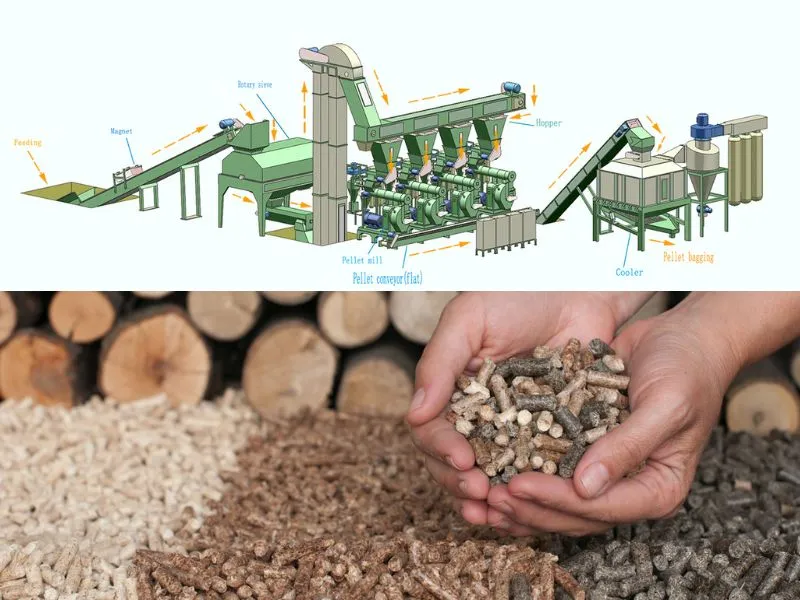
Equipment in the wood pellet production line
The wood pellet production line is a modern and synchronous process to convert raw wood materials or wood waste into high-quality biofuel. To achieve the highest production efficiency, the equipment in the line plays an important role
Each device undertakes a separate function, ensuring that the input materials meet the requirements before moving on to the pellet making step.
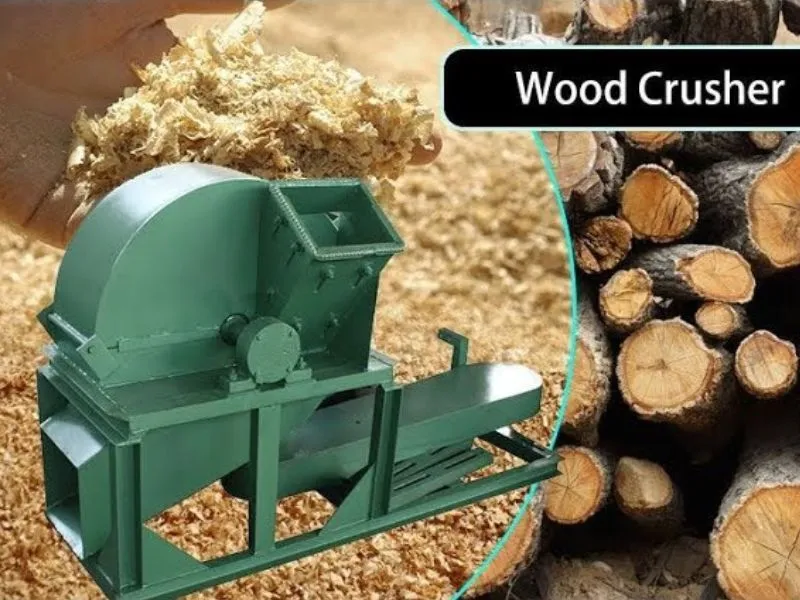
- Sawdust crusher
The sawdust crusher is the first device in the wood pellet production line, responsible for processing raw materials such as wood chips, bark, shavings, or wood waste from wood processing factories. The machine works by using blades or hammers to cut and grind raw materials into small, uniform sawdust.
Outstanding features:
- Capable of processing many types of wood materials with different hardness.
- The output sawdust particle size is usually from 2-6 mm, suitable for compression.
- Increase the efficiency of the next steps by ensuring uniform raw materials.
The sawdust crusher helps reduce the size of raw materials, optimize capacity and save energy throughout the entire process.
- Sawdust screening machine
After the raw materials are crushed into sawdust, the next step is screening to remove impurities or substandard particles. The sawdust screening machine performs this step by using a filter screen or a vibration mechanism to separate sawdust particles by size.
Benefits of the screening machine:
- Remove impurities such as metal, stone, sand or large pieces of wood.
- Ensures high uniformity of sawdust, helping to protect equipment in the following stages, especially the pellet press.
- Improve the quality of finished wood pellets.
The screening machine not only ensures the purity of the raw materials but also contributes to improving the efficiency and life of the entire production line.
- Sawdust dryer
One of the important factors affecting the quality of wood pellets is the moisture content of the raw materials. Sawdust dryers are used to reduce the moisture content of the raw materials, ensuring that they meet the standards before compression. Normally, the required moisture content of sawdust in pellet production is about 10-15%.
Advantages of the dryer:
- Using modern drying technology such as hot air drying or conveyor belt to save energy.
- Capable of processing large amounts of sawdust in a short time.
- Reduces the risk of mold or bacteria in the raw materials.
- Sawdust dryer not only ensures optimal humidity but also helps maintain the calorific value of finished wood pellets, increasing their value of use.
- Sawdust pellet machine
The sawdust pellet machine is the central equipment in the production line, where the sawdust raw material after being processed is pressed into wood pellets. The pressing process takes place under high pressure and high temperature, helping to create pellets with high hardness and mechanical strength.
Outstanding features:
- Equipped with molds of different sizes (usually 6-10 mm) to create standard pellets.
- Stable operating mechanism, energy saving.
- Ensure the pellets have a smooth, uniform surface and high calorific value.
- The pellet machine helps ensure the quality of the final product, meeting the requirements of strict export markets such as Japan and the EU.
- Container pelletizing machine
In large factories, the transportation of wood pellets to storage or containers for export requires the support of a pelletizing machine. This equipment helps reduce manual labor and optimize the transportation process.
Benefits of the spraying machine:
- Automate the process of loading and unloading pellets into containers or warehouses.
- Reduce time and labor costs.
- Ensure safe transportation, avoid broken or damaged pellets.
- The pelletizing machine not only increases productivity but also improves professionalism in packaging and exporting.
- Other auxiliary equipment
In addition to the main equipment, the wood pellet production line also requires some auxiliary equipment to support the operating process.
Some important auxiliary equipment:
- Conveyor system: Transports raw materials between stages in the line.
- Industrial vacuum cleaner: Removes fine dust, keeping the working environment clean and safe.
- Automatic control system: Manages and monitors the entire line, helping to optimize performance.
- Auxiliary equipment plays a supporting role, helping the production line operate continuously, synchronously and more efficiently.
How much does it cost to invest in a wood pellet production line?
The investment cost of a wood pellet production line depends on the production scale, line capacity, and level of automation of the system. Here are some factors that affect the cost
- Line capacity: Common capacity ranges from 1 ton/hour to 10 tons/hour or more. The higher the capacity, the higher the investment cost.
- Equipment type: Equipment such as crushers, dryers, pellet presses, and auxiliary systems (conveyors, vacuum cleaners, control systems) have different prices depending on the brand, quality, and technology.
- Automation: Highly automated production lines will have higher investment costs, but in return, they will reduce labor costs and increase operating efficiency.
- Equipment origin: Equipment imported from Europe or Japan is often more expensive than domestically produced products or from China.
The investment cost of a wood pellet production line can range from several billion to tens of billions of VND, depending on the scale and specific requirements. To have an accurate figure, businesses need to survey, calculate, and choose a reputable equipment supplier to optimize costs and operating efficiency. An example for your reference: The investment cost for a wood pellet production line with a capacity of 1 ton/hour is about 3.7 billion VND excluding tax.
In summary
The wood pellet production line is not only an economically efficient choice but also plays an important role in the sustainable energy development strategy. Investing in this line not only helps to maximize the use of wood resources but also meets the increasing demand of domestic and foreign markets.
Hopefully the information in the article will help you have a comprehensive view and make the right decision for your business.
